
From California to Khamla to Fireblaze: DrAnup Kelkar Joins Fireblaze AI School as Python Academy Is Acquired

The VNIT and IIIT Nagpur alumnus will lead academics and corporate relations at one ofVidarbha's largest AI and data science institutes

NAGPUR, 4 November 2026: Dr Anup Kelkar, a US-returned technologist with a PhD in AI/

ML, has joined Fireblaze AI School as Director of Academics and Corporate Relations,

following Fireblaze AI School's acquisition of his institute, Anup Kelkar's Python Academy,

Khamla.


Early in his career, Dr Kelkar worked with Tata Consultancy Services (TCS) in California,

USA. He returned to Nagpur to bring global industry practice into the classroom and

founded Python Academy in 2016, making it one of the city's first data analytics academies.

Close to a decade later, Python Academy's courses, alumni network and Khamla operations

move under Fireblaze AI School, a NASSCOM partner institute that has trained more than

20,000 learners across three Nagpur centres.


"I started Python Academy to give Nagpur students the same skills I saw global technology

teams rely on. Fireblaze shares that project-first philosophy, and together we can take that

teaching to many more students, colleges and companies," said Dr Anup Kelkar.


A Teacher, Researcher and Entrepreneur


Dr Kelkar holds B.Tech and M.Tech degrees in Computer Science from VNIT Nagpur and

recently completed a PhD in AI/ML at IIIT Nagpur. He has served as a Technical Trainer with

the IIIT Nagpur Training and Placement Cell, conducted a full-semester IT workshop for IIIT

Nagpur, and led more than 20 faculty development seminars on Python and R under NIT

Warangal (HRD Ministry) and IIIT Nagpur programmes. He has presented research in

Singapore on predicting the NIFTY Auto Index using Twitter sentiment, and regularly

conducts sessions at engineering colleges across Nagpur.


He is also Founder and CEO of SpringBoard and Senior Technical Advisor at TechQuadra

Software Solutions. Python Academy holds ratings of 4.9 on Sulekha and 4.6 on Lyfskills.


His Role at Fireblaze AI School


As Director of Academics and Corporate Relations, Dr Kelkar will lead curriculum design and

teaching quality across Fireblaze AI School, and build partnerships with colleges and

companies. He joins an institute that already works with colleges including KDK College of

Engineering, YCCE, KITS Ramtek and Rashtrasant Tukadoji Maharaj Nagpur University, and that has trained 350+ professionals at organisations including ICICI Bank, Solar Industries,Navbharat Media and Basant Agro Tech.


"Dr Kelkar brings research depth, global industry experience and the trust of thousands of

students. Bringing our institutions together means learners in Vidarbha get world-class AI

education without having to leave the city," said Aniruddha Kalbande, Founder and CEO,

Fireblaze AI School.


Two Founders, One Institute


Aniruddha Abhay Kalbande founded Fireblaze AI School and Fireblaze Technologies Private

Limited in October 2017, and has helped students, freshers and working professionals across

India, the USA and Europe build careers in data science, machine learning and AI. He was

Visiting Faculty at upGrad from 2019 to 2022, is an Associate Member of TiE Nagpur, and is

a Global Shaper with the World Economic Forum's Global Shapers Community, Nagpur Hub.

Under his leadership, Fireblaze AI School has grown into a three-centre institute with a

NASSCOM partnership, a corporate training practice and its own learning platform.


For Students and Partners


Students get a curriculum led by a PhD in AI/ML, programmes in data science, data

analytics, Generative AI and AI-powered full stack development, and placement support

including resume building, mock interviews and hiring-partner access.


All learners get Fireblaze Learn, the official student app on Google Play, with live classes,

self-paced lessons, doubt chat with faculty and placement tools. The app is rated 5.0.


Colleges get one partner for faculty development, cohort training under MOU, capstone

projects and guest sessions.


Companies get onsite and online training in Generative AI, Python, data analytics and

Power BI.

Hiring partners get access to job-ready graduates from both institutes.


Current Python Academy students can contact any Fireblaze AI School centre in Nagpur for

details about their batch.


About Fireblaze AI School


Fireblaze AI School is an AI and data science training institute headquartered at Mate

Square, Nagpur, and a unit of Fireblaze Technologies Private Limited. Founded on 31

October 2017 by Aniruddha Abhay Kalbande, it runs centres at Mate Square, Nandanvan and Sadar. The institute has trained more than 20,000 learners in data science, data analytics,

Generative AI, AI-powered full stack development and AI marketing, and has been a

NASSCOM partners for its PGP in Data Science and Analytics since 2024. Learn more at

fireblazeaischool.in.


About Anup Kelkar's Python Academy


Founded in 2016 in Khamla, Nagpur, Anup Kelkar's Python Academy was one of the city's

first data analytics academies. It trains students in Python programming, AI-integrated data

science and machine learning, Gen AI engineering and Python full stack development, and

also offers corporate training and career mentorship. The academy is rated 4.9 on Sulekha

and 4.6 on Lyfskills.


Media Contact

Fireblaze AI School

Email: +91 85301 07029

Website: fireblazeaischool.in


Thavaputhalvi Rural Women Empowerment Mission: Empowering Rural Women to Become Entrepreneurs and Leaders - By Prof. Dr. Subathra Chelladurai, F

In a society striving for inclusive growth and sustainable development, the empowerment of rural women is not merely a social responsibility; it is an essential investment in the future of families, communities, and the nation. Recognising this need, the Thavaputhalvi Rural Women Empowerment Mission, an initiative of OF BY & FOR YOU TRUST, INDIA, seeks to create meaningful opportunities for rural women to develop their skills, pursue entrepreneurship, achieve economic independence, and emerge as leaders of change.

Beyond Empowerment: Building Economic Independence

Rural women play a vital role in agriculture, household management, traditional occupations, food preparation, handicrafts, and community development. Despite their contributions, many face barriers that limit their economic advancement. Inadequate access to business training, financial resources, market opportunities, technology, professional networks, and institutional support can prevent their skills from becoming sustainable sources of income.

The Thavaputhalvi Rural Women Empowerment Mission envisions a future in which rural women are recognised not only for their contributions to families and communities but also as entrepreneurs, producers, business owners, decision-makers, and agents of social transformation.

The mission's underlying philosophy is that women should have the opportunity to move beyond economic dependency and become confident participants in the economic development of their communities.

Transforming Skills into Sustainable Livelihoods

One of the mission's central priorities is to encourage rural women to identify their strengths, develop practical skills, and explore viable entrepreneurial opportunities. Women who possess traditional knowledge or experience in food production, tailoring, handicrafts, natural products, agriculture-related activities, and other local occupations can be supported in transforming these capabilities into organised business ventures.

However, entrepreneurship requires more than an idea or a product. It also demands planning, financial awareness, quality management, packaging, branding, pricing, customer relations, and access to markets.

Accordingly, the mission seeks to promote a comprehensive approach to women's entrepreneurship through capacity-building programmes, enterprise development guidance, product improvement, marketing support, and connections with appropriate institutions and business networks.

Particular importance can be given to locally available resources and traditional skills, enabling women to develop enterprises that respond to market demand while preserving the value of local knowledge and culture.

Creating Market Opportunities for Rural Women

For many small producers, developing a product is only the first step. Reaching customers, securing fair prices, maintaining product quality, and competing in an increasingly digital marketplace can be equally challenging.

The Thavaputhalvi mission seeks to address these challenges by encouraging women entrepreneurs to strengthen their product identity, improve presentation and packaging, explore digital marketing, and establish connections with retailers, institutions, consumers, and other potential buyers.

Collective marketing and collaborative business models may also help women share resources, improve visibility, and explore larger market opportunities.

By connecting skill development with business guidance and market access, the mission aims to create an enabling environment in which rural women can pursue more sustainable livelihoods and build confidence in their entrepreneurial abilities.

Financial Literacy and Responsible Enterprise Development

Access to finance is an important consideration for women seeking to establish or expand a business. Yet financial support is most effective when accompanied by appropriate guidance, realistic business planning, and an understanding of repayment responsibilities.

The mission seeks to encourage financial literacy and awareness of suitable government schemes, institutional credit facilities, and entrepreneurship support programmes, subject to eligibility and the applicable requirements of the respective institutions.

The objective is to help women make informed financial decisions, understand business risks, and develop enterprises with a stronger foundation for long-term sustainability.

Economic empowerment should not be measured solely by the number of businesses established. It should also be reflected in women's ability to make independent financial decisions, contribute to household well-being, participate in community affairs, and plan confidently for their futures.

A Community-Centred Vision for Women's Leadership

The impact of empowering a woman can extend beyond her individual enterprise. When women gain skills, confidence, income, and decision-making opportunities, they can become role models for younger generations and contribute to the progress of their communities.

Thavaputhalvi aspires to encourage a culture in which rural women support one another, exchange knowledge, build professional relationships, and work collectively towards shared economic goals.

The mission's long-term vision is to nurture a network of capable rural women entrepreneurs who can inspire others, strengthen local economies, and contribute to inclusive development.

Progress towards this vision will depend on collaboration among women, community organisations, educational institutions, financial institutions, government agencies, responsible businesses, and potential supporters.

The Vision Behind Thavaputhalvi

Founded by Prof. Dr. Subathra Chelladurai, the Thavaputhalvi Rural Women Empowerment Mission reflects a commitment to connecting women's empowerment with practical economic opportunities. Through OF BY & FOR YOU TRUST, INDIA, the initiative seeks to promote a development approach that values women's abilities and supports their journey towards entrepreneurship, independence, and leadership.

The name Thavaputhalvi represents an identity associated with purpose, dignity, and positive social contribution. The mission aspires to translate these values into opportunities that help rural women recognise their potential and take meaningful steps towards economic self-reliance.

Its vision is not simply to encourage women to earn an income, but to help create conditions in which they can build sustainable enterprises, strengthen their confidence, and participate more actively in shaping their futures.

Empowering Women, Strengthening India

India's development journey becomes more inclusive when rural women have access to the knowledge, resources, opportunities, and networks needed to realise their potential. Supporting women-led enterprises can contribute to livelihood generation, local economic activity, family well-being, and stronger communities.

The Thavaputhalvi Rural Women Empowerment Mission seeks to contribute to this broader vision by placing rural women at the centre of economic opportunity and community development.

When a rural woman is empowered with skills, opportunity, confidence, and market access, she gains more than the possibility of earning an income—she gains greater power to shape her own future.

Through its commitment to rural women's entrepreneurship and economic independence, Thavaputhalvi aspires to help turn women's potential into opportunity, opportunity into enterprise, and enterprise into lasting social progress.


Prof.Dr. SUBATHRA CHELLADURAI- Founder

THAVAPUTHALVI RURAL WOMEN EMPOWERMENT MISSION

An Initiative of OF BY & FOR YOU TRUST, INDIA

Instapage: https://www.instagram.com/thavaputhalvi_youtrust

Website: https://thavaputhalvi.in, Whatsapp/ Call : +91-7358102775


Empowering Rural Women • Inspiring Change


 Thavaputhalvi Rural Women Empowerment Mission: Empowering Rural Women to Become Entrepreneurs and Leaders - By Prof. Dr. Subathra Chelladurai, Founder, THAVAPUTHALVI RURAL WOMEN EMPOWERMENT MISSION, An Initiative of OF BY & FOR YOU TRUST, INDIA


In a society striving for inclusive growth and sustainable development, the empowerment of rural women is not merely a social responsibility; it is an essential investment in the future of families, communities, and the nation. Recognising this need, the Thavaputhalvi Rural Women Empowerment Mission, an initiative of OF BY & FOR YOU TRUST, INDIA, seeks to create meaningful opportunities for rural women to develop their skills, pursue entrepreneurship, achieve economic independence, and emerge as leaders of change.

Beyond Empowerment: Building Economic Independence

Rural women play a vital role in agriculture, household management, traditional occupations, food preparation, handicrafts, and community development. Despite their contributions, many face barriers that limit their economic advancement. Inadequate access to business training, financial resources, market opportunities, technology, professional networks, and institutional support can prevent their skills from becoming sustainable sources of income.

The Thavaputhalvi Rural Women Empowerment Mission envisions a future in which rural women are recognised not only for their contributions to families and communities but also as entrepreneurs, producers, business owners, decision-makers, and agents of social transformation.

The mission's underlying philosophy is that women should have the opportunity to move beyond economic dependency and become confident participants in the economic development of their communities.

Transforming Skills into Sustainable Livelihoods

One of the mission's central priorities is to encourage rural women to identify their strengths, develop practical skills, and explore viable entrepreneurial opportunities. Women who possess traditional knowledge or experience in food production, tailoring, handicrafts, natural products, agriculture-related activities, and other local occupations can be supported in transforming these capabilities into organised business ventures.

However, entrepreneurship requires more than an idea or a product. It also demands planning, financial awareness, quality management, packaging, branding, pricing, customer relations, and access to markets.

Accordingly, the mission seeks to promote a comprehensive approach to women's entrepreneurship through capacity-building programmes, enterprise development guidance, product improvement, marketing support, and connections with appropriate institutions and business networks.

Particular importance can be given to locally available resources and traditional skills, enabling women to develop enterprises that respond to market demand while preserving the value of local knowledge and culture.

Creating Market Opportunities for Rural Women

For many small producers, developing a product is only the first step. Reaching customers, securing fair prices, maintaining product quality, and competing in an increasingly digital marketplace can be equally challenging.

The Thavaputhalvi mission seeks to address these challenges by encouraging women entrepreneurs to strengthen their product identity, improve presentation and packaging, explore digital marketing, and establish connections with retailers, institutions, consumers, and other potential buyers.

Collective marketing and collaborative business models may also help women share resources, improve visibility, and explore larger market opportunities.

By connecting skill development with business guidance and market access, the mission aims to create an enabling environment in which rural women can pursue more sustainable livelihoods and build confidence in their entrepreneurial abilities.

Financial Literacy and Responsible Enterprise Development

Access to finance is an important consideration for women seeking to establish or expand a business. Yet financial support is most effective when accompanied by appropriate guidance, realistic business planning, and an understanding of repayment responsibilities.

The mission seeks to encourage financial literacy and awareness of suitable government schemes, institutional credit facilities, and entrepreneurship support programmes, subject to eligibility and the applicable requirements of the respective institutions.

The objective is to help women make informed financial decisions, understand business risks, and develop enterprises with a stronger foundation for long-term sustainability.

Economic empowerment should not be measured solely by the number of businesses established. It should also be reflected in women's ability to make independent financial decisions, contribute to household well-being, participate in community affairs, and plan confidently for their futures.

A Community-Centred Vision for Women's Leadership

The impact of empowering a woman can extend beyond her individual enterprise. When women gain skills, confidence, income, and decision-making opportunities, they can become role models for younger generations and contribute to the progress of their communities.

Thavaputhalvi aspires to encourage a culture in which rural women support one another, exchange knowledge, build professional relationships, and work collectively towards shared economic goals.

The mission's long-term vision is to nurture a network of capable rural women entrepreneurs who can inspire others, strengthen local economies, and contribute to inclusive development.

Progress towards this vision will depend on collaboration among women, community organisations, educational institutions, financial institutions, government agencies, responsible businesses, and potential supporters.

The Vision Behind Thavaputhalvi

Founded by Prof. Dr. Subathra Chelladurai, the Thavaputhalvi Rural Women Empowerment Mission reflects a commitment to connecting women's empowerment with practical economic opportunities. Through OF BY & FOR YOU TRUST, INDIA, the initiative seeks to promote a development approach that values women's abilities and supports their journey towards entrepreneurship, independence, and leadership.

The name Thavaputhalvi represents an identity associated with purpose, dignity, and positive social contribution. The mission aspires to translate these values into opportunities that help rural women recognise their potential and take meaningful steps towards economic self-reliance.

Its vision is not simply to encourage women to earn an income, but to help create conditions in which they can build sustainable enterprises, strengthen their confidence, and participate more actively in shaping their futures.

Empowering Women, Strengthening India

India's development journey becomes more inclusive when rural women have access to the knowledge, resources, opportunities, and networks needed to realise their potential. Supporting women-led enterprises can contribute to livelihood generation, local economic activity, family well-being, and stronger communities.

The Thavaputhalvi Rural Women Empowerment Mission seeks to contribute to this broader vision by placing rural women at the centre of economic opportunity and community development.

When a rural woman is empowered with skills, opportunity, confidence, and market access, she gains more than the possibility of earning an income—she gains greater power to shape her own future.

Through its commitment to rural women's entrepreneurship and economic independence, Thavaputhalvi aspires to help turn women's potential into opportunity, opportunity into enterprise, and enterprise into lasting social progress.


Prof.Dr. SUBATHRA CHELLADURAI- Founder

THAVAPUTHALVI RURAL WOMEN EMPOWERMENT MISSION

An Initiative of OF BY & FOR YOU TRUST, INDIA

Instapage: https://www.instagram.com/thavaputhalvi_youtrust

Website: https://thavaputhalvi.in, Whatsapp/ Call : +91-7358102775


Empowering Rural Women • Inspiring Change



Swarat Madhav Industries Limited: Leading India’s Next Agricultural Revolution Under Ashish Kumar Tiwari

The backbone of India has long been its villages, powered by millions of farmers who work the land. Yet, for generations, the agricultural sector has grappled with fragmentation, unpredictable market dynamics, and a stark lack of modern technological infrastructure. Enter Ashish Kumar Tiwari (Brahmachari Madhav Ji), the Founder, Chairman, and Managing Director of Swarat Madhav Industries Limited. Tiwari is not just participating in the sector; he is actively engineering a blueprint for its future, seamlessly weaving deeply rooted Indian traditions with cutting-edge technology.Driven by the foundational ethos, “Agricultural Solutions for a Better Tomorrow,” Tiwari’s work transcends traditional corporate boundaries. He envisions an ecosystem where profit aligns with purpose, and where the farmer is elevated from a vulnerable worker to an empowered entrepreneur.


A Tech-Driven Blueprint for the Indian Farm


At the core of Tiwari’s vision is the complete modernization of the crop lifecycle. For too long, Indian agriculture has relied on legacy methods that leave yield and quality to chance. Under his leadership, Swarat Madhav Industries Limited is pioneering the integration of technology-driven farming practices.

By introducing data-backed precision agriculture, smart irrigation techniques, and soil-health analytics, Tiwari aims to take the guesswork out of farming. This transition allows smallholders to optimize their resource inputs—such as water, organic fertilizers, and seeds—resulting in higher crop yields, reduced overhead costs, and a significantly smaller environmental footprint. For Tiwari, technology is the ultimate equalizer, capable of bringing global farming standards straight to the heart of rural India.


Solving the Post-Harvest Crisis


Increased yields mean very little if the produce rots before it ever reaches a consumer's plate. India loses a staggering percentage of its annual harvest to inadequate storage and fractured supply chains. Recognizing this critical bottleneck, Tiwari has focused heavily on building modern cold-chain infrastructure and advanced warehousing systems.

By establishing high-tech storage hubs closer to rural clusters, Swarat Madhav Industries Limited provides farmers with a vital safety net. Instead of being forced into distress sales immediately after a harvest when prices are at their lowest, farmers can safely store their yields. This preservation infrastructure maintains crop quality, staggers market supply, stabilizes consumer pricing, and directly boosts the income of the rural workforce.


Streamlining Markets and Driving Sustainable Growth


Beyond the fields and warehouses, Tiwari is heavily invested in bridging the massive gap between rural producers and urban consumers. By leveraging digital platforms and building highly efficient distribution channels, he is systematically cutting out unnecessary intermediaries. This direct-to-market connection ensures that farmers receive a fair, transparent price for their hard work, while urban markets get access to fresher, traceable, and safer food products.

Sustainability is the invisible thread running through every aspect of this model. Tiwari strongly champions agricultural practices that protect the earth for future generations. From advocating for regenerative farming to promoting the reduction of post-harvest waste, his strategy balances economic viability with ecological preservation.


Empowering Communities Beyond the Balance Sheet


What truly distinguishes Ashish Kumar Tiwari’s trajectory is his profound commitment to human capital. He views the transformation of Indian agriculture not merely as a business opportunity, but as a primary vehicle for rural development and national self-reliance. By bringing innovation to the grassroots, he is creating sustainable livelihoods, curbing forced urban migration, and restoring a sense of pride to the farming profession.

As India moves steadily toward a tech-empowered future, the work being done at Swarat Madhav Industries Limited stands as a powerful testament to what can be achieved when vision meets execution. Through an unyielding commitment to technology, infrastructure, and the welfare of the farmer, Ashish Kumar Tiwari is successfully building the foundations for a resilient, sustainable, and highly prosperous rural India.


Visit our official website

https://www.swaratmadhavindustrieslimited.com/


Homeopathy in Hyderabad: PCOS Diet Plan and Women's Health Awareness

Understand PCOS symptoms, healthy food choices, and lifestyle changes. Contact Spiritual Homeopathy to learn about consultation services in Hyderabad.

Introduction to Polycystic Ovary Syndrome

Polycystic Ovary Syndrome, commonly known as PCOS, is a hormonal disorder that affects women of reproductive age. It can influence menstrual cycles, skin condition, metabolism, and reproductive health. Symptoms may differ from one person to another, making early assessment and appropriate care important. Women searching for homeopathy in Hyderabad may want to understand PCOS management options and the role of healthy lifestyle habits in supporting overall wellness.

Signs That May Indicate PCOS

PCOS can present through a variety of symptoms. Recognizing these changes can help women seek timely medical advice.

  • Menstrual cycles that are irregular or absent.
  • Acne, oily skin, or persistent skin problems.
  • Increased facial or body hair.
  • Hair thinning on the scalp.
  • Difficulty managing weight.
  • Challenges with ovulation or becoming pregnant.

Some women with PCOS may also develop insulin resistance, which can increase the risk of type 2 diabetes. A healthcare professional can assess symptoms and recommend appropriate investigations.

What Contributes to PCOS?

PCOS is associated with hormonal, metabolic, and genetic factors. Increased androgen levels may interfere with ovulation, while insulin resistance can affect blood sugar regulation. A family history of PCOS may also increase susceptibility. The exact cause is not fully understood, and the condition can affect women of different body sizes.

Building a Balanced PCOS Diet

Nutrition is an important part of supporting metabolic health. Instead of following strict or restrictive diets, focus on a variety of nutritious foods.

Foods to include:

  • Whole grains such as oats and brown rice.
  • Vegetables and whole fruits.
  • Protein sources such as eggs, beans, lentils, and fish.
  • Healthy fats from nuts, seeds, and olive oil.

Healthy habits to follow:

  • Reduce frequent intake of sugary drinks and highly processed foods.
  • Eat balanced meals with appropriate portions.
  • Participate in regular physical activity.
  • Maintain a consistent sleep schedule.
  • Practice relaxation techniques to manage stress.

A registered dietitian can help create a suitable meal plan based on individual nutritional needs.

Homeopathy in Hyderabad: Important Considerations

Women exploring homeopathy in Hyderabad may seek consultations to discuss their health concerns and lifestyle. However, reliable scientific evidence does not establish homeopathy as an effective treatment for PCOS. It should not replace medical evaluation, prescribed treatment, or fertility care. Evidence-based management may include nutritional guidance, physical activity, and medical treatment tailored to individual symptoms.

About Spiritual Homeopathy

Spiritual Homeopathy offers consultations for individuals seeking information about their health concerns. Women interested in homeopathy in Hyderabad can contact the clinic to learn about its consultation services. Making informed healthcare decisions and obtaining appropriate medical supervision remain essential when managing PCOS.

Conclusion

PCOS management requires an individualized approach that considers hormonal health, nutrition, and long-term well-being. Balanced meals, regular exercise, and appropriate medical guidance can help address health needs and metabolic risks.

To learn more about consultation services at Spiritual Homeopathy, call 9069176176.

#spiritualhomeo  #bestdoctors  #pcos

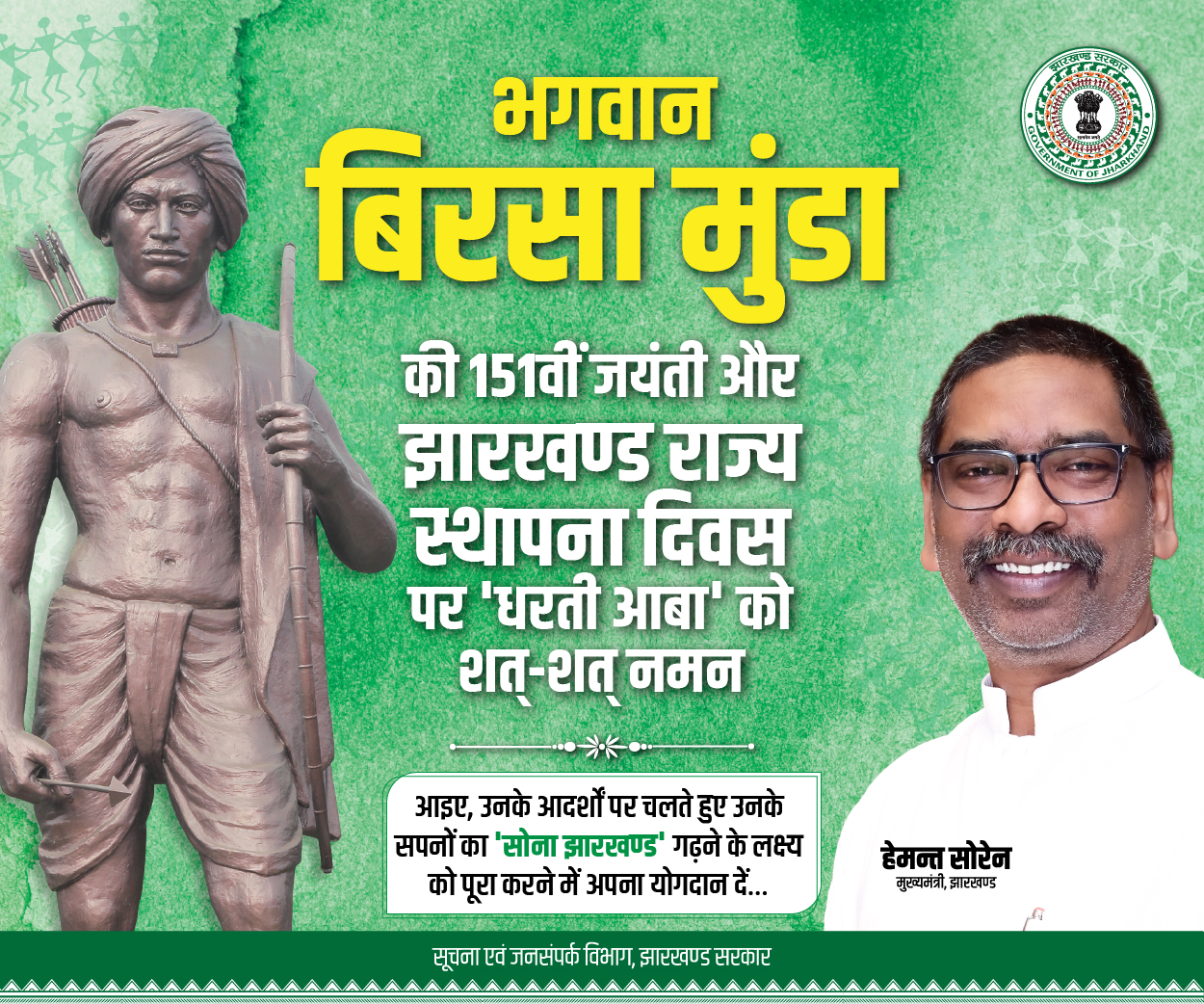
स्वर्गीय सुदिव्य कुमार की स्मृति में शोकसभा आयोजित, पदाधिकारियों एवं कर्मियों ने अर्पित किए श्रद्धासुमन

माननीय मंत्री स्वर्गीय श्री सुदिव्य कुमार की स्मृति में आज दिनांक 09 सितंबर 2026 को अपराह्न 5:00 बजे FFP Building के Meeting Hall में शोकसभा का आयोजन किया गया।

शोकसभा में पर्यटन, कला-संस्कृति, खेलकूद एवं युवा कार्य विभाग, झारखंड सरकार के पदाधिकारियों एवं कर्मियों के साथ-साथ Project Building में कार्यरत विभिन्न विभागों के पदाधिकारियों एवं कर्मियों ने उपस्थित होकर दिवंगत माननीय मंत्री जी को भावपूर्ण श्रद्धांजलि अर्पित की तथा उनके चित्र पर श्रद्धासुमन अर्पित किए।

इस अवसर पर स्वर्गीय श्री सुदिव्य कुमार के जीवन, व्यक्तित्व, जनसेवा तथा उनके कार्यों को समर्पित एक विशेष Tribute Video भी प्रदर्शित किया गया। वीडियो के माध्यम से उनके सार्वजनिक जीवन की स्मृतियों, महत्वपूर्ण कार्यों एवं राज्य तथा जनहित के प्रति उनकी प्रतिबद्धता को स्मरण किया गया। उपस्थित सभी लोगों ने भावपूर्ण वातावरण में उन्हें याद किया।

शोकसभा के दौरान वक्ताओं ने स्वर्गीय श्री सुदिव्य कुमार के सरल एवं सहज व्यक्तित्व, जनसेवा के प्रति समर्पण तथा राज्य के विकास के प्रति उनकी प्रतिबद्धता को याद करते हुए उनके असामयिक निधन को राज्य के लिए अपूरणीय क्षति बताया।

कार्यक्रम के अंत में उपस्थित पदाधिकारियों एवं कर्मियों ने दिवंगत आत्मा की शांति के लिए प्रार्थना की और शोक-संतप्त परिवार के प्रति गहरी संवेदना व्यक्त करते हुए उन्हें सादर नमन एवं श्रद्धांजलि अर्पित की।

— पर्यटन, कला-संस्कृति, खेलकूद एवं युवा कार्य विभाग

झारखंड सरकार

Who Really Makes Money in India’s F&O Market?

Smart Money Club Is Asking the Harder Question

For years, the main F&O headline has been simple: more than 90% of retail traders lose money every year. SEBI’s FY25 study says around 91% of individual traders lost. But that is only one side of the story. The harder question is who is making the money.

SEBI’s FY24 data answers it. Individual traders lost about ₹41,500 crore in gross F&O P&L, while proprietary desks and FPIs together made around ₹61,000 crore, and 96% of proprietary-trader profits and 97% of FPI profits came from algo-driven entities. That is who retail traders were competing against. Even individuals who used algos did not escape: as a group, they still lost around ₹13,900 crore on the same basis.

Put together, F&O looks less like a fair game for retail and more like a transfer: individual traders keep entering and mostly keep losing, while the profits keep showing up with professional desks and algo-driven players. That does not mean F&O was created to take money from retail traders. But the money has been moving in one direction for years: away from individuals and towards professional desks.

This is one of the reasons Pranjal Rastogi and CA Harshitha Iyer took Smart Money Club in a different direction. The Surat-based SEBI-registered firm focuses on equity swing and positional trading and has deliberately stayed away from teaching F&O and intraday trading despite steady demand for both.

Their concern was where a beginner starts. If almost all the profits on the professional side come from algos, why are beginners still pushed towards F&O as their first way to earn trading?

For a lot of people entering the market today, F&O is where trading begins rather than where it arrives after years of experience. Options look easy to access, the capital required can look small, and social media is full of gurus promising quick money. Someone who has barely studied a stock can open an account and start trading options almost immediately.

What makes this worse is how F&O is sold to beginners. For an education business, it is the easier product to market: more trades, more screenshots, more action and a simpler promise of quick money. And when people lose, the blame usually comes back to them. If you end up on the losing side, which SEBI’s data says happens to roughly nine out of ten individual traders, the explanation is often that you lacked “discipline” or could not “control your emotions”. Far less attention goes to the fact that you were sent into a market where the other side is often running far more sophisticated systems.

Rastogi and Iyer had already seen how this content cycle works while building Captum, the financial-markets channel that crossed 100,000 subscribers before Smart Money Club took shape. The content that travelled fastest was usually built around a strong hook, a quick takeaway of something that kept people watching till the end. It worked for reach. Teaching someone to trade needed something different, and that shaped what Smart Money Club would focus on.

Smart Money Club was built around swing and positional trading from the start, for people with jobs, businesses and full-time careers: people who could not make the market the centre of their day. For that audience, intraday trading and F&O made little sense. Both require much closer tracking of the market and, with leverage and expiry involved, mistakes get expensive quickly. Swing and positional trading fit better. Trades play out over days or weeks, which gives the trader time to study the overall market, choose the sector and stock, plan the entry and risk, and then manage the position without sitting in front of the screen all day.

That choice set the order of the entire SMC process: market first, then sectors, stock selection, setups, entries, risk and trade management. The same sequence runs through its weekly Live Inner Circle sessions, recorded course videos and its in-house platform, ProScreener.

The firm has worked with more than 16,000 people through its workshops and programmes, most of them working professionals and business owners. For them, a trading style that needs constant decisions through the day would not fit real life. Smart Money Club chose to build around real reality instead of around what was easiest to sell.

Swing trading does not remove risk, and SMC does not present it as an easier route to profits. Stocks can fall, setups fail and traders still make mistakes. The difference is the type of game being played. There is no weekly expiry forcing a position to resolve within a few hours or days. A trader can take time finding the right stock, define the risk before entering and stay out when the market is not offering a trade that fits.

India has made trading easy to access, and that is a good thing. But easy access to a sophisticated product does not make the product simple. If SEBI’s numbers show retail traders losing while professional and algo-driven players take home most of the profits, trading education may need to reconsider where the first lesson begins.

Smart Money Club’s answer is straightforward: a retail trader does not need to become a weaker version of a professional trading desk. They need a style of trading that fits the life they have.

CA Harshitha Iyer and Pranjal Rastogi are co-founders of Smart Money Club. Wealth Vidhya is a SEBI Registered Research Analyst (INH000028352). Views are personal. Investments in the securities market are subject to market risks. Read all related documents carefully before investing.

Beyond Care: Building India's Longevity Economy By Alok Bhatnagar Founder & CEO, KinKeeper

India stands at the threshold of a demographic transformation that will redefine its economic and social future. For decades, our growth story has been powered by the demographic dividend of a young population. That advantage fuelled entrepreneurship, investment, and innovation. Today, however, a new opportunity is emerging—one that demands an equally ambitious vision.

The future of India's prosperity will not be shaped by youth alone. It will also depend on how successfully we enable millions of older Indians to live healthier, longer, more productive, and financially secure lives.

This is the foundation of the Longevity Economy.

Unlike the traditional view of ageing as a period of dependency, the longevity economy recognises longer lives as an economic asset. It encompasses the products, services, technologies, policies, and infrastructure that enable people to remain healthy, independent, socially connected, and economically active throughout later life. It is about moving beyond care to build an ecosystem that empowers people to age with dignity, purpose, and opportunity.

The scale of this opportunity is significant. According to the UNFPA India Ageing Report 2023, India had approximately 149 million people aged 60 years and above in 2022. By 2050, that number is projected to reach 347 million, representing 20.8% of the population. The population aged 80 years and above is expected to grow by around 279% during the same period. These figures represent one of the most profound demographic shifts in India's history.

The challenge, however, is not simply that people are living longer. It is ensuring they live better. Extending healthspan—the years spent in good physical, mental, and social health—is as important as extending lifespan. Healthier ageing reduces pressure on healthcare systems while enabling people to remain active, independent, and engaged for longer.

This transformation extends far beyond healthcare. It creates opportunities across preventive healthcare, digital health, AgeTech, insurance, retirement planning, accessible housing, mobility, wellness, nutrition, lifelong learning, travel, home modifications, and community-based services. Advances in artificial intelligence, wearable devices, remote monitoring, and assistive technologies are also reshaping how people age safely and independently.

A growing number of senior citizens today possess accumulated savings, home ownership, professional expertise, and decades of experience. They are not merely recipients of care—they are consumers, mentors, entrepreneurs, investors, volunteers, and active contributors to society. Businesses that understand their evolving aspirations will be better positioned to serve one of India's fastest-growing consumer segments.

Recognising this opportunity, NITI Aayog has highlighted the rapid emergence of India's silver economy and the opportunities it presents across healthcare, financial services, housing, technology, wellness, and home-based care. The report also notes that healthcare accounts for nearly 31% of senior citizens' expenditure, underscoring the growing demand for preventive healthcare, rehabilitation, home healthcare, and technology-enabled services.

The longevity economy is also poised to become a major employment generator. As India's population ages, demand will grow for caregivers, geriatric specialists, nurses, physiotherapists, rehabilitation professionals, psychologists, nutritionists, accessibility consultants, financial advisers, and AgeTech innovators. Building this ecosystem can create millions of skilled jobs while improving quality of life and reducing pressure on families.

The Economic Survey 2023–24 introduces the concept of the Silver Dividend, noting that enabling people aged 60–69 to remain economically active could increase GDP across Asian economies by an average of 1.5%. It recommends greater investment in lifelong learning, care infrastructure, workforce development, and age-friendly employment, recognising healthy ageing as both a social and economic priority.

Around the world, countries are already adapting to longer lives. Japan has pioneered AgeTech and robotics for independent living. Germany has strengthened long-term care systems, while Singapore has invested in age-friendly communities and ageing-in-place programmes. Their experience demonstrates that demographic change can become a catalyst for innovation when supported by forward-looking policy and private-sector investment.

India must now develop its own model. Urbanisation, migration, smaller families, and longer life expectancy have changed traditional caregiving patterns. Millions of older parents now live independently while their children pursue careers elsewhere. Meeting their evolving needs will require an integrated ecosystem that combines family support, technology, professional services, and community engagement.

The Government of India has taken encouraging steps through initiatives such as the Senior Ageing Growth Engine (SAGE), which supports startups developing solutions for older adults, alongside programmes that encourage healthy ageing and continued participation in society. Together, these initiatives signal an important shift—from treating ageing primarily as a welfare concern to recognising it as a driver of innovation and economic opportunity.

Yet government action alone will not be enough. Building a longevity economy requires collaboration between policymakers, entrepreneurs, healthcare providers, investors, insurers, technology companies, financial institutions, urban planners, academia, and civil society. Age-friendly infrastructure, preventive healthcare, digital inclusion, lifelong learning, and community-based support must become central to India's development agenda.

As India progresses towards Viksit Bharat 2047, success will not be measured solely by economic growth. It will also be measured by how effectively we enable people of every generation to live healthier, safer, more independent, and financially secure lives.

The question is no longer whether India will become an ageing society—it already is. The real challenge is whether we are prepared to transform longevity into a national advantage.

Building the longevity economy is not simply about caring for older citizens. It is about creating a future where longer lives fuel innovation, strengthen industries, generate employment, and enhance social well-being. India has the scale, entrepreneurial talent, and policy momentum to lead this transformation. If we act with vision today, longevity will become not a demographic challenge, but one of India's greatest economic opportunities.

दिल्ली के सत्य निकेतन में इमारत गिरने से छह की मौत, बिल्डिंग के मालिक पर एफआईआर

#delhisatyaniketanbuildingcollapse

दिल्ली के सत्य निकेतन इलाके में बहुमंजिला इमारत के ढहने से मलबे के नीचे दबकर 6 लोगों की मौत हो गई है। हादसे के बाद 15 घंटे से ज्यादा समय से राहत और बचाव अभियान जारी है। एनडीआरएफ, दिल्ली फायर सर्विस, दिल्ली पुलिस समेत कई एजेंसियों की टीमें भारी मलबे को हटाकर किसी और के दबे होने की आशंका में लगातार तलाश कर रही हैं।

मलबे से 11 लोगों को निकाला गया

दक्षिण-पश्चिम दिल्ली के सत्य निकेतन इलाके में एक बहुमंजिला इमारत ढहने की घटना में मारे गए लोगों की संख्या बढ़कर छह हो गई है और मलबे से कुल 11 लोगों को निकाला गया है। दिल्ली विश्वविद्यालय के दक्षिणी परिसर के पास स्थित इस इमारत का इस्तेमाल लड़कों के पीजी (पेइंग गेस्ट) आवास के रूप में किया जा रहा था। इमारत में मरम्मत का काम चल रहा था, तभी रविवार अपराह्न करीब डेढ़ बजे यह ढह गई।

रातभर चला राहत और बचाव अभियान

दिल्ली बिल्डिंग हादसे में पुलिस के साथ ही दिल्ली अग्निशमन सेवा (डीएफएस), राष्ट्रीय आपदा मोचन बल (एनडीआरएफ) और दिल्ली आपदा प्रबंधन प्राधिकरण (डीडीएमए) समेत कई एजेंसियां रातभर राहत और बचाव अभियान में जुटी हैं। पुलिस उपायुक्त (दक्षिण-पश्चिम) अमित गोयल ने कहा कि रात में एक और व्यक्ति को मलबे से निकाला गया लेकिन उसकी मौत हो चुकी थी। इसके साथ ही मृतकों की संख्या बढ़कर छह हो गई।

इमारत मालिक पर एफआईआर दर्ज

पुलिस ने इमारत के मालिक और अन्य लोगों के खिलाफ मामला दर्ज किया है। घटना की मजिस्ट्रेट जांच के आदेश भी दिए गए हैं। बताया जा रहा है कि सत्य निकेतन की शॉप नंबर-14 को कथित तौर पर अवैध तरीके से बहुमंजिला इमारत में तब्दील कर दिया गया था। इसी इमारत में पीजी चल रहा था, जहां बड़ी संख्या में छात्र रह रहे थे।

जर्जर हालत वाली इमारतों को नोटिस

हादसे के बाद आसपास की इमारतों की सुरक्षा को लेकर भी गंभीर सवाल खड़े हो गए हैं। शॉप नंबर-13 और 14 को मिलाकर बनाई गई ठीक बगल की पांच मंजिला इमारत की हालत भी खराब बताई गई है। एहतियात के तौर पर इस इमारत को खाली करा दिया गया है। एमसीडी ने वहां नोटिस चस्पा किया है। एमसीडी ने उसी गली में जर्जर हालत वाली इमारतों को नोटिस जारी किया, जहां इमारत ढह गई थी।

चार मंजिल से ऊपर की अवैध इमारतें होंगी सील

दिल्ली नगर निगम ने चार मंजिल से अधिक के सभी अवैध निर्माण तत्काल प्रभाव से सील करने और दोषी अधिकारियों के खिलाफ कड़ी कार्रवाई करने के निर्देश दिए हैं। मेयर प्रवेश वाही ने रविवार रात यह जानकारी दी। उन्होंने कहा कि यह आदेश तत्काल प्रभाव से लागू हो गया है।

Soummodeep Dey Appointed National Coordinator of Janata Congress Party, Set to Lead Youth Mobilisation Drive

Jamshedpur/New Delhi: In a move that signals a fresh push for youth-driven politics, the Janata Congress Party (JCP) has elevated Soummodeep Dey, a Jamshedpur-based social worker and youth activist, to the position of National Coordinator. The appointment, confirmed by the party's central leadership, marks a significant step up from his earlier role as the party's National Youth Coordinator and places him at the heart of JCP's organisational expansion across the country.Dey's rise within the party has been steady. Barely months after taking charge of the youth wing under the "People First, Nation First, India First" banner, he has now been handed a broader mandate that goes beyond youth mobilisation to include strengthening the party's central committee structure. Party insiders say the decision reflects growing confidence in his ability to build grassroots networks and translate organisational directives into on-ground action.

"This is not just a position, it is a responsibility to build the organisation across the country and give the voice of the youth a new direction," Dey said following the announcement. He added that his immediate priorities would be organisational expansion, deeper youth participation, and highlighting issues that directly affect ordinary citizens.

A Background Rooted in Service

Dey's political journey did not begin with the Janata Congress Party. Hailing from Jamshedpur, Jharkhand, he first built a public profile through the Netaji Subhash Chandra Bose Seva Samiti, a community welfare organisation he founded that has been active in blood donation drives, cleanliness campaigns, disaster relief, and support for the underprivileged. The organisation's consistent work in the region earned Dey the Subhash Chandra Bose Icon Award 2025, a recognition of his contribution to social welfare and community development.

Before joining JCP, Dey was also associated with the National Students' Union of India, where he served as State Vice-Chairman of the Social Media Committee for Odisha. During his tenure, he was part of the coordination team for the Bharat Jodo Nyay Yatra in Odisha and held responsibilities within the University President NSUI campus committee, giving him early exposure to large-scale organisational coordination and student politics.

On the academic front, Dey holds a degree in Mechanical Engineering and an MBA specialising in Human Resources and Marketing, a combination that party colleagues say has shaped his structured approach to organisational planning.

Party's Push for Youth Leadership

The Janata Congress Party, which has been steadily expanding its footprint, has framed the appointment as part of a larger strategy to bring younger voices into decision-making roles ahead of upcoming state elections, including in Manipur and Goa. The party has also been vocal on regional and cross-border issues, recently expressing solidarity with flood and landslide-affected communities in Nepal, an initiative in which Dey featured prominently as the face of the party's outreach.

Party leadership, in its formal note of congratulations, said it appreciated Dey's trust, passion, and dedication toward youth and the nation, adding that his leadership was expected to help empower young people and position them at the forefront of nation-building efforts.

What Comes Next

With the appointment now official, attention turns to how quickly Dey can translate his organisational experience into visible results for JCP. His task list includes expanding the party's presence in states where it currently has limited structure, strengthening the central committee, and ensuring that youth engagement extends beyond social media messaging into active ground mobilisation.

For a party still building its national identity, the choice of a coordinator with a background in both grassroots social work and structured student politics appears deliberate. Whether this translates into electoral traction remains to be seen, but for now, the appointment has generated visible enthusiasm among party supporters and workers who see it as evidence of the party's willingness to invest in younger leadership.

Soummodeep Dey's appointment as National Coordinator adds a new chapter to a career that has moved from community service in Jamshedpur to student politics in Odisha and now to a national role within the Janata Congress Party's organisational framework.

For more information You can Visit on Instagram:

https://www.instagram.com/soummo_deep_dey?igsi=Z2FwaWlhbWNsems0


Nature Hospitality Expands Reach With New International Tour Packages

INDIA — Nature Hospitality, a travel and hospitality provider that has spent over a decade building its name around domestic getaways in Delhi, Bangalore, Mumbai, Chennai, Ahmedabad, Hyderabad and other Indian destinations, has now widened its portfolio to include a full lineup of international tour packages.The company, established in 2014, built its early reputation on curated trips to the Himalayan belt, Wayanad, Munnar, and island destinations such as Lakshadweep. Its move into international travel marks a shift for a brand that has largely been associated with domestic holidays until now.

The new offering includes Paris tour packages built around the Eiffel Tower, the Louvre Museum, and the Seine River, along with broader Europe tour packages covering France, Switzerland, Italy, Germany, and Spain. Travelers looking specifically at the Alps and lake country can also choose dedicated Switzerland tour packages.

Beyond Europe, Nature Hospitality has added USA tour packages featuring New York, Las Vegas, Los Angeles, and Miami, as well as Australia tour packages built around Sydney, Melbourne, and the Gold Coast. The company has also introduced Japan tour packages covering Tokyo, Kyoto, Osaka, and Mount Fuji, giving travelers a route into a market that combines modern cities with traditional culture.

For travelers drawn to desert landscapes and city luxury, the company has rolled out Dubai tour packages that include desert safaris, shopping, and sightseeing alongside stays at upscale hotels. South Africa tour packages round out the list, taking travelers through Cape Town, Johannesburg, and wildlife safaris across the country's landscapes.

"Our clients have been asking for the same kind of planning and support they got on their India trips, but for international destinations," the company said. "This expansion is our way of answering that demand without changing how we work with people."

That approach includes honeymoon and family packages, which the company has customized for couples, families, and groups traveling together. Nature Hospitality is also continuing its practice of building personalized itineraries from scratch, based on a traveler's destination, budget, travel dates, and specific preferences, rather than relying only on fixed departures.

Industry watchers have pointed to a broader trend behind this kind of expansion. Indian travelers have increasingly moved from domestic weekend trips toward longer international holidays over the past few years, a shift that has pushed many established domestic operators to add global destinations to their catalogs.

Nature Hospitality's past reviews, many tied to its Himalayan and Kerala tours, have often highlighted the hands-on support its team provides during a trip, including arranging local transport and adjusting plans on short notice. The company says it intends to carry that same level of involvement into its international bookings, from visa guidance to on-ground coordination at each destination.

The company has not limited its international packages to a single style of travel. Its catalog spans romantic city breaks in Paris, adventure-driven safaris in South Africa, beach and city combinations in Australia, and cultural circuits through Japan, giving it a spread that can serve very different types of travelers under one brand.

With this expansion, Nature Hospitality positions itself to compete for a segment of travelers who previously would have booked international trips through separate specialist agencies for each region. By keeping planning, budgeting, and support under one roof, the company is betting that convenience will be as strong a draw as the destinations themselves.

Nature Hospitality says more destinations and packages are expected to be added to its international lineup in the coming months, as it continues building out this side of the business alongside its existing domestic operations.

For those interested in Paris, Europe, USA, Australia, South Africa, Japan, Dubai, Switzerland, honeymoon and family holidays, or a fully customized international itinerary, Nature Hospitality can be reached through its official website and customer support channels.

Media Contact: Nature Hospitality Email: www.naturehospitality.net


From California to Khamla to Fireblaze: DrAnup Kelkar Joins Fireblaze AI School as Python Academy Is Acquired

The VNIT and IIIT Nagpur alumnus will lead academics and corporate relations at one ofVidarbha's largest AI and data science institutes

NAGPUR, 4 November 2026: Dr Anup Kelkar, a US-returned technologist with a PhD in AI/

ML, has joined Fireblaze AI School as Director of Academics and Corporate Relations,

following Fireblaze AI School's acquisition of his institute, Anup Kelkar's Python Academy,

Khamla.


Early in his career, Dr Kelkar worked with Tata Consultancy Services (TCS) in California,

USA. He returned to Nagpur to bring global industry practice into the classroom and

founded Python Academy in 2016, making it one of the city's first data analytics academies.

Close to a decade later, Python Academy's courses, alumni network and Khamla operations

move under Fireblaze AI School, a NASSCOM partner institute that has trained more than

20,000 learners across three Nagpur centres.


"I started Python Academy to give Nagpur students the same skills I saw global technology

teams rely on. Fireblaze shares that project-first philosophy, and together we can take that

teaching to many more students, colleges and companies," said Dr Anup Kelkar.


A Teacher, Researcher and Entrepreneur


Dr Kelkar holds B.Tech and M.Tech degrees in Computer Science from VNIT Nagpur and

recently completed a PhD in AI/ML at IIIT Nagpur. He has served as a Technical Trainer with

the IIIT Nagpur Training and Placement Cell, conducted a full-semester IT workshop for IIIT

Nagpur, and led more than 20 faculty development seminars on Python and R under NIT

Warangal (HRD Ministry) and IIIT Nagpur programmes. He has presented research in

Singapore on predicting the NIFTY Auto Index using Twitter sentiment, and regularly

conducts sessions at engineering colleges across Nagpur.


He is also Founder and CEO of SpringBoard and Senior Technical Advisor at TechQuadra

Software Solutions. Python Academy holds ratings of 4.9 on Sulekha and 4.6 on Lyfskills.


His Role at Fireblaze AI School


As Director of Academics and Corporate Relations, Dr Kelkar will lead curriculum design and

teaching quality across Fireblaze AI School, and build partnerships with colleges and

companies. He joins an institute that already works with colleges including KDK College of

Engineering, YCCE, KITS Ramtek and Rashtrasant Tukadoji Maharaj Nagpur University, and that has trained 350+ professionals at organisations including ICICI Bank, Solar Industries,Navbharat Media and Basant Agro Tech.


"Dr Kelkar brings research depth, global industry experience and the trust of thousands of

students. Bringing our institutions together means learners in Vidarbha get world-class AI

education without having to leave the city," said Aniruddha Kalbande, Founder and CEO,

Fireblaze AI School.


Two Founders, One Institute


Aniruddha Abhay Kalbande founded Fireblaze AI School and Fireblaze Technologies Private

Limited in October 2017, and has helped students, freshers and working professionals across

India, the USA and Europe build careers in data science, machine learning and AI. He was

Visiting Faculty at upGrad from 2019 to 2022, is an Associate Member of TiE Nagpur, and is

a Global Shaper with the World Economic Forum's Global Shapers Community, Nagpur Hub.

Under his leadership, Fireblaze AI School has grown into a three-centre institute with a

NASSCOM partnership, a corporate training practice and its own learning platform.


For Students and Partners


Students get a curriculum led by a PhD in AI/ML, programmes in data science, data

analytics, Generative AI and AI-powered full stack development, and placement support

including resume building, mock interviews and hiring-partner access.


All learners get Fireblaze Learn, the official student app on Google Play, with live classes,

self-paced lessons, doubt chat with faculty and placement tools. The app is rated 5.0.


Colleges get one partner for faculty development, cohort training under MOU, capstone

projects and guest sessions.


Companies get onsite and online training in Generative AI, Python, data analytics and

Power BI.

Hiring partners get access to job-ready graduates from both institutes.


Current Python Academy students can contact any Fireblaze AI School centre in Nagpur for

details about their batch.


About Fireblaze AI School


Fireblaze AI School is an AI and data science training institute headquartered at Mate

Square, Nagpur, and a unit of Fireblaze Technologies Private Limited. Founded on 31

October 2017 by Aniruddha Abhay Kalbande, it runs centres at Mate Square, Nandanvan and Sadar. The institute has trained more than 20,000 learners in data science, data analytics,

Generative AI, AI-powered full stack development and AI marketing, and has been a

NASSCOM partners for its PGP in Data Science and Analytics since 2024. Learn more at

fireblazeaischool.in.


About Anup Kelkar's Python Academy


Founded in 2016 in Khamla, Nagpur, Anup Kelkar's Python Academy was one of the city's

first data analytics academies. It trains students in Python programming, AI-integrated data

science and machine learning, Gen AI engineering and Python full stack development, and

also offers corporate training and career mentorship. The academy is rated 4.9 on Sulekha

and 4.6 on Lyfskills.


Media Contact

Fireblaze AI School

Email: +91 85301 07029

Website: fireblazeaischool.in


Thavaputhalvi Rural Women Empowerment Mission: Empowering Rural Women to Become Entrepreneurs and Leaders - By Prof. Dr. Subathra Chelladurai, F

In a society striving for inclusive growth and sustainable development, the empowerment of rural women is not merely a social responsibility; it is an essential investment in the future of families, communities, and the nation. Recognising this need, the Thavaputhalvi Rural Women Empowerment Mission, an initiative of OF BY & FOR YOU TRUST, INDIA, seeks to create meaningful opportunities for rural women to develop their skills, pursue entrepreneurship, achieve economic independence, and emerge as leaders of change.

Beyond Empowerment: Building Economic Independence

Rural women play a vital role in agriculture, household management, traditional occupations, food preparation, handicrafts, and community development. Despite their contributions, many face barriers that limit their economic advancement. Inadequate access to business training, financial resources, market opportunities, technology, professional networks, and institutional support can prevent their skills from becoming sustainable sources of income.

The Thavaputhalvi Rural Women Empowerment Mission envisions a future in which rural women are recognised not only for their contributions to families and communities but also as entrepreneurs, producers, business owners, decision-makers, and agents of social transformation.

The mission's underlying philosophy is that women should have the opportunity to move beyond economic dependency and become confident participants in the economic development of their communities.

Transforming Skills into Sustainable Livelihoods

One of the mission's central priorities is to encourage rural women to identify their strengths, develop practical skills, and explore viable entrepreneurial opportunities. Women who possess traditional knowledge or experience in food production, tailoring, handicrafts, natural products, agriculture-related activities, and other local occupations can be supported in transforming these capabilities into organised business ventures.

However, entrepreneurship requires more than an idea or a product. It also demands planning, financial awareness, quality management, packaging, branding, pricing, customer relations, and access to markets.

Accordingly, the mission seeks to promote a comprehensive approach to women's entrepreneurship through capacity-building programmes, enterprise development guidance, product improvement, marketing support, and connections with appropriate institutions and business networks.

Particular importance can be given to locally available resources and traditional skills, enabling women to develop enterprises that respond to market demand while preserving the value of local knowledge and culture.

Creating Market Opportunities for Rural Women

For many small producers, developing a product is only the first step. Reaching customers, securing fair prices, maintaining product quality, and competing in an increasingly digital marketplace can be equally challenging.

The Thavaputhalvi mission seeks to address these challenges by encouraging women entrepreneurs to strengthen their product identity, improve presentation and packaging, explore digital marketing, and establish connections with retailers, institutions, consumers, and other potential buyers.

Collective marketing and collaborative business models may also help women share resources, improve visibility, and explore larger market opportunities.

By connecting skill development with business guidance and market access, the mission aims to create an enabling environment in which rural women can pursue more sustainable livelihoods and build confidence in their entrepreneurial abilities.

Financial Literacy and Responsible Enterprise Development

Access to finance is an important consideration for women seeking to establish or expand a business. Yet financial support is most effective when accompanied by appropriate guidance, realistic business planning, and an understanding of repayment responsibilities.

The mission seeks to encourage financial literacy and awareness of suitable government schemes, institutional credit facilities, and entrepreneurship support programmes, subject to eligibility and the applicable requirements of the respective institutions.

The objective is to help women make informed financial decisions, understand business risks, and develop enterprises with a stronger foundation for long-term sustainability.

Economic empowerment should not be measured solely by the number of businesses established. It should also be reflected in women's ability to make independent financial decisions, contribute to household well-being, participate in community affairs, and plan confidently for their futures.

A Community-Centred Vision for Women's Leadership

The impact of empowering a woman can extend beyond her individual enterprise. When women gain skills, confidence, income, and decision-making opportunities, they can become role models for younger generations and contribute to the progress of their communities.

Thavaputhalvi aspires to encourage a culture in which rural women support one another, exchange knowledge, build professional relationships, and work collectively towards shared economic goals.

The mission's long-term vision is to nurture a network of capable rural women entrepreneurs who can inspire others, strengthen local economies, and contribute to inclusive development.

Progress towards this vision will depend on collaboration among women, community organisations, educational institutions, financial institutions, government agencies, responsible businesses, and potential supporters.

The Vision Behind Thavaputhalvi

Founded by Prof. Dr. Subathra Chelladurai, the Thavaputhalvi Rural Women Empowerment Mission reflects a commitment to connecting women's empowerment with practical economic opportunities. Through OF BY & FOR YOU TRUST, INDIA, the initiative seeks to promote a development approach that values women's abilities and supports their journey towards entrepreneurship, independence, and leadership.

The name Thavaputhalvi represents an identity associated with purpose, dignity, and positive social contribution. The mission aspires to translate these values into opportunities that help rural women recognise their potential and take meaningful steps towards economic self-reliance.

Its vision is not simply to encourage women to earn an income, but to help create conditions in which they can build sustainable enterprises, strengthen their confidence, and participate more actively in shaping their futures.

Empowering Women, Strengthening India

India's development journey becomes more inclusive when rural women have access to the knowledge, resources, opportunities, and networks needed to realise their potential. Supporting women-led enterprises can contribute to livelihood generation, local economic activity, family well-being, and stronger communities.

The Thavaputhalvi Rural Women Empowerment Mission seeks to contribute to this broader vision by placing rural women at the centre of economic opportunity and community development.

When a rural woman is empowered with skills, opportunity, confidence, and market access, she gains more than the possibility of earning an income—she gains greater power to shape her own future.

Through its commitment to rural women's entrepreneurship and economic independence, Thavaputhalvi aspires to help turn women's potential into opportunity, opportunity into enterprise, and enterprise into lasting social progress.


Prof.Dr. SUBATHRA CHELLADURAI- Founder

THAVAPUTHALVI RURAL WOMEN EMPOWERMENT MISSION

An Initiative of OF BY & FOR YOU TRUST, INDIA

Instapage: https://www.instagram.com/thavaputhalvi_youtrust

Website: https://thavaputhalvi.in, Whatsapp/ Call : +91-7358102775


Empowering Rural Women • Inspiring Change


 Thavaputhalvi Rural Women Empowerment Mission: Empowering Rural Women to Become Entrepreneurs and Leaders - By Prof. Dr. Subathra Chelladurai, Founder, THAVAPUTHALVI RURAL WOMEN EMPOWERMENT MISSION, An Initiative of OF BY & FOR YOU TRUST, INDIA


In a society striving for inclusive growth and sustainable development, the empowerment of rural women is not merely a social responsibility; it is an essential investment in the future of families, communities, and the nation. Recognising this need, the Thavaputhalvi Rural Women Empowerment Mission, an initiative of OF BY & FOR YOU TRUST, INDIA, seeks to create meaningful opportunities for rural women to develop their skills, pursue entrepreneurship, achieve economic independence, and emerge as leaders of change.

Beyond Empowerment: Building Economic Independence

Rural women play a vital role in agriculture, household management, traditional occupations, food preparation, handicrafts, and community development. Despite their contributions, many face barriers that limit their economic advancement. Inadequate access to business training, financial resources, market opportunities, technology, professional networks, and institutional support can prevent their skills from becoming sustainable sources of income.

The Thavaputhalvi Rural Women Empowerment Mission envisions a future in which rural women are recognised not only for their contributions to families and communities but also as entrepreneurs, producers, business owners, decision-makers, and agents of social transformation.

The mission's underlying philosophy is that women should have the opportunity to move beyond economic dependency and become confident participants in the economic development of their communities.

Transforming Skills into Sustainable Livelihoods

One of the mission's central priorities is to encourage rural women to identify their strengths, develop practical skills, and explore viable entrepreneurial opportunities. Women who possess traditional knowledge or experience in food production, tailoring, handicrafts, natural products, agriculture-related activities, and other local occupations can be supported in transforming these capabilities into organised business ventures.

However, entrepreneurship requires more than an idea or a product. It also demands planning, financial awareness, quality management, packaging, branding, pricing, customer relations, and access to markets.

Accordingly, the mission seeks to promote a comprehensive approach to women's entrepreneurship through capacity-building programmes, enterprise development guidance, product improvement, marketing support, and connections with appropriate institutions and business networks.

Particular importance can be given to locally available resources and traditional skills, enabling women to develop enterprises that respond to market demand while preserving the value of local knowledge and culture.

Creating Market Opportunities for Rural Women

For many small producers, developing a product is only the first step. Reaching customers, securing fair prices, maintaining product quality, and competing in an increasingly digital marketplace can be equally challenging.

The Thavaputhalvi mission seeks to address these challenges by encouraging women entrepreneurs to strengthen their product identity, improve presentation and packaging, explore digital marketing, and establish connections with retailers, institutions, consumers, and other potential buyers.

Collective marketing and collaborative business models may also help women share resources, improve visibility, and explore larger market opportunities.

By connecting skill development with business guidance and market access, the mission aims to create an enabling environment in which rural women can pursue more sustainable livelihoods and build confidence in their entrepreneurial abilities.

Financial Literacy and Responsible Enterprise Development

Access to finance is an important consideration for women seeking to establish or expand a business. Yet financial support is most effective when accompanied by appropriate guidance, realistic business planning, and an understanding of repayment responsibilities.

The mission seeks to encourage financial literacy and awareness of suitable government schemes, institutional credit facilities, and entrepreneurship support programmes, subject to eligibility and the applicable requirements of the respective institutions.

The objective is to help women make informed financial decisions, understand business risks, and develop enterprises with a stronger foundation for long-term sustainability.

Economic empowerment should not be measured solely by the number of businesses established. It should also be reflected in women's ability to make independent financial decisions, contribute to household well-being, participate in community affairs, and plan confidently for their futures.

A Community-Centred Vision for Women's Leadership

The impact of empowering a woman can extend beyond her individual enterprise. When women gain skills, confidence, income, and decision-making opportunities, they can become role models for younger generations and contribute to the progress of their communities.

Thavaputhalvi aspires to encourage a culture in which rural women support one another, exchange knowledge, build professional relationships, and work collectively towards shared economic goals.

The mission's long-term vision is to nurture a network of capable rural women entrepreneurs who can inspire others, strengthen local economies, and contribute to inclusive development.

Progress towards this vision will depend on collaboration among women, community organisations, educational institutions, financial institutions, government agencies, responsible businesses, and potential supporters.

The Vision Behind Thavaputhalvi

Founded by Prof. Dr. Subathra Chelladurai, the Thavaputhalvi Rural Women Empowerment Mission reflects a commitment to connecting women's empowerment with practical economic opportunities. Through OF BY & FOR YOU TRUST, INDIA, the initiative seeks to promote a development approach that values women's abilities and supports their journey towards entrepreneurship, independence, and leadership.

The name Thavaputhalvi represents an identity associated with purpose, dignity, and positive social contribution. The mission aspires to translate these values into opportunities that help rural women recognise their potential and take meaningful steps towards economic self-reliance.

Its vision is not simply to encourage women to earn an income, but to help create conditions in which they can build sustainable enterprises, strengthen their confidence, and participate more actively in shaping their futures.

Empowering Women, Strengthening India

India's development journey becomes more inclusive when rural women have access to the knowledge, resources, opportunities, and networks needed to realise their potential. Supporting women-led enterprises can contribute to livelihood generation, local economic activity, family well-being, and stronger communities.

The Thavaputhalvi Rural Women Empowerment Mission seeks to contribute to this broader vision by placing rural women at the centre of economic opportunity and community development.

When a rural woman is empowered with skills, opportunity, confidence, and market access, she gains more than the possibility of earning an income—she gains greater power to shape her own future.

Through its commitment to rural women's entrepreneurship and economic independence, Thavaputhalvi aspires to help turn women's potential into opportunity, opportunity into enterprise, and enterprise into lasting social progress.


Prof.Dr. SUBATHRA CHELLADURAI- Founder

THAVAPUTHALVI RURAL WOMEN EMPOWERMENT MISSION

An Initiative of OF BY & FOR YOU TRUST, INDIA

Instapage: https://www.instagram.com/thavaputhalvi_youtrust

Website: https://thavaputhalvi.in, Whatsapp/ Call : +91-7358102775


Empowering Rural Women • Inspiring Change


 Thavaputhalvi Rural Women Empowerment Mission: Empowering Rural Women to Become Entrepreneurs and Leaders - By Prof. Dr. Subathra Chelladurai, Founder, THAVAPUTHALVI RURAL WOMEN EMPOWERMENT MISSION, An Initiative of OF BY & FOR YOU TRUST, INDIA


In a society striving for inclusive growth and sustainable development, the empowerment of rural women is not merely a social responsibility; it is an essential investment in the future of families, communities, and the nation. Recognising this need, the Thavaputhalvi Rural Women Empowerment Mission, an initiative of OF BY & FOR YOU TRUST, INDIA, seeks to create meaningful opportunities for rural women to develop their skills, pursue entrepreneurship, achieve economic independence, and emerge as leaders of change.

Beyond Empowerment: Building Economic Independence

Rural women play a vital role in agriculture, household management, traditional occupations, food preparation, handicrafts, and community development. Despite their contributions, many face barriers that limit their economic advancement. Inadequate access to business training, financial resources, market opportunities, technology, professional networks, and institutional support can prevent their skills from becoming sustainable sources of income.

The Thavaputhalvi Rural Women Empowerment Mission envisions a future in which rural women are recognised not only for their contributions to families and communities but also as entrepreneurs, producers, business owners, decision-makers, and agents of social transformation.

The mission's underlying philosophy is that women should have the opportunity to move beyond economic dependency and become confident participants in the economic development of their communities.

Transforming Skills into Sustainable Livelihoods

One of the mission's central priorities is to encourage rural women to identify their strengths, develop practical skills, and explore viable entrepreneurial opportunities. Women who possess traditional knowledge or experience in food production, tailoring, handicrafts, natural products, agriculture-related activities, and other local occupations can be supported in transforming these capabilities into organised business ventures.

However, entrepreneurship requires more than an idea or a product. It also demands planning, financial awareness, quality management, packaging, branding, pricing, customer relations, and access to markets.

Accordingly, the mission seeks to promote a comprehensive approach to women's entrepreneurship through capacity-building programmes, enterprise development guidance, product improvement, marketing support, and connections with appropriate institutions and business networks.

Particular importance can be given to locally available resources and traditional skills, enabling women to develop enterprises that respond to market demand while preserving the value of local knowledge and culture.

Creating Market Opportunities for Rural Women

For many small producers, developing a product is only the first step. Reaching customers, securing fair prices, maintaining product quality, and competing in an increasingly digital marketplace can be equally challenging.

The Thavaputhalvi mission seeks to address these challenges by encouraging women entrepreneurs to strengthen their product identity, improve presentation and packaging, explore digital marketing, and establish connections with retailers, institutions, consumers, and other potential buyers.

Collective marketing and collaborative business models may also help women share resources, improve visibility, and explore larger market opportunities.

By connecting skill development with business guidance and market access, the mission aims to create an enabling environment in which rural women can pursue more sustainable livelihoods and build confidence in their entrepreneurial abilities.

Financial Literacy and Responsible Enterprise Development

Access to finance is an important consideration for women seeking to establish or expand a business. Yet financial support is most effective when accompanied by appropriate guidance, realistic business planning, and an understanding of repayment responsibilities.

The mission seeks to encourage financial literacy and awareness of suitable government schemes, institutional credit facilities, and entrepreneurship support programmes, subject to eligibility and the applicable requirements of the respective institutions.

The objective is to help women make informed financial decisions, understand business risks, and develop enterprises with a stronger foundation for long-term sustainability.

Economic empowerment should not be measured solely by the number of businesses established. It should also be reflected in women's ability to make independent financial decisions, contribute to household well-being, participate in community affairs, and plan confidently for their futures.

A Community-Centred Vision for Women's Leadership

The impact of empowering a woman can extend beyond her individual enterprise. When women gain skills, confidence, income, and decision-making opportunities, they can become role models for younger generations and contribute to the progress of their communities.

Thavaputhalvi aspires to encourage a culture in which rural women support one another, exchange knowledge, build professional relationships, and work collectively towards shared economic goals.

The mission's long-term vision is to nurture a network of capable rural women entrepreneurs who can inspire others, strengthen local economies, and contribute to inclusive development.

Progress towards this vision will depend on collaboration among women, community organisations, educational institutions, financial institutions, government agencies, responsible businesses, and potential supporters.

The Vision Behind Thavaputhalvi

Founded by Prof. Dr. Subathra Chelladurai, the Thavaputhalvi Rural Women Empowerment Mission reflects a commitment to connecting women's empowerment with practical economic opportunities. Through OF BY & FOR YOU TRUST, INDIA, the initiative seeks to promote a development approach that values women's abilities and supports their journey towards entrepreneurship, independence, and leadership.

The name Thavaputhalvi represents an identity associated with purpose, dignity, and positive social contribution. The mission aspires to translate these values into opportunities that help rural women recognise their potential and take meaningful steps towards economic self-reliance.

Its vision is not simply to encourage women to earn an income, but to help create conditions in which they can build sustainable enterprises, strengthen their confidence, and participate more actively in shaping their futures.

Empowering Women, Strengthening India

India's development journey becomes more inclusive when rural women have access to the knowledge, resources, opportunities, and networks needed to realise their potential. Supporting women-led enterprises can contribute to livelihood generation, local economic activity, family well-being, and stronger communities.

The Thavaputhalvi Rural Women Empowerment Mission seeks to contribute to this broader vision by placing rural women at the centre of economic opportunity and community development.

When a rural woman is empowered with skills, opportunity, confidence, and market access, she gains more than the possibility of earning an income—she gains greater power to shape her own future.

Through its commitment to rural women's entrepreneurship and economic independence, Thavaputhalvi aspires to help turn women's potential into opportunity, opportunity into enterprise, and enterprise into lasting social progress.


Prof.Dr. SUBATHRA CHELLADURAI- Founder

THAVAPUTHALVI RURAL WOMEN EMPOWERMENT MISSION

An Initiative of OF BY & FOR YOU TRUST, INDIA

Instapage: https://www.instagram.com/thavaputhalvi_youtrust

Website: https://thavaputhalvi.in, Whatsapp/ Call : +91-7358102775


Empowering Rural Women • Inspiring Change


Swarat Madhav Industries Limited: Leading India’s Next Agricultural Revolution Under Ashish Kumar Tiwari

The backbone of India has long been its villages, powered by millions of farmers who work the land. Yet, for generations, the agricultural sector has grappled with fragmentation, unpredictable market dynamics, and a stark lack of modern technological infrastructure. Enter Ashish Kumar Tiwari (Brahmachari Madhav Ji), the Founder, Chairman, and Managing Director of Swarat Madhav Industries Limited. Tiwari is not just participating in the sector; he is actively engineering a blueprint for its future, seamlessly weaving deeply rooted Indian traditions with cutting-edge technology.Driven by the foundational ethos, “Agricultural Solutions for a Better Tomorrow,” Tiwari’s work transcends traditional corporate boundaries. He envisions an ecosystem where profit aligns with purpose, and where the farmer is elevated from a vulnerable worker to an empowered entrepreneur.


A Tech-Driven Blueprint for the Indian Farm


At the core of Tiwari’s vision is the complete modernization of the crop lifecycle. For too long, Indian agriculture has relied on legacy methods that leave yield and quality to chance. Under his leadership, Swarat Madhav Industries Limited is pioneering the integration of technology-driven farming practices.

By introducing data-backed precision agriculture, smart irrigation techniques, and soil-health analytics, Tiwari aims to take the guesswork out of farming. This transition allows smallholders to optimize their resource inputs—such as water, organic fertilizers, and seeds—resulting in higher crop yields, reduced overhead costs, and a significantly smaller environmental footprint. For Tiwari, technology is the ultimate equalizer, capable of bringing global farming standards straight to the heart of rural India.


Solving the Post-Harvest Crisis


Increased yields mean very little if the produce rots before it ever reaches a consumer's plate. India loses a staggering percentage of its annual harvest to inadequate storage and fractured supply chains. Recognizing this critical bottleneck, Tiwari has focused heavily on building modern cold-chain infrastructure and advanced warehousing systems.

By establishing high-tech storage hubs closer to rural clusters, Swarat Madhav Industries Limited provides farmers with a vital safety net. Instead of being forced into distress sales immediately after a harvest when prices are at their lowest, farmers can safely store their yields. This preservation infrastructure maintains crop quality, staggers market supply, stabilizes consumer pricing, and directly boosts the income of the rural workforce.


Streamlining Markets and Driving Sustainable Growth


Beyond the fields and warehouses, Tiwari is heavily invested in bridging the massive gap between rural producers and urban consumers. By leveraging digital platforms and building highly efficient distribution channels, he is systematically cutting out unnecessary intermediaries. This direct-to-market connection ensures that farmers receive a fair, transparent price for their hard work, while urban markets get access to fresher, traceable, and safer food products.

Sustainability is the invisible thread running through every aspect of this model. Tiwari strongly champions agricultural practices that protect the earth for future generations. From advocating for regenerative farming to promoting the reduction of post-harvest waste, his strategy balances economic viability with ecological preservation.


Empowering Communities Beyond the Balance Sheet


What truly distinguishes Ashish Kumar Tiwari’s trajectory is his profound commitment to human capital. He views the transformation of Indian agriculture not merely as a business opportunity, but as a primary vehicle for rural development and national self-reliance. By bringing innovation to the grassroots, he is creating sustainable livelihoods, curbing forced urban migration, and restoring a sense of pride to the farming profession.

As India moves steadily toward a tech-empowered future, the work being done at Swarat Madhav Industries Limited stands as a powerful testament to what can be achieved when vision meets execution. Through an unyielding commitment to technology, infrastructure, and the welfare of the farmer, Ashish Kumar Tiwari is successfully building the foundations for a resilient, sustainable, and highly prosperous rural India.


Visit our official website

https://www.swaratmadhavindustrieslimited.com/


Homeopathy in Hyderabad: PCOS Diet Plan and Women's Health Awareness

Understand PCOS symptoms, healthy food choices, and lifestyle changes. Contact Spiritual Homeopathy to learn about consultation services in Hyderabad.

Introduction to Polycystic Ovary Syndrome

Polycystic Ovary Syndrome, commonly known as PCOS, is a hormonal disorder that affects women of reproductive age. It can influence menstrual cycles, skin condition, metabolism, and reproductive health. Symptoms may differ from one person to another, making early assessment and appropriate care important. Women searching for homeopathy in Hyderabad may want to understand PCOS management options and the role of healthy lifestyle habits in supporting overall wellness.

Signs That May Indicate PCOS

PCOS can present through a variety of symptoms. Recognizing these changes can help women seek timely medical advice.

  • Menstrual cycles that are irregular or absent.
  • Acne, oily skin, or persistent skin problems.
  • Increased facial or body hair.
  • Hair thinning on the scalp.
  • Difficulty managing weight.
  • Challenges with ovulation or becoming pregnant.

Some women with PCOS may also develop insulin resistance, which can increase the risk of type 2 diabetes. A healthcare professional can assess symptoms and recommend appropriate investigations.

What Contributes to PCOS?

PCOS is associated with hormonal, metabolic, and genetic factors. Increased androgen levels may interfere with ovulation, while insulin resistance can affect blood sugar regulation. A family history of PCOS may also increase susceptibility. The exact cause is not fully understood, and the condition can affect women of different body sizes.

Building a Balanced PCOS Diet

Nutrition is an important part of supporting metabolic health. Instead of following strict or restrictive diets, focus on a variety of nutritious foods.

Foods to include:

  • Whole grains such as oats and brown rice.
  • Vegetables and whole fruits.
  • Protein sources such as eggs, beans, lentils, and fish.
  • Healthy fats from nuts, seeds, and olive oil.

Healthy habits to follow:

  • Reduce frequent intake of sugary drinks and highly processed foods.
  • Eat balanced meals with appropriate portions.
  • Participate in regular physical activity.
  • Maintain a consistent sleep schedule.
  • Practice relaxation techniques to manage stress.

A registered dietitian can help create a suitable meal plan based on individual nutritional needs.

Homeopathy in Hyderabad: Important Considerations

Women exploring homeopathy in Hyderabad may seek consultations to discuss their health concerns and lifestyle. However, reliable scientific evidence does not establish homeopathy as an effective treatment for PCOS. It should not replace medical evaluation, prescribed treatment, or fertility care. Evidence-based management may include nutritional guidance, physical activity, and medical treatment tailored to individual symptoms.

About Spiritual Homeopathy

Spiritual Homeopathy offers consultations for individuals seeking information about their health concerns. Women interested in homeopathy in Hyderabad can contact the clinic to learn about its consultation services. Making informed healthcare decisions and obtaining appropriate medical supervision remain essential when managing PCOS.

Conclusion

PCOS management requires an individualized approach that considers hormonal health, nutrition, and long-term well-being. Balanced meals, regular exercise, and appropriate medical guidance can help address health needs and metabolic risks.

To learn more about consultation services at Spiritual Homeopathy, call 9069176176.

#spiritualhomeo  #bestdoctors  #pcos

स्वर्गीय सुदिव्य कुमार की स्मृति में शोकसभा आयोजित, पदाधिकारियों एवं कर्मियों ने अर्पित किए श्रद्धासुमन

माननीय मंत्री स्वर्गीय श्री सुदिव्य कुमार की स्मृति में आज दिनांक 09 सितंबर 2026 को अपराह्न 5:00 बजे FFP Building के Meeting Hall में शोकसभा का आयोजन किया गया।

शोकसभा में पर्यटन, कला-संस्कृति, खेलकूद एवं युवा कार्य विभाग, झारखंड सरकार के पदाधिकारियों एवं कर्मियों के साथ-साथ Project Building में कार्यरत विभिन्न विभागों के पदाधिकारियों एवं कर्मियों ने उपस्थित होकर दिवंगत माननीय मंत्री जी को भावपूर्ण श्रद्धांजलि अर्पित की तथा उनके चित्र पर श्रद्धासुमन अर्पित किए।

इस अवसर पर स्वर्गीय श्री सुदिव्य कुमार के जीवन, व्यक्तित्व, जनसेवा तथा उनके कार्यों को समर्पित एक विशेष Tribute Video भी प्रदर्शित किया गया। वीडियो के माध्यम से उनके सार्वजनिक जीवन की स्मृतियों, महत्वपूर्ण कार्यों एवं राज्य तथा जनहित के प्रति उनकी प्रतिबद्धता को स्मरण किया गया। उपस्थित सभी लोगों ने भावपूर्ण वातावरण में उन्हें याद किया।

शोकसभा के दौरान वक्ताओं ने स्वर्गीय श्री सुदिव्य कुमार के सरल एवं सहज व्यक्तित्व, जनसेवा के प्रति समर्पण तथा राज्य के विकास के प्रति उनकी प्रतिबद्धता को याद करते हुए उनके असामयिक निधन को राज्य के लिए अपूरणीय क्षति बताया।

कार्यक्रम के अंत में उपस्थित पदाधिकारियों एवं कर्मियों ने दिवंगत आत्मा की शांति के लिए प्रार्थना की और शोक-संतप्त परिवार के प्रति गहरी संवेदना व्यक्त करते हुए उन्हें सादर नमन एवं श्रद्धांजलि अर्पित की।

— पर्यटन, कला-संस्कृति, खेलकूद एवं युवा कार्य विभाग

झारखंड सरकार

Who Really Makes Money in India’s F&O Market?

Smart Money Club Is Asking the Harder Question

For years, the main F&O headline has been simple: more than 90% of retail traders lose money every year. SEBI’s FY25 study says around 91% of individual traders lost. But that is only one side of the story. The harder question is who is making the money.

SEBI’s FY24 data answers it. Individual traders lost about ₹41,500 crore in gross F&O P&L, while proprietary desks and FPIs together made around ₹61,000 crore, and 96% of proprietary-trader profits and 97% of FPI profits came from algo-driven entities. That is who retail traders were competing against. Even individuals who used algos did not escape: as a group, they still lost around ₹13,900 crore on the same basis.

Put together, F&O looks less like a fair game for retail and more like a transfer: individual traders keep entering and mostly keep losing, while the profits keep showing up with professional desks and algo-driven players. That does not mean F&O was created to take money from retail traders. But the money has been moving in one direction for years: away from individuals and towards professional desks.

This is one of the reasons Pranjal Rastogi and CA Harshitha Iyer took Smart Money Club in a different direction. The Surat-based SEBI-registered firm focuses on equity swing and positional trading and has deliberately stayed away from teaching F&O and intraday trading despite steady demand for both.

Their concern was where a beginner starts. If almost all the profits on the professional side come from algos, why are beginners still pushed towards F&O as their first way to earn trading?

For a lot of people entering the market today, F&O is where trading begins rather than where it arrives after years of experience. Options look easy to access, the capital required can look small, and social media is full of gurus promising quick money. Someone who has barely studied a stock can open an account and start trading options almost immediately.

What makes this worse is how F&O is sold to beginners. For an education business, it is the easier product to market: more trades, more screenshots, more action and a simpler promise of quick money. And when people lose, the blame usually comes back to them. If you end up on the losing side, which SEBI’s data says happens to roughly nine out of ten individual traders, the explanation is often that you lacked “discipline” or could not “control your emotions”. Far less attention goes to the fact that you were sent into a market where the other side is often running far more sophisticated systems.

Rastogi and Iyer had already seen how this content cycle works while building Captum, the financial-markets channel that crossed 100,000 subscribers before Smart Money Club took shape. The content that travelled fastest was usually built around a strong hook, a quick takeaway of something that kept people watching till the end. It worked for reach. Teaching someone to trade needed something different, and that shaped what Smart Money Club would focus on.

Smart Money Club was built around swing and positional trading from the start, for people with jobs, businesses and full-time careers: people who could not make the market the centre of their day. For that audience, intraday trading and F&O made little sense. Both require much closer tracking of the market and, with leverage and expiry involved, mistakes get expensive quickly. Swing and positional trading fit better. Trades play out over days or weeks, which gives the trader time to study the overall market, choose the sector and stock, plan the entry and risk, and then manage the position without sitting in front of the screen all day.

That choice set the order of the entire SMC process: market first, then sectors, stock selection, setups, entries, risk and trade management. The same sequence runs through its weekly Live Inner Circle sessions, recorded course videos and its in-house platform, ProScreener.

The firm has worked with more than 16,000 people through its workshops and programmes, most of them working professionals and business owners. For them, a trading style that needs constant decisions through the day would not fit real life. Smart Money Club chose to build around real reality instead of around what was easiest to sell.

Swing trading does not remove risk, and SMC does not present it as an easier route to profits. Stocks can fall, setups fail and traders still make mistakes. The difference is the type of game being played. There is no weekly expiry forcing a position to resolve within a few hours or days. A trader can take time finding the right stock, define the risk before entering and stay out when the market is not offering a trade that fits.

India has made trading easy to access, and that is a good thing. But easy access to a sophisticated product does not make the product simple. If SEBI’s numbers show retail traders losing while professional and algo-driven players take home most of the profits, trading education may need to reconsider where the first lesson begins.

Smart Money Club’s answer is straightforward: a retail trader does not need to become a weaker version of a professional trading desk. They need a style of trading that fits the life they have.

CA Harshitha Iyer and Pranjal Rastogi are co-founders of Smart Money Club. Wealth Vidhya is a SEBI Registered Research Analyst (INH000028352). Views are personal. Investments in the securities market are subject to market risks. Read all related documents carefully before investing.

Beyond Care: Building India's Longevity Economy By Alok Bhatnagar Founder & CEO, KinKeeper

India stands at the threshold of a demographic transformation that will redefine its economic and social future. For decades, our growth story has been powered by the demographic dividend of a young population. That advantage fuelled entrepreneurship, investment, and innovation. Today, however, a new opportunity is emerging—one that demands an equally ambitious vision.

The future of India's prosperity will not be shaped by youth alone. It will also depend on how successfully we enable millions of older Indians to live healthier, longer, more productive, and financially secure lives.

This is the foundation of the Longevity Economy.

Unlike the traditional view of ageing as a period of dependency, the longevity economy recognises longer lives as an economic asset. It encompasses the products, services, technologies, policies, and infrastructure that enable people to remain healthy, independent, socially connected, and economically active throughout later life. It is about moving beyond care to build an ecosystem that empowers people to age with dignity, purpose, and opportunity.

The scale of this opportunity is significant. According to the UNFPA India Ageing Report 2023, India had approximately 149 million people aged 60 years and above in 2022. By 2050, that number is projected to reach 347 million, representing 20.8% of the population. The population aged 80 years and above is expected to grow by around 279% during the same period. These figures represent one of the most profound demographic shifts in India's history.

The challenge, however, is not simply that people are living longer. It is ensuring they live better. Extending healthspan—the years spent in good physical, mental, and social health—is as important as extending lifespan. Healthier ageing reduces pressure on healthcare systems while enabling people to remain active, independent, and engaged for longer.

This transformation extends far beyond healthcare. It creates opportunities across preventive healthcare, digital health, AgeTech, insurance, retirement planning, accessible housing, mobility, wellness, nutrition, lifelong learning, travel, home modifications, and community-based services. Advances in artificial intelligence, wearable devices, remote monitoring, and assistive technologies are also reshaping how people age safely and independently.

A growing number of senior citizens today possess accumulated savings, home ownership, professional expertise, and decades of experience. They are not merely recipients of care—they are consumers, mentors, entrepreneurs, investors, volunteers, and active contributors to society. Businesses that understand their evolving aspirations will be better positioned to serve one of India's fastest-growing consumer segments.

Recognising this opportunity, NITI Aayog has highlighted the rapid emergence of India's silver economy and the opportunities it presents across healthcare, financial services, housing, technology, wellness, and home-based care. The report also notes that healthcare accounts for nearly 31% of senior citizens' expenditure, underscoring the growing demand for preventive healthcare, rehabilitation, home healthcare, and technology-enabled services.

The longevity economy is also poised to become a major employment generator. As India's population ages, demand will grow for caregivers, geriatric specialists, nurses, physiotherapists, rehabilitation professionals, psychologists, nutritionists, accessibility consultants, financial advisers, and AgeTech innovators. Building this ecosystem can create millions of skilled jobs while improving quality of life and reducing pressure on families.

The Economic Survey 2023–24 introduces the concept of the Silver Dividend, noting that enabling people aged 60–69 to remain economically active could increase GDP across Asian economies by an average of 1.5%. It recommends greater investment in lifelong learning, care infrastructure, workforce development, and age-friendly employment, recognising healthy ageing as both a social and economic priority.

Around the world, countries are already adapting to longer lives. Japan has pioneered AgeTech and robotics for independent living. Germany has strengthened long-term care systems, while Singapore has invested in age-friendly communities and ageing-in-place programmes. Their experience demonstrates that demographic change can become a catalyst for innovation when supported by forward-looking policy and private-sector investment.

India must now develop its own model. Urbanisation, migration, smaller families, and longer life expectancy have changed traditional caregiving patterns. Millions of older parents now live independently while their children pursue careers elsewhere. Meeting their evolving needs will require an integrated ecosystem that combines family support, technology, professional services, and community engagement.

The Government of India has taken encouraging steps through initiatives such as the Senior Ageing Growth Engine (SAGE), which supports startups developing solutions for older adults, alongside programmes that encourage healthy ageing and continued participation in society. Together, these initiatives signal an important shift—from treating ageing primarily as a welfare concern to recognising it as a driver of innovation and economic opportunity.

Yet government action alone will not be enough. Building a longevity economy requires collaboration between policymakers, entrepreneurs, healthcare providers, investors, insurers, technology companies, financial institutions, urban planners, academia, and civil society. Age-friendly infrastructure, preventive healthcare, digital inclusion, lifelong learning, and community-based support must become central to India's development agenda.

As India progresses towards Viksit Bharat 2047, success will not be measured solely by economic growth. It will also be measured by how effectively we enable people of every generation to live healthier, safer, more independent, and financially secure lives.

The question is no longer whether India will become an ageing society—it already is. The real challenge is whether we are prepared to transform longevity into a national advantage.

Building the longevity economy is not simply about caring for older citizens. It is about creating a future where longer lives fuel innovation, strengthen industries, generate employment, and enhance social well-being. India has the scale, entrepreneurial talent, and policy momentum to lead this transformation. If we act with vision today, longevity will become not a demographic challenge, but one of India's greatest economic opportunities.

दिल्ली के सत्य निकेतन में इमारत गिरने से छह की मौत, बिल्डिंग के मालिक पर एफआईआर

#delhisatyaniketanbuildingcollapse

दिल्ली के सत्य निकेतन इलाके में बहुमंजिला इमारत के ढहने से मलबे के नीचे दबकर 6 लोगों की मौत हो गई है। हादसे के बाद 15 घंटे से ज्यादा समय से राहत और बचाव अभियान जारी है। एनडीआरएफ, दिल्ली फायर सर्विस, दिल्ली पुलिस समेत कई एजेंसियों की टीमें भारी मलबे को हटाकर किसी और के दबे होने की आशंका में लगातार तलाश कर रही हैं।

मलबे से 11 लोगों को निकाला गया

दक्षिण-पश्चिम दिल्ली के सत्य निकेतन इलाके में एक बहुमंजिला इमारत ढहने की घटना में मारे गए लोगों की संख्या बढ़कर छह हो गई है और मलबे से कुल 11 लोगों को निकाला गया है। दिल्ली विश्वविद्यालय के दक्षिणी परिसर के पास स्थित इस इमारत का इस्तेमाल लड़कों के पीजी (पेइंग गेस्ट) आवास के रूप में किया जा रहा था। इमारत में मरम्मत का काम चल रहा था, तभी रविवार अपराह्न करीब डेढ़ बजे यह ढह गई।

रातभर चला राहत और बचाव अभियान

दिल्ली बिल्डिंग हादसे में पुलिस के साथ ही दिल्ली अग्निशमन सेवा (डीएफएस), राष्ट्रीय आपदा मोचन बल (एनडीआरएफ) और दिल्ली आपदा प्रबंधन प्राधिकरण (डीडीएमए) समेत कई एजेंसियां रातभर राहत और बचाव अभियान में जुटी हैं। पुलिस उपायुक्त (दक्षिण-पश्चिम) अमित गोयल ने कहा कि रात में एक और व्यक्ति को मलबे से निकाला गया लेकिन उसकी मौत हो चुकी थी। इसके साथ ही मृतकों की संख्या बढ़कर छह हो गई।

इमारत मालिक पर एफआईआर दर्ज

पुलिस ने इमारत के मालिक और अन्य लोगों के खिलाफ मामला दर्ज किया है। घटना की मजिस्ट्रेट जांच के आदेश भी दिए गए हैं। बताया जा रहा है कि सत्य निकेतन की शॉप नंबर-14 को कथित तौर पर अवैध तरीके से बहुमंजिला इमारत में तब्दील कर दिया गया था। इसी इमारत में पीजी चल रहा था, जहां बड़ी संख्या में छात्र रह रहे थे।

जर्जर हालत वाली इमारतों को नोटिस

हादसे के बाद आसपास की इमारतों की सुरक्षा को लेकर भी गंभीर सवाल खड़े हो गए हैं। शॉप नंबर-13 और 14 को मिलाकर बनाई गई ठीक बगल की पांच मंजिला इमारत की हालत भी खराब बताई गई है। एहतियात के तौर पर इस इमारत को खाली करा दिया गया है। एमसीडी ने वहां नोटिस चस्पा किया है। एमसीडी ने उसी गली में जर्जर हालत वाली इमारतों को नोटिस जारी किया, जहां इमारत ढह गई थी।

चार मंजिल से ऊपर की अवैध इमारतें होंगी सील

दिल्ली नगर निगम ने चार मंजिल से अधिक के सभी अवैध निर्माण तत्काल प्रभाव से सील करने और दोषी अधिकारियों के खिलाफ कड़ी कार्रवाई करने के निर्देश दिए हैं। मेयर प्रवेश वाही ने रविवार रात यह जानकारी दी। उन्होंने कहा कि यह आदेश तत्काल प्रभाव से लागू हो गया है।

Soummodeep Dey Appointed National Coordinator of Janata Congress Party, Set to Lead Youth Mobilisation Drive

Jamshedpur/New Delhi: In a move that signals a fresh push for youth-driven politics, the Janata Congress Party (JCP) has elevated Soummodeep Dey, a Jamshedpur-based social worker and youth activist, to the position of National Coordinator. The appointment, confirmed by the party's central leadership, marks a significant step up from his earlier role as the party's National Youth Coordinator and places him at the heart of JCP's organisational expansion across the country.Dey's rise within the party has been steady. Barely months after taking charge of the youth wing under the "People First, Nation First, India First" banner, he has now been handed a broader mandate that goes beyond youth mobilisation to include strengthening the party's central committee structure. Party insiders say the decision reflects growing confidence in his ability to build grassroots networks and translate organisational directives into on-ground action.

"This is not just a position, it is a responsibility to build the organisation across the country and give the voice of the youth a new direction," Dey said following the announcement. He added that his immediate priorities would be organisational expansion, deeper youth participation, and highlighting issues that directly affect ordinary citizens.

A Background Rooted in Service

Dey's political journey did not begin with the Janata Congress Party. Hailing from Jamshedpur, Jharkhand, he first built a public profile through the Netaji Subhash Chandra Bose Seva Samiti, a community welfare organisation he founded that has been active in blood donation drives, cleanliness campaigns, disaster relief, and support for the underprivileged. The organisation's consistent work in the region earned Dey the Subhash Chandra Bose Icon Award 2025, a recognition of his contribution to social welfare and community development.

Before joining JCP, Dey was also associated with the National Students' Union of India, where he served as State Vice-Chairman of the Social Media Committee for Odisha. During his tenure, he was part of the coordination team for the Bharat Jodo Nyay Yatra in Odisha and held responsibilities within the University President NSUI campus committee, giving him early exposure to large-scale organisational coordination and student politics.

On the academic front, Dey holds a degree in Mechanical Engineering and an MBA specialising in Human Resources and Marketing, a combination that party colleagues say has shaped his structured approach to organisational planning.

Party's Push for Youth Leadership

The Janata Congress Party, which has been steadily expanding its footprint, has framed the appointment as part of a larger strategy to bring younger voices into decision-making roles ahead of upcoming state elections, including in Manipur and Goa. The party has also been vocal on regional and cross-border issues, recently expressing solidarity with flood and landslide-affected communities in Nepal, an initiative in which Dey featured prominently as the face of the party's outreach.

Party leadership, in its formal note of congratulations, said it appreciated Dey's trust, passion, and dedication toward youth and the nation, adding that his leadership was expected to help empower young people and position them at the forefront of nation-building efforts.

What Comes Next

With the appointment now official, attention turns to how quickly Dey can translate his organisational experience into visible results for JCP. His task list includes expanding the party's presence in states where it currently has limited structure, strengthening the central committee, and ensuring that youth engagement extends beyond social media messaging into active ground mobilisation.

For a party still building its national identity, the choice of a coordinator with a background in both grassroots social work and structured student politics appears deliberate. Whether this translates into electoral traction remains to be seen, but for now, the appointment has generated visible enthusiasm among party supporters and workers who see it as evidence of the party's willingness to invest in younger leadership.

Soummodeep Dey's appointment as National Coordinator adds a new chapter to a career that has moved from community service in Jamshedpur to student politics in Odisha and now to a national role within the Janata Congress Party's organisational framework.

For more information You can Visit on Instagram:

https://www.instagram.com/soummo_deep_dey?igsi=Z2FwaWlhbWNsems0


Nature Hospitality Expands Reach With New International Tour Packages

INDIA — Nature Hospitality, a travel and hospitality provider that has spent over a decade building its name around domestic getaways in Delhi, Bangalore, Mumbai, Chennai, Ahmedabad, Hyderabad and other Indian destinations, has now widened its portfolio to include a full lineup of international tour packages.The company, established in 2014, built its early reputation on curated trips to the Himalayan belt, Wayanad, Munnar, and island destinations such as Lakshadweep. Its move into international travel marks a shift for a brand that has largely been associated with domestic holidays until now.

The new offering includes Paris tour packages built around the Eiffel Tower, the Louvre Museum, and the Seine River, along with broader Europe tour packages covering France, Switzerland, Italy, Germany, and Spain. Travelers looking specifically at the Alps and lake country can also choose dedicated Switzerland tour packages.

Beyond Europe, Nature Hospitality has added USA tour packages featuring New York, Las Vegas, Los Angeles, and Miami, as well as Australia tour packages built around Sydney, Melbourne, and the Gold Coast. The company has also introduced Japan tour packages covering Tokyo, Kyoto, Osaka, and Mount Fuji, giving travelers a route into a market that combines modern cities with traditional culture.

For travelers drawn to desert landscapes and city luxury, the company has rolled out Dubai tour packages that include desert safaris, shopping, and sightseeing alongside stays at upscale hotels. South Africa tour packages round out the list, taking travelers through Cape Town, Johannesburg, and wildlife safaris across the country's landscapes.

"Our clients have been asking for the same kind of planning and support they got on their India trips, but for international destinations," the company said. "This expansion is our way of answering that demand without changing how we work with people."

That approach includes honeymoon and family packages, which the company has customized for couples, families, and groups traveling together. Nature Hospitality is also continuing its practice of building personalized itineraries from scratch, based on a traveler's destination, budget, travel dates, and specific preferences, rather than relying only on fixed departures.

Industry watchers have pointed to a broader trend behind this kind of expansion. Indian travelers have increasingly moved from domestic weekend trips toward longer international holidays over the past few years, a shift that has pushed many established domestic operators to add global destinations to their catalogs.

Nature Hospitality's past reviews, many tied to its Himalayan and Kerala tours, have often highlighted the hands-on support its team provides during a trip, including arranging local transport and adjusting plans on short notice. The company says it intends to carry that same level of involvement into its international bookings, from visa guidance to on-ground coordination at each destination.

The company has not limited its international packages to a single style of travel. Its catalog spans romantic city breaks in Paris, adventure-driven safaris in South Africa, beach and city combinations in Australia, and cultural circuits through Japan, giving it a spread that can serve very different types of travelers under one brand.

With this expansion, Nature Hospitality positions itself to compete for a segment of travelers who previously would have booked international trips through separate specialist agencies for each region. By keeping planning, budgeting, and support under one roof, the company is betting that convenience will be as strong a draw as the destinations themselves.

Nature Hospitality says more destinations and packages are expected to be added to its international lineup in the coming months, as it continues building out this side of the business alongside its existing domestic operations.

For those interested in Paris, Europe, USA, Australia, South Africa, Japan, Dubai, Switzerland, honeymoon and family holidays, or a fully customized international itinerary, Nature Hospitality can be reached through its official website and customer support channels.

Media Contact: Nature Hospitality Email: www.naturehospitality.net