/home/streetbuzz1/public_html/ajaydev/system/../storage/avatars/thumbs1/_noavatar_user.gif/home/streetbuzz1/public_html/ajaydev/system/../storage/avatars/thumbs4/_noavatar_user.gif/home/streetbuzz1/public_html/ajaydev/system/../storage/avatars/thumbs5/_noavatar_user.gif/home/streetbuzz1/public_html/ajaydev/system/../storage/avatars/thumbs1/_noavatar_user.gif/home/streetbuzz1/public_html/ajaydev/system/../storage/avatars/thumbs4/_noavatar_user.gif/home/streetbuzz1/public_html/ajaydev/system/../storage/avatars/thumbs5/_noavatar_user.gif/home/streetbuzz1/public_html/ajaydev/system/../storage/avatars/thumbs1/_noavatar_user.gif/home/streetbuzz1/public_html/ajaydev/system/../storage/avatars/thumbs4/_noavatar_user.gif/home/streetbuzz1/public_html/ajaydev/system/../storage/avatars/thumbs5/_noavatar_user.gif/home/streetbuzz1/public_html/ajaydev/system/../storage/avatars/thumbs1/_noavatar_user.gif/home/streetbuzz1/public_html/ajaydev/system/../storage/avatars/thumbs4/_noavatar_user.gif/home/streetbuzz1/public_html/ajaydev/system/../storage/avatars/thumbs5/_noavatar_user.gif/home/streetbuzz1/public_html/ajaydev/system/../storage/avatars/thumbs1/1790061986790694.png/home/streetbuzz1/public_html/ajaydev/system/../storage/avatars/thumbs4/1790061986790694.png/home/streetbuzz1/public_html/ajaydev/system/../storage/avatars/thumbs5/1790061986790694.png/home/streetbuzz1/public_html/ajaydev/system/../storage/avatars/thumbs1/1757680261657299.png/home/streetbuzz1/public_html/ajaydev/system/../storage/avatars/thumbs4/1757680261657299.png/home/streetbuzz1/public_html/ajaydev/system/../storage/avatars/thumbs5/1757680261657299.png/home/streetbuzz1/public_html/ajaydev/system/../storage/avatars/thumbs1/_noavatar_user.gif/home/streetbuzz1/public_html/ajaydev/system/../storage/avatars/thumbs4/_noavatar_user.gif/home/streetbuzz1/public_html/ajaydev/system/../storage/avatars/thumbs5/_noavatar_user.gif/home/streetbuzz1/public_html/ajaydev/system/../storage/avatars/thumbs1/_noavatar_user.gif/home/streetbuzz1/public_html/ajaydev/system/../storage/avatars/thumbs4/_noavatar_user.gif/home/streetbuzz1/public_html/ajaydev/system/../storage/avatars/thumbs5/_noavatar_user.gif/home/streetbuzz1/public_html/ajaydev/system/../storage/avatars/thumbs1/_noavatar_user.gif/home/streetbuzz1/public_html/ajaydev/system/../storage/avatars/thumbs4/_noavatar_user.gif/home/streetbuzz1/public_html/ajaydev/system/../storage/avatars/thumbs5/_noavatar_user.gif/home/streetbuzz1/public_html/ajaydev/system/../storage/avatars/thumbs1/_noavatar_user.gif/home/streetbuzz1/public_html/ajaydev/system/../storage/avatars/thumbs4/_noavatar_user.gif/home/streetbuzz1/public_html/ajaydev/system/../storage/avatars/thumbs5/_noavatar_user.gif StreetBuzz s:who
The People Behind the Spaces: How The KariGhars Built a Design-First Culture

A beautifully designed home may appear effortless when it is finally completed. Behind that finished space, however, are countless decisions involving design, materials, detailing, engineering, execution and coordination.

For The KariGhars, the people responsible for those decisions are at the heart of the organisation.

Founded by Abhishek Chadha and Aashita Chadha in 2009, The KariGhars has grown into a top interior design company in Bangalore with a multidisciplinary team involved in creating and executing residential spaces. Vinayak Chadha serves as the company’s Managing Director.

The company’s approach to its team is notably collaborative. According to The KariGhars, hierarchy takes a back seat to expertise, creativity and communication. Designers, architects, contractors and other stakeholders work together through discussions and brainstorming sessions during projects.

This collaborative model is particularly important in luxury residential interiors.

A high-end home is rarely the result of one person’s creative vision alone. A designer may establish the aesthetic direction, but translating that concept into reality requires technical planning, material knowledge, craftsmanship, project management and careful execution.

That is why The KariGhars places its designers at the centre of the project journey.

The company describes its designers as the “faces, voices and storytellers” behind its projects. Rather than treating design as a standardised output, the organisation encourages individual designers to bring their own creative perspectives while working within a collaborative project environment.

This philosophy is visible across the company’s portfolio.

The KariGhars works across different residential formats, from apartments and penthouses to villas and large-format homes. Its services cover spaces such as living rooms, bedrooms, modular kitchens, wardrobes, dining areas, pooja rooms, home offices, bathrooms and balconies, alongside custom furniture and complete turnkey execution.

The scale of the organisation has also evolved with its project portfolio. The company currently highlights a team of more than 650 members and over 8,000 completed projects.

For a homeowner, this scale can translate into access to a broader range of expertise while still allowing the design to remain personalised.

The team’s role becomes particularly important during execution. Materials must be sourced and coordinated, dimensions need to be accurate, finishes must match the approved design, and multiple trades have to work in sequence. The smallest detail can influence the final appearance of a premium residence.

The KariGhars’ experience across thousands of homes provides its designers and execution teams with exposure to different architectural layouts, lifestyles, materials and design requirements.

Ultimately, the company’s work demonstrates an important principle of contemporary interior design: exceptional spaces are created not only through exceptional ideas, but through the people who have the expertise and discipline to turn those ideas into reality.

For The KariGhars, the team is not simply a support system behind the brand. It is an integral part of the design philosophy itself.

PGT-A Genetic Screening in Fertility Care

Genetic Screening (PGT-A) in Modern Fertility Care: Who Actually Needs It? 

When a woman begins fertility treatment, the number of decisions can feel overwhelming. Should you try medicines first? Is IUI enough? When is IVF the right step? And if IVF is advised, should you also test embryos through PGT-A? Many patients hear about genetic screening and assume it is something every IVF cycle should include. In reality, PGT-A can be helpful in selected situations, but it is not a universal requirement for every woman or couple trying to conceive.


At ARC Fertility Hospitals, conversations around PGT-A are usually guided by one central question: will this test meaningfully improve decision-making for this patient? That distinction matters. A test can be scientifically advanced, but it should still be used thoughtfully, with clear counselling about benefits, limitations, emotional impact, and cost.


What Is PGT-A?


PGT-A stands for Preimplantation Genetic Testing for Aneuploidy. It is a test performed during an IVF cycle to check whether embryos have the expected number of chromosomes. Human embryos should usually have 46 chromosomes. If an embryo has missing or extra chromosomes, it may fail to implant, lead to miscarriage, or result in certain chromosomal conditions.


In a typical IVF cycle with PGT-A, eggs are collected, fertilised in the laboratory, and embryos are grown for a few days until they reach the blastocyst stage. A few cells are then carefully biopsied from the outer layer of the embryo, which later forms the placenta. These cells are sent for genetic analysis while the embryo is usually frozen. Once results are available, doctors can prioritise embryos that are chromosomally suitable for transfer.


It is important to understand what PGT-A does not do. It does not guarantee pregnancy. It does not check every possible genetic disease. It is different from PGT-M, which is used when there is a known single-gene disorder in the family. PGT-A mainly helps with chromosomal screening and embryo selection.


Why Chromosomes Matter in IVF


Many women blame themselves when an IVF cycle fails or when a pregnancy ends early. But in a significant number of cases, the reason is biological rather than behavioural. Embryos with chromosomal imbalance often look normal under the microscope, yet may not have the ability to continue developing.


This is one reason PGT-A became part of modern fertility care. It offers extra information beyond embryo appearance. However, more information is not always equal to better outcomes for everyone. The usefulness of PGT-A depends strongly on age, fertility history, embryo number, previous miscarriages, and the reason IVF is being done.


Who May Actually Benefit from PGT-A?


Women of advanced reproductive age


As women age, especially after 35, the proportion of eggs and embryos with chromosomal abnormalities tends to increase. This does not mean pregnancy is impossible, but embryo selection becomes more complex. For women in their late thirties or forties, PGT-A may help identify embryos with a better chromosomal profile, potentially reducing the chance of transferring embryos unlikely to implant.


Couples with recurrent pregnancy loss


Repeated miscarriage can be emotionally exhausting. When miscarriages are suspected to be linked to chromosomal abnormalities, PGT-A may be considered as part of a broader evaluation. It should not replace other investigations, such as uterine assessment, hormonal review, clotting-related evaluation when indicated, or parental karyotyping in selected cases. But it may help reduce uncertainty around embryo chromosomal status.


Repeated IVF failure despite good-looking embryos


Some patients have transferred embryos that appeared strong in the laboratory but did not implant. In such cases, doctors look at multiple possibilities: embryo genetics, uterine receptivity, sperm quality, stimulation response, endometrial factors, and medical conditions. PGT-A may be discussed when embryo chromosomal status is a likely missing piece in the picture.


Patients with many embryos and a need to prioritise transfer


In some IVF cycles, patients may have several blastocysts. Choosing which embryo to transfer first can become important, especially when time, emotional energy, or previous failed transfers are concerns. PGT-A may help rank embryos for transfer, though it still cannot predict implantation with certainty.


Who May Not Need PGT-A?


PGT-A is not automatically needed for every young woman undergoing IVF. If a woman is younger, has a good prognosis, no miscarriage history, and only a small number of embryos, the benefit may be limited. In some cases, testing may add cost and waiting time without clearly improving the chance of having a baby.


It may also be less useful when there are very few embryos available. If only one embryo forms, some patients may prefer transfer after counselling rather than testing, especially because PGT-A cannot improve the embryo itself. It can only provide information about chromosomal status based on sampled cells.


This is where personalised fertility counselling matters. A woman should not feel pressured into PGT-A simply because it sounds advanced. The better question is: will the result change the treatment plan?


PGT-A, IUI, and IVF: Where Does It Fit?


PGT-A can only be done as part of IVF because embryos must be created in the laboratory before testing. It cannot be done with IUI. For women deciding between IUI and IVF, doctors first consider age, fallopian tube status, sperm parameters, ovulation, duration of infertility, and previous treatment history.


For example, a younger woman with open tubes, mild ovulation issues, and a short duration of infertility may not need IVF immediately. IUI may be reasonable. But a woman over 38 with a long infertility history, low ovarian reserve, or previous miscarriages may be counselled differently. If IVF is chosen, PGT-A may then enter the discussion depending on the full clinical picture.


Cost and Time Considerations


PGT-A adds cost to an IVF cycle because it involves embryo biopsy, freezing, laboratory genetic testing, and later frozen embryo transfer planning. It may also extend the timeline because embryos are usually not transferred immediately in the same cycle. For many women, this waiting period can feel emotionally heavy, especially after already going through injections, scans, egg retrieval, and fertilisation updates.


Cost should be discussed openly before starting treatment. A responsible fertility team will explain whether PGT-A is strongly recommended, optional, or unlikely to add much value in your case. Patients should feel comfortable asking: Why am I being advised this test? What will we do differently based on the result? What are the alternatives if we do not test?


What Are the Limitations of PGT-A?


PGT-A is a screening test, not a promise. Embryos reported as suitable still may not implant. Embryos can also show mosaic results, meaning tested cells may contain a mixture of normal and abnormal chromosomal patterns. Mosaic embryo decisions require careful counselling and should not be reduced to a simple yes or no.


There is also the reality that PGT-A tests a small sample of cells from the embryo’s outer layer. Although technology has improved, interpretation still needs expertise. This is why embryo testing should always be paired with genetic counselling and fertility specialist guidance, not treated as a standalone shortcut.


How ARC Fertility Hospitals Approach the Decision


At ARC Fertility Hospitals, PGT-A is considered within the broader fertility journey, not as an isolated add-on. Doctors assess age, ovarian reserve, semen analysis, previous pregnancy history, embryo development, ultrasound findings, and emotional readiness. For women comparing centres and trying to understand advanced IVF options, speaking with specialists at the Best IVF centre in Hyderabad can help clarify whether embryo genetic screening is relevant to their situation.


The goal is not to test more embryos for the sake of technology. The goal is to make embryo transfer decisions more informed when the clinical situation justifies it.


Questions to Ask Before Saying Yes to PGT-A


Before choosing PGT-A, ask your fertility doctor a few practical questions. Is my age or fertility history a strong reason for testing? How many embryos are likely to reach the blastocyst stage? Will testing change which embryo is transferred first? What happens if all embryos are abnormal or mosaic? What are the costs, timelines, and emotional implications?


These questions are not signs of doubt. They are signs of informed participation. Fertility treatment often feels like handing your future to medical science, but good care should bring you into the decision-making process with clarity and respect.


The Bottom Line


PGT-A is a valuable tool in modern IVF, especially for women of advanced reproductive age, those with recurrent miscarriages, repeated IVF failure, or multiple embryos where selection is difficult. But it is not necessary for everyone. The right use of PGT-A depends on whether it can answer a meaningful clinical question in your treatment plan.


If you are considering IVF and feel confused about embryo testing, the most helpful next step is a personalised fertility evaluation. With the right explanation, PGT-A becomes less frightening and less mysterious. It becomes what it should be: one possible tool, used carefully, to support better fertility decisions.




Trailer Driving School in Kerala: Master the Reverse That Fails Most Candidates, on A2Z's Own Trailers

A2Z International Heavy Equipment Institute, training drivers and operators in Kerala since 1978, runs normal and container trailer courses on its own vehicles and practice ground, with 19 branches and a main campus at Willingdon Island, Kochi.A2Z International Heavy Equipment Institute runs two trailer courses, one for normal trailers and one for container trailers, aimed at drivers who want work at ports, with logistics companies and in heavy haulage in India and the Gulf. The institute says most candidates underestimate the same two things: the order in which the licences have to be earned, and reversing an articulated vehicle.

The licence is a ladder

A trailer licence is not a standalone licence. It is an endorsement added to an existing heavy vehicle licence, and it sits at the top of a sequence. A driver starts with an LMV licence, adds a transport or commercial endorsement, moves up to a heavy goods vehicle licence (HMV or HTV), and only then qualifies for the trailer endorsement that covers articulated and multi-axle vehicles. Each step generally requires holding the previous one for a qualifying period set by the RTO. Commercial driving in Kerala also needs a separate driver's badge.

"Half the people who call us have planned around a timeline they read online, and then find their licence dates don't qualify them yet," said Aravind, Executive Director of A2Z International Heavy Equipment Institute. "The first thing any trailer driving school in Kerala should do is look at what you hold and when you got it. Then we can tell you your real route, and it saves people months."

What the practical test asks for

The trailer practical tests five things: a pre-trip inspection including the coupling, coupling and uncoupling, controlled manoeuvring and turning with the articulation, reversing, and safe road handling under load. Reversing is where most candidates fail. In reverse, an articulated trailer swings the opposite way to the steering input.

"People expect the highway to be the hard part," Aravind said. "Then you ask a man to reverse a trailer into a bay, and for the first week he turns the wheel the wrong way every time. You can't learn that from a video. You need hours on a real trailer with an instructor next to you telling you what your hands are doing."

Two courses on one owned fleet

A2Z trains on trailers it owns, on a dedicated practice ground, instead of booking time on hired vehicles. Students can choose normal trailer training or container trailer training. Both follow a seven-stage curriculum: vehicle parts, controls and pre-trip checks; coupling and uncoupling; reversing, turning and manoeuvring; container handling and load securing; highway driving, gradients and braking; daily checks and basic maintenance; and licence and assessment preparation.

Graduates receive ISO and Operator Card certification along with guidance on heavy transport licensing. The main campus at Willingdon Island has a hostel for students who travel in.

A trailer driving school in Kerala with its own vehicles can give students more practice. On a hired trailer, time runs out when the booking ends. On an owned one, students keep practising until the reverse is under control.

An institute of firsts since 1978

A2Z opened in 1978. It is the only JCB-authorised operator training institute in Kerala and the state's only fixed tower crane training institute, and it was the first in Kerala to offer imported Zoomlion crane operator training. It owns every machine and vehicle it trains on and works with more than 527 placement partner companies.

Where trailer drivers work

The institute describes trailer driving as one of the better-paying commercial driving categories. Demand comes from Kerala's ports, from logistics corridors across India, and from heavy haulage in the Gulf. Graduates train for roles as trailer drivers, container and port trailer drivers, transport and logistics drivers, and heavy vehicle drivers in India and the Gulf.

Gulf haulage employers usually require a practical trade test. A2Z runs that test at its own Heavy Equipment International Trade Test Centre at Willingdon Island, following the skill verification requirements of GCC countries including Saudi Arabia, the UAE, Qatar and Kuwait. Candidates train and test on the same trailers.

A2Z provides training, assessment and placement assistance. It does not recruit for overseas jobs and refers candidates who want to work abroad to licensed recruiting agents.

Who can join

Entry depends on the licence ladder rather than on education. The minimum age follows RTO norms for heavy vehicles, which is higher than the age for a car licence. Candidates need basic physical fitness and government photo ID and proof of address, and an existing light vehicle licence helps.

Anyone comparing a trailer driving school in Kerala can ask three things: whether the school owns its trailers, whether it offers container trailer training as well as normal trailer training, and whether it can run the trade test that Gulf employers ask for.

Course details and eligibility for A2Z's trailer driving school in Kerala are at https://a2zinstitute.in/courses/trailer-operator-training/

For fees, batch dates and the nearest of the 19 branches, send the admissions team details of the licence you hold by phone or WhatsApp.


About A2Z International Heavy Equipment Institute

Founded in 1978, A2Z International Heavy Equipment Institute is an ISO 9001:2015 certified heavy equipment and heavy driving training institute in Kerala, India. It is the only JCB-authorised operator training institute in Kerala and the state's only fixed tower crane training institute, and it was the first in Kerala to offer imported Zoomlion crane operator training. The institute owns all of its training machines. It runs a Heavy Equipment International Trade Test Centre at Willingdon Island, Kochi, and works with more than 527 placement partner companies. Website: https://a2zinstitute.in

Media Contact

A2Z International Heavy Equipment Institute

Willingdon Island, Kochi, Kerala, India

Admissions: +91 85900 85591

Web: https://a2zinstitute.in

Trailer Driving School in Kerala: Master the Reverse That Fails Most Candidates, on A2Z's Own Trailers

A2Z International Heavy Equipment Institute, training drivers and operators in Kerala since 1978, runs normal and container trailer courses on its own vehicles and practice ground, with 19 branches and a main campus at Willingdon Island, Kochi.A2Z International Heavy Equipment Institute runs two trailer courses, one for normal trailers and one for container trailers, aimed at drivers who want work at ports, with logistics companies and in heavy haulage in India and the Gulf. The institute says most candidates underestimate the same two things: the order in which the licences have to be earned, and reversing an articulated vehicle.

The licence is a ladder

A trailer licence is not a standalone licence. It is an endorsement added to an existing heavy vehicle licence, and it sits at the top of a sequence. A driver starts with an LMV licence, adds a transport or commercial endorsement, moves up to a heavy goods vehicle licence (HMV or HTV), and only then qualifies for the trailer endorsement that covers articulated and multi-axle vehicles. Each step generally requires holding the previous one for a qualifying period set by the RTO. Commercial driving in Kerala also needs a separate driver's badge.

"Half the people who call us have planned around a timeline they read online, and then find their licence dates don't qualify them yet," said Aravind, Executive Director of A2Z International Heavy Equipment Institute. "The first thing any trailer driving school in Kerala should do is look at what you hold and when you got it. Then we can tell you your real route, and it saves people months."

What the practical test asks for

The trailer practical tests five things: a pre-trip inspection including the coupling, coupling and uncoupling, controlled manoeuvring and turning with the articulation, reversing, and safe road handling under load. Reversing is where most candidates fail. In reverse, an articulated trailer swings the opposite way to the steering input.

"People expect the highway to be the hard part," Aravind said. "Then you ask a man to reverse a trailer into a bay, and for the first week he turns the wheel the wrong way every time. You can't learn that from a video. You need hours on a real trailer with an instructor next to you telling you what your hands are doing."

Two courses on one owned fleet

A2Z trains on trailers it owns, on a dedicated practice ground, instead of booking time on hired vehicles. Students can choose normal trailer training or container trailer training. Both follow a seven-stage curriculum: vehicle parts, controls and pre-trip checks; coupling and uncoupling; reversing, turning and manoeuvring; container handling and load securing; highway driving, gradients and braking; daily checks and basic maintenance; and licence and assessment preparation.

Graduates receive ISO and Operator Card certification along with guidance on heavy transport licensing. The main campus at Willingdon Island has a hostel for students who travel in.

A trailer driving school in Kerala with its own vehicles can give students more practice. On a hired trailer, time runs out when the booking ends. On an owned one, students keep practising until the reverse is under control.

An institute of firsts since 1978

A2Z opened in 1978. It is the only JCB-authorised operator training institute in Kerala and the state's only fixed tower crane training institute, and it was the first in Kerala to offer imported Zoomlion crane operator training. It owns every machine and vehicle it trains on and works with more than 527 placement partner companies.

Where trailer drivers work

The institute describes trailer driving as one of the better-paying commercial driving categories. Demand comes from Kerala's ports, from logistics corridors across India, and from heavy haulage in the Gulf. Graduates train for roles as trailer drivers, container and port trailer drivers, transport and logistics drivers, and heavy vehicle drivers in India and the Gulf.

Gulf haulage employers usually require a practical trade test. A2Z runs that test at its own Heavy Equipment International Trade Test Centre at Willingdon Island, following the skill verification requirements of GCC countries including Saudi Arabia, the UAE, Qatar and Kuwait. Candidates train and test on the same trailers.

A2Z provides training, assessment and placement assistance. It does not recruit for overseas jobs and refers candidates who want to work abroad to licensed recruiting agents.

Who can join

Entry depends on the licence ladder rather than on education. The minimum age follows RTO norms for heavy vehicles, which is higher than the age for a car licence. Candidates need basic physical fitness and government photo ID and proof of address, and an existing light vehicle licence helps.

Anyone comparing a trailer driving school in Kerala can ask three things: whether the school owns its trailers, whether it offers container trailer training as well as normal trailer training, and whether it can run the trade test that Gulf employers ask for.

Course details and eligibility for A2Z's trailer driving school in Kerala are at https://a2zinstitute.in/courses/trailer-operator-training/

For fees, batch dates and the nearest of the 19 branches, send the admissions team details of the licence you hold by phone or WhatsApp.


About A2Z International Heavy Equipment Institute

Founded in 1978, A2Z International Heavy Equipment Institute is an ISO 9001:2015 certified heavy equipment and heavy driving training institute in Kerala, India. It is the only JCB-authorised operator training institute in Kerala and the state's only fixed tower crane training institute, and it was the first in Kerala to offer imported Zoomlion crane operator training. The institute owns all of its training machines. It runs a Heavy Equipment International Trade Test Centre at Willingdon Island, Kochi, and works with more than 527 placement partner companies. Website: https://a2zinstitute.in

Media Contact

A2Z International Heavy Equipment Institute

Willingdon Island, Kochi, Kerala, India

Admissions: +91 85900 85591

Web: https://a2zinstitute.in

గణేశ్ నిమజ్జనానికి ఎస్సారెస్పీ నుంచి నీటి విడుదల

కరీంనగర్/కొత్తపల్లి: గణేశ్ విగ్రహాల నిమజ్జనం కోసం ఎస్సారెస్పీ మెయిన్ కెనాల్‌కు సోమవారం నీటిని విడుదల చేశారు. నవరాత్రి ఉత్సవాలు ముగియనున్న నేపథ్యంలో కరీంనగర్ జిల్లాలోని కాకతీయ కాల్వలు, డిస్ట్రిబ్యూటరీ కాల్వల్లో నిమజ్జనానికి ఇబ్బందులు లేకుండా నీటిని విడుదల చేయాలని చొప్పదండి ఎమ్మెల్యే మేడిపల్లి సత్యం ప్రాజెక్టు చీఫ్ ఇంజినీర్‌ను కోరారు.

కొన్నేళ్లుగా గణేశ్ విగ్రహాలను కాకతీయ కాల్వలతో పాటు పలు డిస్ట్రిబ్యూటరీ కాల్వల్లో నిమజ్జనం చేస్తున్నారని, ప్రస్తుతం కాల్వల్లో నీరు లేక భక్తులు ఇబ్బందులు ఎదుర్కొంటున్నారని ఎమ్మెల్యే అధికారుల దృష్టికి తీసుకెళ్లారు. దీంతో ఎమ్మెల్యే సూచన మేరకు నీటిని విడుదల చేస్తామని ప్రాజెక్టు సీఈ తెలిపారు.

సోమవారం ఉదయం 11 గంటలకు తొలుత 500 క్యూసెక్కుల నీటిని విడుదల చేశారు. అనంతరం సాయంత్రం మరో 3 వేల క్యూసెక్కుల నీటిని వదిలారు. కరీంనగర్ నగరంలో పెద్ద సంఖ్యలో గణేశ్ విగ్రహాలను నిమజ్జనం చేసే చింతకుంట కెనాల్‌కు మంగళవారం రాత్రి వరకు నీరు చేరే అవకాశం ఉందని అధికారులు తెలిపారు.

Homeo Doctor in Hyderabad for Stress Management and Emotional Wellness

Consult a homeo doctor in Hyderabad for stress management. Learn about stress symptoms, causes, lifestyle support, and personalised homeopathic care.

Stress can affect emotional balance, physical comfort, sleep, concentration, and everyday activities. Busy schedules, workplace demands, family responsibilities, financial concerns, academic pressure, relationship difficulties, and significant life changes can contribute to stress. When stress becomes persistent, consulting a homeo doctor in Hyderabad can help individuals discuss their concerns and understand their overall health pattern.

Understanding Stress Symptoms

Stress may affect people differently and can involve emotional, physical, and behavioural changes. Common symptoms include excessive worrying, irritability, restlessness, fatigue, difficulty concentrating, disturbed sleep, headaches, muscle tension, digestive discomfort, appetite changes, and difficulty relaxing. Some individuals may also feel overwhelmed by routine responsibilities.

A homeo doctor in Hyderabad can discuss these symptoms during a detailed consultation and consider their connection with daily routines, lifestyle, and personal stress triggers.

Causes and Triggers of Stress

Several factors can contribute to stress. Professional deadlines, academic responsibilities, financial pressure, family concerns, relationship challenges, inadequate rest, lifestyle changes, and prolonged emotional strain are common triggers. Irregular sleeping patterns and insufficient relaxation may also make everyday pressures harder to manage.

Identifying situations that increase stress can help individuals understand their personal patterns. Regular physical activity, adequate sleep, balanced nutrition, relaxation practices, organised routines, and supportive social connections can contribute to healthier stress management.

Homeopathy Treatment for Stress

Homeopathic care for stress follows an individualised approach. A homeo doctor in Hyderabad may explore emotional experiences, sleep habits, lifestyle patterns, daily responsibilities, stress triggers, and related physical symptoms during consultation. This broader understanding can help develop personalised guidance based on individual concerns.

Alongside professional care, maintaining healthy routines and creating time for relaxation may support emotional and physical well-being. Stress that significantly interferes with everyday life should receive appropriate professional attention.

Spiritual Homeopathy in Hyderabad

Spiritual Homeopathy provides personalised homeopathic consultations for people seeking support for stress and related concerns. The approach considers the individual as a whole, including lifestyle, emotional experiences, daily routines, and overall health concerns. Individuals searching for a homeo doctor in Hyderabad can connect with Spiritual Homeopathy for professional consultation and personalised guidance.

If stress is affecting your sleep, concentration, work, relationships, or daily routine, seeking timely professional guidance can be helpful. For consultation with a homeo doctor in Hyderabad, contact Spiritual Homeopathy.

Call: 9069176176

GAFA and IIRIS Consulting Push Forensic Investigation into the AI Era

NEW DELHI: The growing sophistication of financial fraud and technology-enabled crime is forcing a rethink of how investigations are conducted. Artificial intelligence is increasingly becoming part of the investigator’s toolkit, not simply for automation, but for analysing large volumes of financial data, identifying anomalies and connecting information that may otherwise remain fragmented.

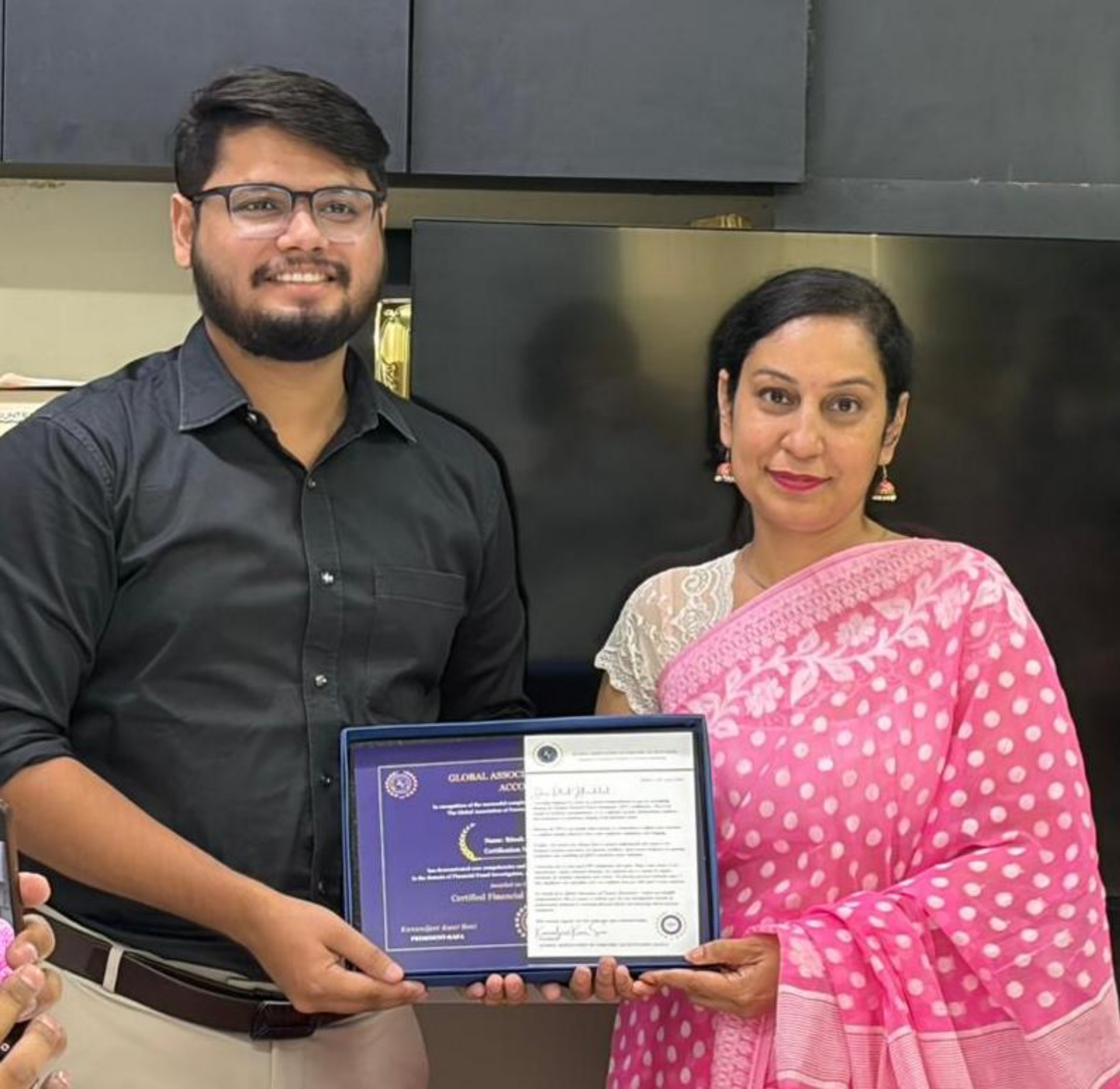
Against this backdrop, the Global Association of Forensic Accountants (GAFA) has joined hands with IIRIS Consulting to develop the Certified AI Investigator (CAII) programme, bringing artificial intelligence directly into the professional investigation curriculum. The programme is positioned at the intersection of forensic accounting, fraud investigation, financial intelligence and applied technology.

The initiative reflects a broader shift in the investigation profession. Fraudsters are increasingly using digital platforms, automated processes, complex transaction structures and technology to conceal financial activity. Investigators, consequently, need to be able to work with data at scale and use technology without losing the fundamentals of evidence-based investigation.

The CAII programme is built around practical application rather than AI theory alone. The current programme includes 48 hours of live instruction across eight modules and eight working platforms, with applications covering AI-assisted investigation, data and transaction analysis, fraud detection and investigative intelligence.

What makes the initiative particularly relevant is its emphasis on the investigator remaining in control. AI can identify patterns and accelerate analysis, but it cannot independently establish whether an unusual transaction is fraudulent, determine the credibility of evidence or replace professional skepticism. Those decisions still require human judgment, corroboration and investigative reasoning.

The collaboration also brings complementary capabilities. The skill enhancement capabilities of Global Association of Forensic Accountants (GAFA) operating across forensic accounting, fraud investigation, AML and financial-crime education, and IIRIS Consulting’s intelligence capabilities across risk advisory, security, intelligence, forensics and due diligence, with operations spanning India, MENA, Asia and Europe.

The development points to a larger transformation within forensic investigation: the next generation of professionals may need to be equally comfortable reading financial statements, interrogating datasets and questioning AI-generated findings. As financial crime continues to evolve, the advantage may increasingly belong not to investigators who simply use AI, but to those who understand when to use it, how to challenge it and how to turn its output into defensible investigative evidence.

Tata Safari: A Premium Family SUV Designed for Comfortable Long-Distance Travel

A Family SUV Built Around Space and ComfortFamily travel often means carrying more passengers, luggage and expectations. For customers planning regular road trips or looking for a spacious SUV for everyday family use, seating capacity, cabin comfort and practicality can become important purchase considerations.

The Tata Safari is positioned as a premium SUV with three-row seating, offering 6- and 7-seater configurations depending on the version. Its larger SUV format makes it relevant for families who want additional passenger space and a comfortable environment for longer journeys.

Designed for Long-Distance Travel

A long drive can involve city traffic, open highways and changing road conditions. A family SUV therefore needs to combine performance with a comfortable driving experience.

The Tata Safari has been offered with a 2.0-litre turbocharged diesel engine producing 170 PS and 350 Nm, with manual and automatic transmission options depending on the variant.

Customers should confirm the latest variant-wise specifications, equipment and availability with an authorised Tata Motors dealer before booking.

Three Rows for Growing Families

One of the key reasons customers consider a larger SUV is the flexibility provided by three rows of seating.

The Tata Safari can accommodate larger families and groups while providing the practicality expected from a premium SUV. The third row can be particularly useful when additional passengers need to travel together, while the cabin layout is designed around passenger comfort.

For families that frequently travel together, a three-row SUV can be useful for holidays, weekend trips, airport travel and other journeys where additional seating is required.

Technology and Convenience on the Road

Modern family SUVs are expected to provide more than space. Infotainment, connectivity and convenience features have become an important part of the in-car experience.

The Tata Safari has been offered with features such as a large touchscreen infotainment system, configurable digital instrumentation, connected-car functions and premium audio options, depending on the variant.

Feature availability can vary between variants, so customers should compare the current specifications of the versions they are considering.

Safety as an Important Family Consideration

Safety remains a key consideration when selecting a family vehicle, particularly for customers who regularly travel on highways.

The Tata Safari has been equipped with a range of safety and driver-support technologies, with equipment varying by variant. Tata Motors has highlighted features and systems designed to support occupants and the driver across different driving situations.

Customers should review the latest safety specification of their preferred variant and discuss the available equipment with the dealership before purchase.

Tata Safari for Delhi-NCR Customers

Customers searching for a Tata Safari showroom in Delhi-NCR can explore the vehicle through Garud Tata Motors.

Tata Cars Showroom - Palam, Dwarka provides access for customers from Palam, Dwarka and nearby areas.

Tata Cars Showroom - Najafgarh serves customers from Najafgarh and surrounding locations.

Tata Cars Showroom - Narela provides another option for customers in Narela and nearby areas.

Customers can enquire about available variants, features, colours, pricing and test-drive opportunities at the nearest showroom.

Why a Tata Safari Test Drive Matters

A larger SUV should ideally be experienced before purchase. A test drive gives customers the opportunity to understand the vehicle's size, driving position, visibility, ride comfort, cabin layout and overall driving experience.

Customers interested in a Tata Safari test drive can contact Garud Tata Motors and enquire about available opportunities. A test drive can also help families assess access to the second and third rows and the practicality of the cabin for their typical journeys.

Service Support for Tata Safari Owners

The ownership experience continues after the vehicle is delivered. Regular maintenance and servicing are important for keeping a vehicle in appropriate operating condition.

Garud Tata Motors provides service support through Tata Cars Service Centre - Matiala, Dwarka and Tata Cars Service Centre - Najafgarh.

Safari owners can contact the relevant service centre for applicable scheduled servicing, maintenance and after-sales requirements.

A Premium SUV for the Complete Family Journey

The Tata Safari's appeal comes from the combination of three-row practicality, performance, comfort, technology and safety-focused equipment.

For customers looking for a premium family SUV in Delhi-NCR, the Safari is worth exploring through a showroom visit and test drive. Comparing variants against individual family and travel requirements can help customers select the configuration that suits them best.

About Garud Tata Motors

Garud Tata Motors provides Tata passenger vehicle sales and service support across its Delhi-NCR network. Customers can explore Tata cars and enquire about test drives at Tata Cars Showroom - Palam, Dwarka, Tata Cars Showroom - Najafgarh and Tata Cars Showroom - Narela. Service support is available through Tata Cars Service Centre - Matiala, Dwarka and Tata Cars Service Centre - Najafgarh.

Contact Garud Tata Motors

Website: www.garudtata.com

 Sales Contact: 9217371211

 Service Contact: 9217371211


उत्तर प्रदेश को आपदा-रोधी राज्य के रूप में और सुदृढ़ करने के लिए राज्यव्यापी अभ्यास आयोजित
- *भूकंप, रासायनिक एवं अग्नि आपदाओं से निपटने की तैयारियों को परखने के लिए सिम्पोजियम सम्पन्न*

- *18 सितम्बर को प्रदेश की 157 तहसीलों में होगी राज्यव्यापी मेगा मॉक एक्सरसाइज*

- *विभिन्न विभागों, विशेषज्ञ संस्थाओं एवं आपदा प्रतिक्रिया बलों ने साझा किए अनुभव; समन्वित एवं त्वरित प्रतिक्रिया तंत्र को और सुदृढ़ करने पर जोर*

लखनऊ। उत्तर प्रदेश में भूकंप, औद्योगिक (रासायनिक) एवं अग्नि जैसी बहु-जोखिम वाली आपदाओं से प्रभावी ढंग से निपटने की तैयारियों, प्रतिक्रिया क्षमता एवं अंतर-विभागीय समन्वय को मजबूत करने के उद्देश्य से उत्तर प्रदेश राज्य आपदा प्रबंधन प्राधिकरण द्वारा आयोजित दो दिवसीय Symposium-cum-Table Top Exercise (TTEx) – State Mock Exercise on Earthquake, Chemical and Fire Hazards आज यूपी एसडीएमए भवन, गोमती नगर विस्तार, लखनऊ में सम्पन्न हुआ।
कार्यक्रम के प्रथम दिन उद्घाटन सत्र में UP SDMA  के उपाध्यक्ष लेफ्टिनेंट जनरल योगेंद्र डिमरी, PVSM, AVSM, VSM  (सेवानिवृत्त) ने कहा कि इस प्रकार की अभ्यासों का उद्देश्य राज्य, मण्डल एवं जनपद स्तर पर आपदा प्रतिक्रिया तंत्र की वास्तविक समय में कार्यक्षमता को परखना, संभावित कमियों की पहचान करना तथा उन्हें समयबद्ध रूप से दूर करना है। उन्होंने कहा कि अभ्यास केवल तैयारियों के आकलन तक सीमित नहीं है, बल्कि इसका उद्देश्य एकीकृत, त्वरित एवं प्रभावी आपदा प्रतिक्रिया व्यवस्था के माध्यम से प्रदेश की आपदा-रोधी क्षमता एवं Resilience को और मजबूत करना है।
प्रमुख सचिव, राजस्व विभाग, श्रीमती अपर्णा यू., IASus ने कहा कि प्रदेश की आपदा प्रबंधन व्यवस्था का लक्ष्य केवल आपदा के बाद राहत पहुंचाना नहीं, बल्कि आपदा से पूर्व जोखिम को कम करना, समय रहते तैयारी सुनिश्चित करना तथा आपदा की स्थिति में त्वरित एवं प्रभावी कार्रवाई के माध्यम से जन-धन की हानि को न्यूनतम करना है।
अपर पुलिस महानिदेशक, उत्तर प्रदेश अग्निशमन एवं आपातकालीन सेवाएँ, पद्मजा चौहान, IPSus ने कहा कि आपदा प्रबंधन में प्रशासन, पुलिस, अग्निशमन, स्वास्थ्य, परिवहन, सुरक्षा एवं आपदा प्रतिक्रिया बलों की क्षमताओं को एकीकृत करते हुए Whole of Government एवं Whole of Society  दृष्टिकोण को और मजबूत किए जाने पर बल दिया।
पुलिस महानिदेशक, पी.ए.सी. उत्तर प्रदेश, डॉ. आलोक सिंह, IPSus ने बताया कि आपदा के समय प्रत्येक सेकंड महत्वपूर्ण होती है। प्रभावी प्रतिक्रिया के लिए संबंधित विभागों एवं एजेंसियों की भूमिका, कमांड एवं कंट्रोल व्यवस्था तथा संसाधनों की उपलब्धता पहले से स्पष्ट और समन्वित होना आवश्यक है।
राष्ट्रीय आपदा प्रबंधन प्राधिकरण (NDMA) की सदस्या सुश्री रीता मिसल ने कहा कि उत्तर प्रदेश आपदा प्रबंधन के क्षेत्र में देश के अग्रणी राज्यों में है। उन्होंने कहा कि आपदाएं केवल आपातकालीन प्रतिक्रिया की चुनौती नहीं हैं, बल्कि वेपूर्व तैयारी, जोखिम न्यूनीकरण, संस्थागत क्षमता तथा समन्वित नेतृत्व की भी कसौटी हैं।
लेफ्टिनेंट जनरल अनिंद्य सेनगुप्ता, PVSM, UYSM, AVSM, YSM, आर्मी कमांडर, सेंट्रल कमांड, भारतीय सेनाने आधुनिक तकनीक, अर्ली वार्निंग, त्वरित संचार, विशेषज्ञ संसाधनों एवं फील्ड स्तर की क्षमताओं को आपदा तैयारी की महत्वपूर्ण ताकत बताते हुए मिलिट्री - सिविल कोऑर्डिनेशन पर बल दिया और इस्के निरंतर सुदृढ़ीकरण की आवश्यकता पर जोर दिया।
अभ्यास में उत्तर प्रदेश के भूकंप की दृष्टि से संवेदनशील 34 जनपदोंको केंद्रित किया गया। इन जनपदों केअपर जिलाधिकारी (वित्त एवं राजस्व), उप जिलाधिकारी एवं आपदा विशेषज्ञों ने सक्रिय रूप से प्रतिभाग किया। इसके अतिरिक्त 11 मण्डलों से पुलिस, स्वास्थ्य तथा अग्निशमन एवं आपातकालीन सेवाओं के वरिष्ठ अधिकारियोंने भी सहभागिता की। राज्य एवं राष्ट्रीय स्तर के संबंधित विभागों, विशेषज्ञ संस्थाओं, आपदा प्रतिक्रिया बलों एवं अन्य हितधारकों की भागीदारी के माध्यम से विभिन्न आपदा परिस्थितियों में त्वरित निर्णय लेने, संसाधनों के प्रभावी उपयोग, सूचना के निर्बाध आदान-प्रदान तथा समन्वित प्रतिक्रियाकी व्यवस्थाओं को परखा गया।
दो दिवसीय कार्यक्रम के प्रथम दिन आयोजित सिम्पोजियम में भूकंप, औद्योगिक (रासायनिक) एवं अग्नि आपदाओं से जुड़े विभिन्न पहलुओं पर NDMA, DRDE-DRDO, NCS, UP SDMA, उत्तर प्रदेश फायर एवं इमरजेंसी सर्विसेज, भारतीय रेल, NDRF, स्वास्थ्य विभाग तथा भारतीय सेना के सेंट्रल कमांड सहित विभिन्न संस्थाओं के विशेषज्ञों एवं अधिकारियों ने अनुभव, तकनीकी जानकारी एवं सर्वाेत्तम कार्यप्रणालियां साझा कीं। सिम्पोजियम के दौरान अग्नि एवं औद्योगिक आपदाओं से संबंधित केस स्टडीज भी प्रस्तुत की गईं। प्रथम दिन एक्सरसाइज का संचालन प्राधिकरण के विशेष कार्याधिकारी श्री मान्धाता प्रताप सिंह द्वारा किया गया।
कार्यक्रम के दूसरे दिन आज टेबल टॉप एक्सरसाइज में आपदा प्रतिक्रिया व्यवस्था परखी गयी। TTEx के माध्यम से भूकंप, रासायनिक एवं अग्नि आपदाओं से संबंधित विभिन्न परिदृश्यों में जनपदों, विभागों एवं आपदा प्रतिक्रिया बलों की तैयारी, निर्णय लेने की क्षमता, कमांड एवं कंट्रोल तथा अंतर-विभागीय समन्वय का परीक्षण किया गया। अभ्यास के दौरान भूकंप के तत्काल बाद की कार्रवाई, विद्यालयों, अस्पतालों एवं प्रशासनिक कार्यालयों की स्थिति, रासायनिक गैस रिसाव एवं तरल रसायन के फैलाव तथा अस्पतालों, विद्यालयों एवं बहुमंजिला भवनों में अग्नि आपात स्थिति जैसे परिदृश्यों पर प्रतिभागियों द्वारा प्रतिक्रिया रणनीतियों पर चर्चा की गयी। टेबल टॉप एक्सरसाइज का संचालन प्राधिकरण के प्रोजेक्ट कोऑर्डिनेटर- प्रशिक्षण प्रवीन किशोर द्वारा किया गया।
अभ्यास के अगले चरण में 18 सितम्बर 2026 को राज्यव्यापी मेगा मॉक एक्सरसाइज आयोजित की जाएगी। 34 जनपदों की 157 तहसीलों में विभिन्न चिन्हित स्थलों पर एक साथ भौतिक रूप से आयोजित होने वाला यह अभ्यास प्रदेश की भूकंप संबंधी तैयारियों एवं बहु-स्तरीय आपदा प्रतिक्रिया तंत्र की वास्तविक परिस्थितियों में व्यापक परख करेगा। इस दौरान सभी संबंधित जनपदों में जिला आपातकालीन संचालन केंद्र (DEOC) एवं Incident Response Teams (IRT) को सक्रिय किया जाएगा। इसके माध्यम से कमांड, नियंत्रण, सूचना संप्रेषण एवं अंतर-विभागीय समन्वय की व्यवस्थाओं का परीक्षण किया जाएगा। प्रत्येक जनपद मेंफील्ड हॉस्पिटल स्थापित कर बड़े पैमाने पर घायलों के त्वरित उपचार, ट्रायेज, रेफरल एवं चिकित्सा सेवाओं की तैयारियों को भी परखा जाएगा। मॉक एक्सरसाइज के दौरान भूकंप के पश्चात भवनों से सुरक्षित निकासी, ध्वस्त संरचनाओं में खोज एवं बचाव, अग्निकांड, गैस/रासायनिक रिसाव एवं अन्य संभावित द्वितीयक आपदा परिस्थितियों का सजीव अभ्यास किया जाएगा। इन परिदृश्यों को विद्यालयों, मॉल, कार्यालयों, बहुमंजिला भवनों तथा औद्योगिक इकाइयों-विशेषकर MAH एवं Non-MAH  इकाइयों में व्यावहारिक रूप से प्रदर्शित एवं अभ्यासित किया जाएगा। अभ्यास को और अधिक व्यापक एवं यथार्थपरक बनाने के लिए भारतीय रेल द्वारा भूकंप के कारण ट्रेन के पटरी से उतरने (Derailment) की विशेष आपदा परिस्थिति का भी सिमुलेशन किया जाएगा। इसमें खोज एवं बचाव, घायलों की निकासी, चिकित्सा सहायता, राहत तथा विभिन्न संबंधित एजेंसियों के बीच समन्वित प्रतिक्रिया की क्षमता का परीक्षण किया जाएगा। पूरे मेगा मॉक एक्सरसाइज की UP SDMA  द्वारा वीडियो कॉन्फ्रेंसिंग के माध्यम से राज्य स्तर से लाइव मॉनिटरिंग एवं कमांड-एंड-कंट्रोल किया जाएगा।
Who Really Makes Money in India’s F&O Market?

Smart Money Club Is Asking the Harder Question

For years, the main F&O headline has been simple: more than 90% of retail traders lose money every year. SEBI’s FY25 study says around 91% of individual traders lost. But that is only one side of the story. The harder question is who is making the money.

SEBI’s FY24 data answers it. Individual traders lost about ₹41,500 crore in gross F&O P&L, while proprietary desks and FPIs together made around ₹61,000 crore, and 96% of proprietary-trader profits and 97% of FPI profits came from algo-driven entities. That is who retail traders were competing against. Even individuals who used algos did not escape: as a group, they still lost around ₹13,900 crore on the same basis.

Put together, F&O looks less like a fair game for retail and more like a transfer: individual traders keep entering and mostly keep losing, while the profits keep showing up with professional desks and algo-driven players. That does not mean F&O was created to take money from retail traders. But the money has been moving in one direction for years: away from individuals and towards professional desks.

This is one of the reasons Pranjal Rastogi and CA Harshitha Iyer took Smart Money Club in a different direction. The Surat-based SEBI-registered firm focuses on equity swing and positional trading and has deliberately stayed away from teaching F&O and intraday trading despite steady demand for both.

Their concern was where a beginner starts. If almost all the profits on the professional side come from algos, why are beginners still pushed towards F&O as their first way to earn trading?

For a lot of people entering the market today, F&O is where trading begins rather than where it arrives after years of experience. Options look easy to access, the capital required can look small, and social media is full of gurus promising quick money. Someone who has barely studied a stock can open an account and start trading options almost immediately.

What makes this worse is how F&O is sold to beginners. For an education business, it is the easier product to market: more trades, more screenshots, more action and a simpler promise of quick money. And when people lose, the blame usually comes back to them. If you end up on the losing side, which SEBI’s data says happens to roughly nine out of ten individual traders, the explanation is often that you lacked “discipline” or could not “control your emotions”. Far less attention goes to the fact that you were sent into a market where the other side is often running far more sophisticated systems.

Rastogi and Iyer had already seen how this content cycle works while building Captum, the financial-markets channel that crossed 100,000 subscribers before Smart Money Club took shape. The content that travelled fastest was usually built around a strong hook, a quick takeaway of something that kept people watching till the end. It worked for reach. Teaching someone to trade needed something different, and that shaped what Smart Money Club would focus on.

Smart Money Club was built around swing and positional trading from the start, for people with jobs, businesses and full-time careers: people who could not make the market the centre of their day. For that audience, intraday trading and F&O made little sense. Both require much closer tracking of the market and, with leverage and expiry involved, mistakes get expensive quickly. Swing and positional trading fit better. Trades play out over days or weeks, which gives the trader time to study the overall market, choose the sector and stock, plan the entry and risk, and then manage the position without sitting in front of the screen all day.

That choice set the order of the entire SMC process: market first, then sectors, stock selection, setups, entries, risk and trade management. The same sequence runs through its weekly Live Inner Circle sessions, recorded course videos and its in-house platform, ProScreener.

The firm has worked with more than 16,000 people through its workshops and programmes, most of them working professionals and business owners. For them, a trading style that needs constant decisions through the day would not fit real life. Smart Money Club chose to build around real reality instead of around what was easiest to sell.

Swing trading does not remove risk, and SMC does not present it as an easier route to profits. Stocks can fall, setups fail and traders still make mistakes. The difference is the type of game being played. There is no weekly expiry forcing a position to resolve within a few hours or days. A trader can take time finding the right stock, define the risk before entering and stay out when the market is not offering a trade that fits.

India has made trading easy to access, and that is a good thing. But easy access to a sophisticated product does not make the product simple. If SEBI’s numbers show retail traders losing while professional and algo-driven players take home most of the profits, trading education may need to reconsider where the first lesson begins.

Smart Money Club’s answer is straightforward: a retail trader does not need to become a weaker version of a professional trading desk. They need a style of trading that fits the life they have.

CA Harshitha Iyer and Pranjal Rastogi are co-founders of Smart Money Club. Wealth Vidhya is a SEBI Registered Research Analyst (INH000028352). Views are personal. Investments in the securities market are subject to market risks. Read all related documents carefully before investing.

The People Behind the Spaces: How The KariGhars Built a Design-First Culture

A beautifully designed home may appear effortless when it is finally completed. Behind that finished space, however, are countless decisions involving design, materials, detailing, engineering, execution and coordination.

For The KariGhars, the people responsible for those decisions are at the heart of the organisation.

Founded by Abhishek Chadha and Aashita Chadha in 2009, The KariGhars has grown into a top interior design company in Bangalore with a multidisciplinary team involved in creating and executing residential spaces. Vinayak Chadha serves as the company’s Managing Director.

The company’s approach to its team is notably collaborative. According to The KariGhars, hierarchy takes a back seat to expertise, creativity and communication. Designers, architects, contractors and other stakeholders work together through discussions and brainstorming sessions during projects.

This collaborative model is particularly important in luxury residential interiors.

A high-end home is rarely the result of one person’s creative vision alone. A designer may establish the aesthetic direction, but translating that concept into reality requires technical planning, material knowledge, craftsmanship, project management and careful execution.

That is why The KariGhars places its designers at the centre of the project journey.

The company describes its designers as the “faces, voices and storytellers” behind its projects. Rather than treating design as a standardised output, the organisation encourages individual designers to bring their own creative perspectives while working within a collaborative project environment.

This philosophy is visible across the company’s portfolio.

The KariGhars works across different residential formats, from apartments and penthouses to villas and large-format homes. Its services cover spaces such as living rooms, bedrooms, modular kitchens, wardrobes, dining areas, pooja rooms, home offices, bathrooms and balconies, alongside custom furniture and complete turnkey execution.

The scale of the organisation has also evolved with its project portfolio. The company currently highlights a team of more than 650 members and over 8,000 completed projects.

For a homeowner, this scale can translate into access to a broader range of expertise while still allowing the design to remain personalised.

The team’s role becomes particularly important during execution. Materials must be sourced and coordinated, dimensions need to be accurate, finishes must match the approved design, and multiple trades have to work in sequence. The smallest detail can influence the final appearance of a premium residence.

The KariGhars’ experience across thousands of homes provides its designers and execution teams with exposure to different architectural layouts, lifestyles, materials and design requirements.

Ultimately, the company’s work demonstrates an important principle of contemporary interior design: exceptional spaces are created not only through exceptional ideas, but through the people who have the expertise and discipline to turn those ideas into reality.

For The KariGhars, the team is not simply a support system behind the brand. It is an integral part of the design philosophy itself.

PGT-A Genetic Screening in Fertility Care

Genetic Screening (PGT-A) in Modern Fertility Care: Who Actually Needs It? 

When a woman begins fertility treatment, the number of decisions can feel overwhelming. Should you try medicines first? Is IUI enough? When is IVF the right step? And if IVF is advised, should you also test embryos through PGT-A? Many patients hear about genetic screening and assume it is something every IVF cycle should include. In reality, PGT-A can be helpful in selected situations, but it is not a universal requirement for every woman or couple trying to conceive.


At ARC Fertility Hospitals, conversations around PGT-A are usually guided by one central question: will this test meaningfully improve decision-making for this patient? That distinction matters. A test can be scientifically advanced, but it should still be used thoughtfully, with clear counselling about benefits, limitations, emotional impact, and cost.


What Is PGT-A?


PGT-A stands for Preimplantation Genetic Testing for Aneuploidy. It is a test performed during an IVF cycle to check whether embryos have the expected number of chromosomes. Human embryos should usually have 46 chromosomes. If an embryo has missing or extra chromosomes, it may fail to implant, lead to miscarriage, or result in certain chromosomal conditions.


In a typical IVF cycle with PGT-A, eggs are collected, fertilised in the laboratory, and embryos are grown for a few days until they reach the blastocyst stage. A few cells are then carefully biopsied from the outer layer of the embryo, which later forms the placenta. These cells are sent for genetic analysis while the embryo is usually frozen. Once results are available, doctors can prioritise embryos that are chromosomally suitable for transfer.


It is important to understand what PGT-A does not do. It does not guarantee pregnancy. It does not check every possible genetic disease. It is different from PGT-M, which is used when there is a known single-gene disorder in the family. PGT-A mainly helps with chromosomal screening and embryo selection.


Why Chromosomes Matter in IVF


Many women blame themselves when an IVF cycle fails or when a pregnancy ends early. But in a significant number of cases, the reason is biological rather than behavioural. Embryos with chromosomal imbalance often look normal under the microscope, yet may not have the ability to continue developing.


This is one reason PGT-A became part of modern fertility care. It offers extra information beyond embryo appearance. However, more information is not always equal to better outcomes for everyone. The usefulness of PGT-A depends strongly on age, fertility history, embryo number, previous miscarriages, and the reason IVF is being done.


Who May Actually Benefit from PGT-A?


Women of advanced reproductive age


As women age, especially after 35, the proportion of eggs and embryos with chromosomal abnormalities tends to increase. This does not mean pregnancy is impossible, but embryo selection becomes more complex. For women in their late thirties or forties, PGT-A may help identify embryos with a better chromosomal profile, potentially reducing the chance of transferring embryos unlikely to implant.


Couples with recurrent pregnancy loss


Repeated miscarriage can be emotionally exhausting. When miscarriages are suspected to be linked to chromosomal abnormalities, PGT-A may be considered as part of a broader evaluation. It should not replace other investigations, such as uterine assessment, hormonal review, clotting-related evaluation when indicated, or parental karyotyping in selected cases. But it may help reduce uncertainty around embryo chromosomal status.


Repeated IVF failure despite good-looking embryos


Some patients have transferred embryos that appeared strong in the laboratory but did not implant. In such cases, doctors look at multiple possibilities: embryo genetics, uterine receptivity, sperm quality, stimulation response, endometrial factors, and medical conditions. PGT-A may be discussed when embryo chromosomal status is a likely missing piece in the picture.


Patients with many embryos and a need to prioritise transfer


In some IVF cycles, patients may have several blastocysts. Choosing which embryo to transfer first can become important, especially when time, emotional energy, or previous failed transfers are concerns. PGT-A may help rank embryos for transfer, though it still cannot predict implantation with certainty.


Who May Not Need PGT-A?


PGT-A is not automatically needed for every young woman undergoing IVF. If a woman is younger, has a good prognosis, no miscarriage history, and only a small number of embryos, the benefit may be limited. In some cases, testing may add cost and waiting time without clearly improving the chance of having a baby.


It may also be less useful when there are very few embryos available. If only one embryo forms, some patients may prefer transfer after counselling rather than testing, especially because PGT-A cannot improve the embryo itself. It can only provide information about chromosomal status based on sampled cells.


This is where personalised fertility counselling matters. A woman should not feel pressured into PGT-A simply because it sounds advanced. The better question is: will the result change the treatment plan?


PGT-A, IUI, and IVF: Where Does It Fit?


PGT-A can only be done as part of IVF because embryos must be created in the laboratory before testing. It cannot be done with IUI. For women deciding between IUI and IVF, doctors first consider age, fallopian tube status, sperm parameters, ovulation, duration of infertility, and previous treatment history.


For example, a younger woman with open tubes, mild ovulation issues, and a short duration of infertility may not need IVF immediately. IUI may be reasonable. But a woman over 38 with a long infertility history, low ovarian reserve, or previous miscarriages may be counselled differently. If IVF is chosen, PGT-A may then enter the discussion depending on the full clinical picture.


Cost and Time Considerations


PGT-A adds cost to an IVF cycle because it involves embryo biopsy, freezing, laboratory genetic testing, and later frozen embryo transfer planning. It may also extend the timeline because embryos are usually not transferred immediately in the same cycle. For many women, this waiting period can feel emotionally heavy, especially after already going through injections, scans, egg retrieval, and fertilisation updates.


Cost should be discussed openly before starting treatment. A responsible fertility team will explain whether PGT-A is strongly recommended, optional, or unlikely to add much value in your case. Patients should feel comfortable asking: Why am I being advised this test? What will we do differently based on the result? What are the alternatives if we do not test?


What Are the Limitations of PGT-A?


PGT-A is a screening test, not a promise. Embryos reported as suitable still may not implant. Embryos can also show mosaic results, meaning tested cells may contain a mixture of normal and abnormal chromosomal patterns. Mosaic embryo decisions require careful counselling and should not be reduced to a simple yes or no.


There is also the reality that PGT-A tests a small sample of cells from the embryo’s outer layer. Although technology has improved, interpretation still needs expertise. This is why embryo testing should always be paired with genetic counselling and fertility specialist guidance, not treated as a standalone shortcut.


How ARC Fertility Hospitals Approach the Decision


At ARC Fertility Hospitals, PGT-A is considered within the broader fertility journey, not as an isolated add-on. Doctors assess age, ovarian reserve, semen analysis, previous pregnancy history, embryo development, ultrasound findings, and emotional readiness. For women comparing centres and trying to understand advanced IVF options, speaking with specialists at the Best IVF centre in Hyderabad can help clarify whether embryo genetic screening is relevant to their situation.


The goal is not to test more embryos for the sake of technology. The goal is to make embryo transfer decisions more informed when the clinical situation justifies it.


Questions to Ask Before Saying Yes to PGT-A


Before choosing PGT-A, ask your fertility doctor a few practical questions. Is my age or fertility history a strong reason for testing? How many embryos are likely to reach the blastocyst stage? Will testing change which embryo is transferred first? What happens if all embryos are abnormal or mosaic? What are the costs, timelines, and emotional implications?


These questions are not signs of doubt. They are signs of informed participation. Fertility treatment often feels like handing your future to medical science, but good care should bring you into the decision-making process with clarity and respect.


The Bottom Line


PGT-A is a valuable tool in modern IVF, especially for women of advanced reproductive age, those with recurrent miscarriages, repeated IVF failure, or multiple embryos where selection is difficult. But it is not necessary for everyone. The right use of PGT-A depends on whether it can answer a meaningful clinical question in your treatment plan.


If you are considering IVF and feel confused about embryo testing, the most helpful next step is a personalised fertility evaluation. With the right explanation, PGT-A becomes less frightening and less mysterious. It becomes what it should be: one possible tool, used carefully, to support better fertility decisions.



Trailer Driving School in Kerala: Master the Reverse That Fails Most Candidates, on A2Z's Own Trailers

A2Z International Heavy Equipment Institute, training drivers and operators in Kerala since 1978, runs normal and container trailer courses on its own vehicles and practice ground, with 19 branches and a main campus at Willingdon Island, Kochi.A2Z International Heavy Equipment Institute runs two trailer courses, one for normal trailers and one for container trailers, aimed at drivers who want work at ports, with logistics companies and in heavy haulage in India and the Gulf. The institute says most candidates underestimate the same two things: the order in which the licences have to be earned, and reversing an articulated vehicle.

The licence is a ladder

A trailer licence is not a standalone licence. It is an endorsement added to an existing heavy vehicle licence, and it sits at the top of a sequence. A driver starts with an LMV licence, adds a transport or commercial endorsement, moves up to a heavy goods vehicle licence (HMV or HTV), and only then qualifies for the trailer endorsement that covers articulated and multi-axle vehicles. Each step generally requires holding the previous one for a qualifying period set by the RTO. Commercial driving in Kerala also needs a separate driver's badge.

"Half the people who call us have planned around a timeline they read online, and then find their licence dates don't qualify them yet," said Aravind, Executive Director of A2Z International Heavy Equipment Institute. "The first thing any trailer driving school in Kerala should do is look at what you hold and when you got it. Then we can tell you your real route, and it saves people months."

What the practical test asks for

The trailer practical tests five things: a pre-trip inspection including the coupling, coupling and uncoupling, controlled manoeuvring and turning with the articulation, reversing, and safe road handling under load. Reversing is where most candidates fail. In reverse, an articulated trailer swings the opposite way to the steering input.

"People expect the highway to be the hard part," Aravind said. "Then you ask a man to reverse a trailer into a bay, and for the first week he turns the wheel the wrong way every time. You can't learn that from a video. You need hours on a real trailer with an instructor next to you telling you what your hands are doing."

Two courses on one owned fleet

A2Z trains on trailers it owns, on a dedicated practice ground, instead of booking time on hired vehicles. Students can choose normal trailer training or container trailer training. Both follow a seven-stage curriculum: vehicle parts, controls and pre-trip checks; coupling and uncoupling; reversing, turning and manoeuvring; container handling and load securing; highway driving, gradients and braking; daily checks and basic maintenance; and licence and assessment preparation.

Graduates receive ISO and Operator Card certification along with guidance on heavy transport licensing. The main campus at Willingdon Island has a hostel for students who travel in.

A trailer driving school in Kerala with its own vehicles can give students more practice. On a hired trailer, time runs out when the booking ends. On an owned one, students keep practising until the reverse is under control.

An institute of firsts since 1978

A2Z opened in 1978. It is the only JCB-authorised operator training institute in Kerala and the state's only fixed tower crane training institute, and it was the first in Kerala to offer imported Zoomlion crane operator training. It owns every machine and vehicle it trains on and works with more than 527 placement partner companies.

Where trailer drivers work

The institute describes trailer driving as one of the better-paying commercial driving categories. Demand comes from Kerala's ports, from logistics corridors across India, and from heavy haulage in the Gulf. Graduates train for roles as trailer drivers, container and port trailer drivers, transport and logistics drivers, and heavy vehicle drivers in India and the Gulf.

Gulf haulage employers usually require a practical trade test. A2Z runs that test at its own Heavy Equipment International Trade Test Centre at Willingdon Island, following the skill verification requirements of GCC countries including Saudi Arabia, the UAE, Qatar and Kuwait. Candidates train and test on the same trailers.

A2Z provides training, assessment and placement assistance. It does not recruit for overseas jobs and refers candidates who want to work abroad to licensed recruiting agents.

Who can join

Entry depends on the licence ladder rather than on education. The minimum age follows RTO norms for heavy vehicles, which is higher than the age for a car licence. Candidates need basic physical fitness and government photo ID and proof of address, and an existing light vehicle licence helps.

Anyone comparing a trailer driving school in Kerala can ask three things: whether the school owns its trailers, whether it offers container trailer training as well as normal trailer training, and whether it can run the trade test that Gulf employers ask for.

Course details and eligibility for A2Z's trailer driving school in Kerala are at https://a2zinstitute.in/courses/trailer-operator-training/

For fees, batch dates and the nearest of the 19 branches, send the admissions team details of the licence you hold by phone or WhatsApp.


About A2Z International Heavy Equipment Institute

Founded in 1978, A2Z International Heavy Equipment Institute is an ISO 9001:2015 certified heavy equipment and heavy driving training institute in Kerala, India. It is the only JCB-authorised operator training institute in Kerala and the state's only fixed tower crane training institute, and it was the first in Kerala to offer imported Zoomlion crane operator training. The institute owns all of its training machines. It runs a Heavy Equipment International Trade Test Centre at Willingdon Island, Kochi, and works with more than 527 placement partner companies. Website: https://a2zinstitute.in

Media Contact

A2Z International Heavy Equipment Institute

Willingdon Island, Kochi, Kerala, India

Admissions: +91 85900 85591

Web: https://a2zinstitute.in

Trailer Driving School in Kerala: Master the Reverse That Fails Most Candidates, on A2Z's Own Trailers

A2Z International Heavy Equipment Institute, training drivers and operators in Kerala since 1978, runs normal and container trailer courses on its own vehicles and practice ground, with 19 branches and a main campus at Willingdon Island, Kochi.A2Z International Heavy Equipment Institute runs two trailer courses, one for normal trailers and one for container trailers, aimed at drivers who want work at ports, with logistics companies and in heavy haulage in India and the Gulf. The institute says most candidates underestimate the same two things: the order in which the licences have to be earned, and reversing an articulated vehicle.

The licence is a ladder

A trailer licence is not a standalone licence. It is an endorsement added to an existing heavy vehicle licence, and it sits at the top of a sequence. A driver starts with an LMV licence, adds a transport or commercial endorsement, moves up to a heavy goods vehicle licence (HMV or HTV), and only then qualifies for the trailer endorsement that covers articulated and multi-axle vehicles. Each step generally requires holding the previous one for a qualifying period set by the RTO. Commercial driving in Kerala also needs a separate driver's badge.

"Half the people who call us have planned around a timeline they read online, and then find their licence dates don't qualify them yet," said Aravind, Executive Director of A2Z International Heavy Equipment Institute. "The first thing any trailer driving school in Kerala should do is look at what you hold and when you got it. Then we can tell you your real route, and it saves people months."

What the practical test asks for

The trailer practical tests five things: a pre-trip inspection including the coupling, coupling and uncoupling, controlled manoeuvring and turning with the articulation, reversing, and safe road handling under load. Reversing is where most candidates fail. In reverse, an articulated trailer swings the opposite way to the steering input.

"People expect the highway to be the hard part," Aravind said. "Then you ask a man to reverse a trailer into a bay, and for the first week he turns the wheel the wrong way every time. You can't learn that from a video. You need hours on a real trailer with an instructor next to you telling you what your hands are doing."

Two courses on one owned fleet

A2Z trains on trailers it owns, on a dedicated practice ground, instead of booking time on hired vehicles. Students can choose normal trailer training or container trailer training. Both follow a seven-stage curriculum: vehicle parts, controls and pre-trip checks; coupling and uncoupling; reversing, turning and manoeuvring; container handling and load securing; highway driving, gradients and braking; daily checks and basic maintenance; and licence and assessment preparation.

Graduates receive ISO and Operator Card certification along with guidance on heavy transport licensing. The main campus at Willingdon Island has a hostel for students who travel in.

A trailer driving school in Kerala with its own vehicles can give students more practice. On a hired trailer, time runs out when the booking ends. On an owned one, students keep practising until the reverse is under control.

An institute of firsts since 1978

A2Z opened in 1978. It is the only JCB-authorised operator training institute in Kerala and the state's only fixed tower crane training institute, and it was the first in Kerala to offer imported Zoomlion crane operator training. It owns every machine and vehicle it trains on and works with more than 527 placement partner companies.

Where trailer drivers work

The institute describes trailer driving as one of the better-paying commercial driving categories. Demand comes from Kerala's ports, from logistics corridors across India, and from heavy haulage in the Gulf. Graduates train for roles as trailer drivers, container and port trailer drivers, transport and logistics drivers, and heavy vehicle drivers in India and the Gulf.

Gulf haulage employers usually require a practical trade test. A2Z runs that test at its own Heavy Equipment International Trade Test Centre at Willingdon Island, following the skill verification requirements of GCC countries including Saudi Arabia, the UAE, Qatar and Kuwait. Candidates train and test on the same trailers.

A2Z provides training, assessment and placement assistance. It does not recruit for overseas jobs and refers candidates who want to work abroad to licensed recruiting agents.

Who can join

Entry depends on the licence ladder rather than on education. The minimum age follows RTO norms for heavy vehicles, which is higher than the age for a car licence. Candidates need basic physical fitness and government photo ID and proof of address, and an existing light vehicle licence helps.

Anyone comparing a trailer driving school in Kerala can ask three things: whether the school owns its trailers, whether it offers container trailer training as well as normal trailer training, and whether it can run the trade test that Gulf employers ask for.

Course details and eligibility for A2Z's trailer driving school in Kerala are at https://a2zinstitute.in/courses/trailer-operator-training/

For fees, batch dates and the nearest of the 19 branches, send the admissions team details of the licence you hold by phone or WhatsApp.


About A2Z International Heavy Equipment Institute

Founded in 1978, A2Z International Heavy Equipment Institute is an ISO 9001:2015 certified heavy equipment and heavy driving training institute in Kerala, India. It is the only JCB-authorised operator training institute in Kerala and the state's only fixed tower crane training institute, and it was the first in Kerala to offer imported Zoomlion crane operator training. The institute owns all of its training machines. It runs a Heavy Equipment International Trade Test Centre at Willingdon Island, Kochi, and works with more than 527 placement partner companies. Website: https://a2zinstitute.in

Media Contact

A2Z International Heavy Equipment Institute

Willingdon Island, Kochi, Kerala, India

Admissions: +91 85900 85591

Web: https://a2zinstitute.in

గణేశ్ నిమజ్జనానికి ఎస్సారెస్పీ నుంచి నీటి విడుదల

కరీంనగర్/కొత్తపల్లి: గణేశ్ విగ్రహాల నిమజ్జనం కోసం ఎస్సారెస్పీ మెయిన్ కెనాల్‌కు సోమవారం నీటిని విడుదల చేశారు. నవరాత్రి ఉత్సవాలు ముగియనున్న నేపథ్యంలో కరీంనగర్ జిల్లాలోని కాకతీయ కాల్వలు, డిస్ట్రిబ్యూటరీ కాల్వల్లో నిమజ్జనానికి ఇబ్బందులు లేకుండా నీటిని విడుదల చేయాలని చొప్పదండి ఎమ్మెల్యే మేడిపల్లి సత్యం ప్రాజెక్టు చీఫ్ ఇంజినీర్‌ను కోరారు.

కొన్నేళ్లుగా గణేశ్ విగ్రహాలను కాకతీయ కాల్వలతో పాటు పలు డిస్ట్రిబ్యూటరీ కాల్వల్లో నిమజ్జనం చేస్తున్నారని, ప్రస్తుతం కాల్వల్లో నీరు లేక భక్తులు ఇబ్బందులు ఎదుర్కొంటున్నారని ఎమ్మెల్యే అధికారుల దృష్టికి తీసుకెళ్లారు. దీంతో ఎమ్మెల్యే సూచన మేరకు నీటిని విడుదల చేస్తామని ప్రాజెక్టు సీఈ తెలిపారు.

సోమవారం ఉదయం 11 గంటలకు తొలుత 500 క్యూసెక్కుల నీటిని విడుదల చేశారు. అనంతరం సాయంత్రం మరో 3 వేల క్యూసెక్కుల నీటిని వదిలారు. కరీంనగర్ నగరంలో పెద్ద సంఖ్యలో గణేశ్ విగ్రహాలను నిమజ్జనం చేసే చింతకుంట కెనాల్‌కు మంగళవారం రాత్రి వరకు నీరు చేరే అవకాశం ఉందని అధికారులు తెలిపారు.

Homeo Doctor in Hyderabad for Stress Management and Emotional Wellness

Consult a homeo doctor in Hyderabad for stress management. Learn about stress symptoms, causes, lifestyle support, and personalised homeopathic care.

Stress can affect emotional balance, physical comfort, sleep, concentration, and everyday activities. Busy schedules, workplace demands, family responsibilities, financial concerns, academic pressure, relationship difficulties, and significant life changes can contribute to stress. When stress becomes persistent, consulting a homeo doctor in Hyderabad can help individuals discuss their concerns and understand their overall health pattern.

Understanding Stress Symptoms

Stress may affect people differently and can involve emotional, physical, and behavioural changes. Common symptoms include excessive worrying, irritability, restlessness, fatigue, difficulty concentrating, disturbed sleep, headaches, muscle tension, digestive discomfort, appetite changes, and difficulty relaxing. Some individuals may also feel overwhelmed by routine responsibilities.

A homeo doctor in Hyderabad can discuss these symptoms during a detailed consultation and consider their connection with daily routines, lifestyle, and personal stress triggers.

Causes and Triggers of Stress

Several factors can contribute to stress. Professional deadlines, academic responsibilities, financial pressure, family concerns, relationship challenges, inadequate rest, lifestyle changes, and prolonged emotional strain are common triggers. Irregular sleeping patterns and insufficient relaxation may also make everyday pressures harder to manage.

Identifying situations that increase stress can help individuals understand their personal patterns. Regular physical activity, adequate sleep, balanced nutrition, relaxation practices, organised routines, and supportive social connections can contribute to healthier stress management.

Homeopathy Treatment for Stress

Homeopathic care for stress follows an individualised approach. A homeo doctor in Hyderabad may explore emotional experiences, sleep habits, lifestyle patterns, daily responsibilities, stress triggers, and related physical symptoms during consultation. This broader understanding can help develop personalised guidance based on individual concerns.

Alongside professional care, maintaining healthy routines and creating time for relaxation may support emotional and physical well-being. Stress that significantly interferes with everyday life should receive appropriate professional attention.

Spiritual Homeopathy in Hyderabad

Spiritual Homeopathy provides personalised homeopathic consultations for people seeking support for stress and related concerns. The approach considers the individual as a whole, including lifestyle, emotional experiences, daily routines, and overall health concerns. Individuals searching for a homeo doctor in Hyderabad can connect with Spiritual Homeopathy for professional consultation and personalised guidance.

If stress is affecting your sleep, concentration, work, relationships, or daily routine, seeking timely professional guidance can be helpful. For consultation with a homeo doctor in Hyderabad, contact Spiritual Homeopathy.

Call: 9069176176

GAFA and IIRIS Consulting Push Forensic Investigation into the AI Era

NEW DELHI: The growing sophistication of financial fraud and technology-enabled crime is forcing a rethink of how investigations are conducted. Artificial intelligence is increasingly becoming part of the investigator’s toolkit, not simply for automation, but for analysing large volumes of financial data, identifying anomalies and connecting information that may otherwise remain fragmented.

Against this backdrop, the Global Association of Forensic Accountants (GAFA) has joined hands with IIRIS Consulting to develop the Certified AI Investigator (CAII) programme, bringing artificial intelligence directly into the professional investigation curriculum. The programme is positioned at the intersection of forensic accounting, fraud investigation, financial intelligence and applied technology.

The initiative reflects a broader shift in the investigation profession. Fraudsters are increasingly using digital platforms, automated processes, complex transaction structures and technology to conceal financial activity. Investigators, consequently, need to be able to work with data at scale and use technology without losing the fundamentals of evidence-based investigation.

The CAII programme is built around practical application rather than AI theory alone. The current programme includes 48 hours of live instruction across eight modules and eight working platforms, with applications covering AI-assisted investigation, data and transaction analysis, fraud detection and investigative intelligence.

What makes the initiative particularly relevant is its emphasis on the investigator remaining in control. AI can identify patterns and accelerate analysis, but it cannot independently establish whether an unusual transaction is fraudulent, determine the credibility of evidence or replace professional skepticism. Those decisions still require human judgment, corroboration and investigative reasoning.

The collaboration also brings complementary capabilities. The skill enhancement capabilities of Global Association of Forensic Accountants (GAFA) operating across forensic accounting, fraud investigation, AML and financial-crime education, and IIRIS Consulting’s intelligence capabilities across risk advisory, security, intelligence, forensics and due diligence, with operations spanning India, MENA, Asia and Europe.

The development points to a larger transformation within forensic investigation: the next generation of professionals may need to be equally comfortable reading financial statements, interrogating datasets and questioning AI-generated findings. As financial crime continues to evolve, the advantage may increasingly belong not to investigators who simply use AI, but to those who understand when to use it, how to challenge it and how to turn its output into defensible investigative evidence.

Tata Safari: A Premium Family SUV Designed for Comfortable Long-Distance Travel

A Family SUV Built Around Space and ComfortFamily travel often means carrying more passengers, luggage and expectations. For customers planning regular road trips or looking for a spacious SUV for everyday family use, seating capacity, cabin comfort and practicality can become important purchase considerations.

The Tata Safari is positioned as a premium SUV with three-row seating, offering 6- and 7-seater configurations depending on the version. Its larger SUV format makes it relevant for families who want additional passenger space and a comfortable environment for longer journeys.

Designed for Long-Distance Travel

A long drive can involve city traffic, open highways and changing road conditions. A family SUV therefore needs to combine performance with a comfortable driving experience.

The Tata Safari has been offered with a 2.0-litre turbocharged diesel engine producing 170 PS and 350 Nm, with manual and automatic transmission options depending on the variant.

Customers should confirm the latest variant-wise specifications, equipment and availability with an authorised Tata Motors dealer before booking.

Three Rows for Growing Families

One of the key reasons customers consider a larger SUV is the flexibility provided by three rows of seating.

The Tata Safari can accommodate larger families and groups while providing the practicality expected from a premium SUV. The third row can be particularly useful when additional passengers need to travel together, while the cabin layout is designed around passenger comfort.

For families that frequently travel together, a three-row SUV can be useful for holidays, weekend trips, airport travel and other journeys where additional seating is required.

Technology and Convenience on the Road

Modern family SUVs are expected to provide more than space. Infotainment, connectivity and convenience features have become an important part of the in-car experience.

The Tata Safari has been offered with features such as a large touchscreen infotainment system, configurable digital instrumentation, connected-car functions and premium audio options, depending on the variant.

Feature availability can vary between variants, so customers should compare the current specifications of the versions they are considering.

Safety as an Important Family Consideration

Safety remains a key consideration when selecting a family vehicle, particularly for customers who regularly travel on highways.

The Tata Safari has been equipped with a range of safety and driver-support technologies, with equipment varying by variant. Tata Motors has highlighted features and systems designed to support occupants and the driver across different driving situations.

Customers should review the latest safety specification of their preferred variant and discuss the available equipment with the dealership before purchase.

Tata Safari for Delhi-NCR Customers

Customers searching for a Tata Safari showroom in Delhi-NCR can explore the vehicle through Garud Tata Motors.

Tata Cars Showroom - Palam, Dwarka provides access for customers from Palam, Dwarka and nearby areas.

Tata Cars Showroom - Najafgarh serves customers from Najafgarh and surrounding locations.

Tata Cars Showroom - Narela provides another option for customers in Narela and nearby areas.

Customers can enquire about available variants, features, colours, pricing and test-drive opportunities at the nearest showroom.

Why a Tata Safari Test Drive Matters

A larger SUV should ideally be experienced before purchase. A test drive gives customers the opportunity to understand the vehicle's size, driving position, visibility, ride comfort, cabin layout and overall driving experience.

Customers interested in a Tata Safari test drive can contact Garud Tata Motors and enquire about available opportunities. A test drive can also help families assess access to the second and third rows and the practicality of the cabin for their typical journeys.

Service Support for Tata Safari Owners

The ownership experience continues after the vehicle is delivered. Regular maintenance and servicing are important for keeping a vehicle in appropriate operating condition.

Garud Tata Motors provides service support through Tata Cars Service Centre - Matiala, Dwarka and Tata Cars Service Centre - Najafgarh.

Safari owners can contact the relevant service centre for applicable scheduled servicing, maintenance and after-sales requirements.

A Premium SUV for the Complete Family Journey

The Tata Safari's appeal comes from the combination of three-row practicality, performance, comfort, technology and safety-focused equipment.

For customers looking for a premium family SUV in Delhi-NCR, the Safari is worth exploring through a showroom visit and test drive. Comparing variants against individual family and travel requirements can help customers select the configuration that suits them best.

About Garud Tata Motors

Garud Tata Motors provides Tata passenger vehicle sales and service support across its Delhi-NCR network. Customers can explore Tata cars and enquire about test drives at Tata Cars Showroom - Palam, Dwarka, Tata Cars Showroom - Najafgarh and Tata Cars Showroom - Narela. Service support is available through Tata Cars Service Centre - Matiala, Dwarka and Tata Cars Service Centre - Najafgarh.

Contact Garud Tata Motors

Website: www.garudtata.com

 Sales Contact: 9217371211

 Service Contact: 9217371211


उत्तर प्रदेश को आपदा-रोधी राज्य के रूप में और सुदृढ़ करने के लिए राज्यव्यापी अभ्यास आयोजित
- *भूकंप, रासायनिक एवं अग्नि आपदाओं से निपटने की तैयारियों को परखने के लिए सिम्पोजियम सम्पन्न*

- *18 सितम्बर को प्रदेश की 157 तहसीलों में होगी राज्यव्यापी मेगा मॉक एक्सरसाइज*

- *विभिन्न विभागों, विशेषज्ञ संस्थाओं एवं आपदा प्रतिक्रिया बलों ने साझा किए अनुभव; समन्वित एवं त्वरित प्रतिक्रिया तंत्र को और सुदृढ़ करने पर जोर*

लखनऊ। उत्तर प्रदेश में भूकंप, औद्योगिक (रासायनिक) एवं अग्नि जैसी बहु-जोखिम वाली आपदाओं से प्रभावी ढंग से निपटने की तैयारियों, प्रतिक्रिया क्षमता एवं अंतर-विभागीय समन्वय को मजबूत करने के उद्देश्य से उत्तर प्रदेश राज्य आपदा प्रबंधन प्राधिकरण द्वारा आयोजित दो दिवसीय Symposium-cum-Table Top Exercise (TTEx) – State Mock Exercise on Earthquake, Chemical and Fire Hazards आज यूपी एसडीएमए भवन, गोमती नगर विस्तार, लखनऊ में सम्पन्न हुआ।
कार्यक्रम के प्रथम दिन उद्घाटन सत्र में UP SDMA  के उपाध्यक्ष लेफ्टिनेंट जनरल योगेंद्र डिमरी, PVSM, AVSM, VSM  (सेवानिवृत्त) ने कहा कि इस प्रकार की अभ्यासों का उद्देश्य राज्य, मण्डल एवं जनपद स्तर पर आपदा प्रतिक्रिया तंत्र की वास्तविक समय में कार्यक्षमता को परखना, संभावित कमियों की पहचान करना तथा उन्हें समयबद्ध रूप से दूर करना है। उन्होंने कहा कि अभ्यास केवल तैयारियों के आकलन तक सीमित नहीं है, बल्कि इसका उद्देश्य एकीकृत, त्वरित एवं प्रभावी आपदा प्रतिक्रिया व्यवस्था के माध्यम से प्रदेश की आपदा-रोधी क्षमता एवं Resilience को और मजबूत करना है।
प्रमुख सचिव, राजस्व विभाग, श्रीमती अपर्णा यू., IASus ने कहा कि प्रदेश की आपदा प्रबंधन व्यवस्था का लक्ष्य केवल आपदा के बाद राहत पहुंचाना नहीं, बल्कि आपदा से पूर्व जोखिम को कम करना, समय रहते तैयारी सुनिश्चित करना तथा आपदा की स्थिति में त्वरित एवं प्रभावी कार्रवाई के माध्यम से जन-धन की हानि को न्यूनतम करना है।
अपर पुलिस महानिदेशक, उत्तर प्रदेश अग्निशमन एवं आपातकालीन सेवाएँ, पद्मजा चौहान, IPSus ने कहा कि आपदा प्रबंधन में प्रशासन, पुलिस, अग्निशमन, स्वास्थ्य, परिवहन, सुरक्षा एवं आपदा प्रतिक्रिया बलों की क्षमताओं को एकीकृत करते हुए Whole of Government एवं Whole of Society  दृष्टिकोण को और मजबूत किए जाने पर बल दिया।
पुलिस महानिदेशक, पी.ए.सी. उत्तर प्रदेश, डॉ. आलोक सिंह, IPSus ने बताया कि आपदा के समय प्रत्येक सेकंड महत्वपूर्ण होती है। प्रभावी प्रतिक्रिया के लिए संबंधित विभागों एवं एजेंसियों की भूमिका, कमांड एवं कंट्रोल व्यवस्था तथा संसाधनों की उपलब्धता पहले से स्पष्ट और समन्वित होना आवश्यक है।
राष्ट्रीय आपदा प्रबंधन प्राधिकरण (NDMA) की सदस्या सुश्री रीता मिसल ने कहा कि उत्तर प्रदेश आपदा प्रबंधन के क्षेत्र में देश के अग्रणी राज्यों में है। उन्होंने कहा कि आपदाएं केवल आपातकालीन प्रतिक्रिया की चुनौती नहीं हैं, बल्कि वेपूर्व तैयारी, जोखिम न्यूनीकरण, संस्थागत क्षमता तथा समन्वित नेतृत्व की भी कसौटी हैं।
लेफ्टिनेंट जनरल अनिंद्य सेनगुप्ता, PVSM, UYSM, AVSM, YSM, आर्मी कमांडर, सेंट्रल कमांड, भारतीय सेनाने आधुनिक तकनीक, अर्ली वार्निंग, त्वरित संचार, विशेषज्ञ संसाधनों एवं फील्ड स्तर की क्षमताओं को आपदा तैयारी की महत्वपूर्ण ताकत बताते हुए मिलिट्री - सिविल कोऑर्डिनेशन पर बल दिया और इस्के निरंतर सुदृढ़ीकरण की आवश्यकता पर जोर दिया।
अभ्यास में उत्तर प्रदेश के भूकंप की दृष्टि से संवेदनशील 34 जनपदोंको केंद्रित किया गया। इन जनपदों केअपर जिलाधिकारी (वित्त एवं राजस्व), उप जिलाधिकारी एवं आपदा विशेषज्ञों ने सक्रिय रूप से प्रतिभाग किया। इसके अतिरिक्त 11 मण्डलों से पुलिस, स्वास्थ्य तथा अग्निशमन एवं आपातकालीन सेवाओं के वरिष्ठ अधिकारियोंने भी सहभागिता की। राज्य एवं राष्ट्रीय स्तर के संबंधित विभागों, विशेषज्ञ संस्थाओं, आपदा प्रतिक्रिया बलों एवं अन्य हितधारकों की भागीदारी के माध्यम से विभिन्न आपदा परिस्थितियों में त्वरित निर्णय लेने, संसाधनों के प्रभावी उपयोग, सूचना के निर्बाध आदान-प्रदान तथा समन्वित प्रतिक्रियाकी व्यवस्थाओं को परखा गया।
दो दिवसीय कार्यक्रम के प्रथम दिन आयोजित सिम्पोजियम में भूकंप, औद्योगिक (रासायनिक) एवं अग्नि आपदाओं से जुड़े विभिन्न पहलुओं पर NDMA, DRDE-DRDO, NCS, UP SDMA, उत्तर प्रदेश फायर एवं इमरजेंसी सर्विसेज, भारतीय रेल, NDRF, स्वास्थ्य विभाग तथा भारतीय सेना के सेंट्रल कमांड सहित विभिन्न संस्थाओं के विशेषज्ञों एवं अधिकारियों ने अनुभव, तकनीकी जानकारी एवं सर्वाेत्तम कार्यप्रणालियां साझा कीं। सिम्पोजियम के दौरान अग्नि एवं औद्योगिक आपदाओं से संबंधित केस स्टडीज भी प्रस्तुत की गईं। प्रथम दिन एक्सरसाइज का संचालन प्राधिकरण के विशेष कार्याधिकारी श्री मान्धाता प्रताप सिंह द्वारा किया गया।
कार्यक्रम के दूसरे दिन आज टेबल टॉप एक्सरसाइज में आपदा प्रतिक्रिया व्यवस्था परखी गयी। TTEx के माध्यम से भूकंप, रासायनिक एवं अग्नि आपदाओं से संबंधित विभिन्न परिदृश्यों में जनपदों, विभागों एवं आपदा प्रतिक्रिया बलों की तैयारी, निर्णय लेने की क्षमता, कमांड एवं कंट्रोल तथा अंतर-विभागीय समन्वय का परीक्षण किया गया। अभ्यास के दौरान भूकंप के तत्काल बाद की कार्रवाई, विद्यालयों, अस्पतालों एवं प्रशासनिक कार्यालयों की स्थिति, रासायनिक गैस रिसाव एवं तरल रसायन के फैलाव तथा अस्पतालों, विद्यालयों एवं बहुमंजिला भवनों में अग्नि आपात स्थिति जैसे परिदृश्यों पर प्रतिभागियों द्वारा प्रतिक्रिया रणनीतियों पर चर्चा की गयी। टेबल टॉप एक्सरसाइज का संचालन प्राधिकरण के प्रोजेक्ट कोऑर्डिनेटर- प्रशिक्षण प्रवीन किशोर द्वारा किया गया।
अभ्यास के अगले चरण में 18 सितम्बर 2026 को राज्यव्यापी मेगा मॉक एक्सरसाइज आयोजित की जाएगी। 34 जनपदों की 157 तहसीलों में विभिन्न चिन्हित स्थलों पर एक साथ भौतिक रूप से आयोजित होने वाला यह अभ्यास प्रदेश की भूकंप संबंधी तैयारियों एवं बहु-स्तरीय आपदा प्रतिक्रिया तंत्र की वास्तविक परिस्थितियों में व्यापक परख करेगा। इस दौरान सभी संबंधित जनपदों में जिला आपातकालीन संचालन केंद्र (DEOC) एवं Incident Response Teams (IRT) को सक्रिय किया जाएगा। इसके माध्यम से कमांड, नियंत्रण, सूचना संप्रेषण एवं अंतर-विभागीय समन्वय की व्यवस्थाओं का परीक्षण किया जाएगा। प्रत्येक जनपद मेंफील्ड हॉस्पिटल स्थापित कर बड़े पैमाने पर घायलों के त्वरित उपचार, ट्रायेज, रेफरल एवं चिकित्सा सेवाओं की तैयारियों को भी परखा जाएगा। मॉक एक्सरसाइज के दौरान भूकंप के पश्चात भवनों से सुरक्षित निकासी, ध्वस्त संरचनाओं में खोज एवं बचाव, अग्निकांड, गैस/रासायनिक रिसाव एवं अन्य संभावित द्वितीयक आपदा परिस्थितियों का सजीव अभ्यास किया जाएगा। इन परिदृश्यों को विद्यालयों, मॉल, कार्यालयों, बहुमंजिला भवनों तथा औद्योगिक इकाइयों-विशेषकर MAH एवं Non-MAH  इकाइयों में व्यावहारिक रूप से प्रदर्शित एवं अभ्यासित किया जाएगा। अभ्यास को और अधिक व्यापक एवं यथार्थपरक बनाने के लिए भारतीय रेल द्वारा भूकंप के कारण ट्रेन के पटरी से उतरने (Derailment) की विशेष आपदा परिस्थिति का भी सिमुलेशन किया जाएगा। इसमें खोज एवं बचाव, घायलों की निकासी, चिकित्सा सहायता, राहत तथा विभिन्न संबंधित एजेंसियों के बीच समन्वित प्रतिक्रिया की क्षमता का परीक्षण किया जाएगा। पूरे मेगा मॉक एक्सरसाइज की UP SDMA  द्वारा वीडियो कॉन्फ्रेंसिंग के माध्यम से राज्य स्तर से लाइव मॉनिटरिंग एवं कमांड-एंड-कंट्रोल किया जाएगा।
Who Really Makes Money in India’s F&O Market?

Smart Money Club Is Asking the Harder Question

For years, the main F&O headline has been simple: more than 90% of retail traders lose money every year. SEBI’s FY25 study says around 91% of individual traders lost. But that is only one side of the story. The harder question is who is making the money.

SEBI’s FY24 data answers it. Individual traders lost about ₹41,500 crore in gross F&O P&L, while proprietary desks and FPIs together made around ₹61,000 crore, and 96% of proprietary-trader profits and 97% of FPI profits came from algo-driven entities. That is who retail traders were competing against. Even individuals who used algos did not escape: as a group, they still lost around ₹13,900 crore on the same basis.

Put together, F&O looks less like a fair game for retail and more like a transfer: individual traders keep entering and mostly keep losing, while the profits keep showing up with professional desks and algo-driven players. That does not mean F&O was created to take money from retail traders. But the money has been moving in one direction for years: away from individuals and towards professional desks.

This is one of the reasons Pranjal Rastogi and CA Harshitha Iyer took Smart Money Club in a different direction. The Surat-based SEBI-registered firm focuses on equity swing and positional trading and has deliberately stayed away from teaching F&O and intraday trading despite steady demand for both.

Their concern was where a beginner starts. If almost all the profits on the professional side come from algos, why are beginners still pushed towards F&O as their first way to earn trading?

For a lot of people entering the market today, F&O is where trading begins rather than where it arrives after years of experience. Options look easy to access, the capital required can look small, and social media is full of gurus promising quick money. Someone who has barely studied a stock can open an account and start trading options almost immediately.

What makes this worse is how F&O is sold to beginners. For an education business, it is the easier product to market: more trades, more screenshots, more action and a simpler promise of quick money. And when people lose, the blame usually comes back to them. If you end up on the losing side, which SEBI’s data says happens to roughly nine out of ten individual traders, the explanation is often that you lacked “discipline” or could not “control your emotions”. Far less attention goes to the fact that you were sent into a market where the other side is often running far more sophisticated systems.

Rastogi and Iyer had already seen how this content cycle works while building Captum, the financial-markets channel that crossed 100,000 subscribers before Smart Money Club took shape. The content that travelled fastest was usually built around a strong hook, a quick takeaway of something that kept people watching till the end. It worked for reach. Teaching someone to trade needed something different, and that shaped what Smart Money Club would focus on.

Smart Money Club was built around swing and positional trading from the start, for people with jobs, businesses and full-time careers: people who could not make the market the centre of their day. For that audience, intraday trading and F&O made little sense. Both require much closer tracking of the market and, with leverage and expiry involved, mistakes get expensive quickly. Swing and positional trading fit better. Trades play out over days or weeks, which gives the trader time to study the overall market, choose the sector and stock, plan the entry and risk, and then manage the position without sitting in front of the screen all day.

That choice set the order of the entire SMC process: market first, then sectors, stock selection, setups, entries, risk and trade management. The same sequence runs through its weekly Live Inner Circle sessions, recorded course videos and its in-house platform, ProScreener.

The firm has worked with more than 16,000 people through its workshops and programmes, most of them working professionals and business owners. For them, a trading style that needs constant decisions through the day would not fit real life. Smart Money Club chose to build around real reality instead of around what was easiest to sell.

Swing trading does not remove risk, and SMC does not present it as an easier route to profits. Stocks can fall, setups fail and traders still make mistakes. The difference is the type of game being played. There is no weekly expiry forcing a position to resolve within a few hours or days. A trader can take time finding the right stock, define the risk before entering and stay out when the market is not offering a trade that fits.

India has made trading easy to access, and that is a good thing. But easy access to a sophisticated product does not make the product simple. If SEBI’s numbers show retail traders losing while professional and algo-driven players take home most of the profits, trading education may need to reconsider where the first lesson begins.

Smart Money Club’s answer is straightforward: a retail trader does not need to become a weaker version of a professional trading desk. They need a style of trading that fits the life they have.

CA Harshitha Iyer and Pranjal Rastogi are co-founders of Smart Money Club. Wealth Vidhya is a SEBI Registered Research Analyst (INH000028352). Views are personal. Investments in the securities market are subject to market risks. Read all related documents carefully before investing.