How Digital Notarisation Is Simplifying

Documentation for Businesses in India From employee onboarding and vendor agreements to bulk document processing, digital notarisation is helping Indian businesses explore more organised, technology-enabled approaches to eligible corporate documentation.NOIDA, UTTAR PRADESH —

As Indian businesses expand their operations, manage distributed teams and work with vendors across multiple locations, legal documentation has become an increasingly important operational responsibility. Employment-related declarations, vendor agreements, financial documents, corporate affidavits and other formal paperwork may require verification, signatures or notarisation before they can be used. Traditionally, these activities have relied on physical paperwork, in-person appointments and manual coordination. For organisations managing large workforces, multiple vendors or geographically dispersed operations, arranging each step can add administrative effort and interrupt routine business processes. Digital notarisation is one area businesses are examining as they modernise documentation workflows. Depending on the document and applicable legal requirements, a digital process may combine a live interaction with an authorised Notary Public, identity verification, electronic signatures and electronic records. These tools may make coordination more convenient, but they do not remove the need to comply with legal and institutional requirements.

Why Traditional Notarisation Can Be Challenging for Businesses

Corporate documentation often involves several departments, employees, external partners and legal stakeholders. Physical notarisation can become difficult to coordinate when signatories are located in different cities or when many documents need attention within a short period.

· Time-consuming coordination: Employees or authorised representatives may need to travel,

arrange appointments and coordinate document submissions. This can add steps to routine administration.

· Bulk documentation: Organisations with large workforces or vendor networks may need to process

many declarations and agreements. Managing each document separately can make tracking and follow-up more demanding.

· Employee onboarding: Some onboarding processes involve declarations, affidavits or other formal

documents. Where notarisation is required, arranging it can add another coordination step.

· Vendor and partner coordination: Suppliers, contractors and service providers may operate from

different locations, making physical execution inconvenient.

· Document storage and retrieval: Physical records require organised filing and storage. Retrieving

older documents and maintaining consistent records can become harder as organisations grow.

How Digital Notarisation May Support Corporate

Documentation Digital notarisation introduces electronic tools into procedures that have traditionally depended on paper and physical coordination. Depending on the document category and applicable law, the workflow may include a live audio-video interaction with an authorised Notary Public, identity checks, electronic signing and digital document records. For businesses, the potential value lies in making eligible documentation easier to coordinate across locations and departments. Employees, vendors and authorised representatives may be able to participate remotely where the process is legally appropriate and accepted by the receiving institution. Companies should first identify which documents genuinely require notarisation, which can be executed through other legally recognised methods, and what the receiving organisation will accept. This distinction helps prevent digital convenience from being mistaken for automatic legal validity.

Bulk Notarisation: Coordinating Multiple Documents

Bulk document processing is an important operational consideration for organisations that regularly handle employee declarations, vendor agreements, contractual paperwork and other formal records. A digital platform with enterprise-oriented workflows may help centralise requests, coordinate participants and organise document status. Depending on the platform’s capabilities and the legal requirements applicable to each document, businesses may look for:

· Centralised coordination: A common workflow for initiating and monitoring multiple documentation

requests.

· Participant management: Clear steps for identifying the signatories and other people who need to

take part.

· Status visibility: A way for authorised teams to track which documents are pending, completed or

require attention.

· Electronic record access: Organised access to completed documents for authorised users, subject

to privacy, security and retention requirements. These capabilities can support administration, but bulk processing does not change the legal requirements applicable to each individual document or notarial act.

The Role of HR, Legal and Procurement Teams

HR teams may encounter notarisation requirements in specific employee declarations or supporting documents. Legal teams may coordinate affidavits, authorisations and other instruments, while procurement and operations teams may manage vendor-related paperwork. A consistent workflow can help these departments understand who is responsible for each step and where a document stands. Before adopting a digital process, organisations should consult their legal advisers and confirm the requirements of the institution receiving the document. They should also establish internal controls for identity verification, access permissions, document accuracy, retention and auditability.

Legal Recognition and Compliance Remain Essential

India’s legal framework does not make every document suitable for electronic notarisation simply because electronic signatures and digital records are recognised in certain circumstances. The Information Technology Act, 2000 addresses electronic records and electronic signatures, while notarial functions are governed by the Notaries Act, 1952 and the Notaries Rules, 1956. e-signing, e-stamping and notarisation remain distinct processes. A September 2026 development in the Karnataka High Court brought the issue into sharper focus. The Court took on record an electronically notarised affidavit and directed its Registry to bring the possibility of implementing e-notarisation for High Court and District Court filings to the attention of the relevant administrative officials. The direction was to examine the possibility; it does not amount to universal approval of all electronically notarised documents. Separately, the Ministry of Law and Justice stated in an April 2026 Rajya Sabha response that no proposal for a uniform nationwide e-notarisation framework was under consideration. For businesses, this underlines the importance of checking document-specific legal requirements and the acceptance policies of the relevant recipient before relying on a digital process.

What Businesses Should Evaluate Before Adopting a Platform

A business considering digital notarisation should assess more than convenience. It should understand how the platform verifies participants, connects them with an authorised notary, records the notarial process, applies the notary’s signature and official seal where required, and provides the completed document. The organisation should also review privacy safeguards, access controls, storage arrangements, customer support and the ability to retrieve records. Most importantly, the company should confirm whether the intended document can be handled through the proposed process and whether the receiving court, government department, bank, counterparty or other institution will accept it. Legal review should be part of implementation rather than an afterthought. How Digital Platforms Are Entering the Corporate Documentation Space Technology providers are developing services intended to make eligible documentation workflows easier to coordinate. EZNotary, operated by Quereshan Solutions Private Limited, is one such platform. It offers digital notarisation-related workflows, eSigning and eStamping services through an online platform, including a feature that connects users with a live Notary Public through a video call. The company describes enterprise-oriented capabilities for documentation requirements such as bulk notarisation workflows, HR onboarding agreements, vendor contracts and other corporate paperwork. The suitability of any particular document depends on the applicable legal requirements and the policies of the organisation receiving it. EZNotary’s approach reflects a broader shift in how businesses are exploring digital tools for legal and administrative documentation. The platform’s role is best understood as part of an evolving market in which convenience must be balanced with legal compliance, data protection and institutional acceptance.

A More Organised Approach to Business Documentation

As organisations become more geographically distributed, the ability to coordinate documentation across locations is likely to remain an operational priority. Digital tools may help reduce manual follow-up, improve visibility and make eligible processes more accessible to employees and business partners. The long-term value of digital notarisation will depend not simply on moving paperwork online, but on whether the process is legally appropriate, secure and accepted by the relevant institution. Businesses that combine careful legal review with well-managed digital workflows will be better placed to benefit from the changing documentation landscape.

About EZNotary

EZNotary is a digital documentation platform operated by Quereshan Solutions Private Limited. It offers online notarisation-related workflows, eSigning and eStamping services, including live connectivity with a Notary Public. Its enterprise-oriented services are designed to support eligible business documentation workflows. For more information: www.eznotary.in

EDITORIAL FACT-CHECK REFERENCES

The following references support the legal and regulatory context in this article. This reference page is for editorial

verification and may be removed by the publishing desk.

Karnataka High Court development — Bar & Bench, 10 September 2026

Reports that the Court took an electronically notarised affidavit on record and directed the Registry to consider

implementation for court filings.

https://www.barandbench.com/news/litigation/karnataka-hc-calls-for-implementation-of-e-notarisation-in-high-cou

rt-and-district-courts

Karnataka High Court development — LawStreet, 11 September 2026

Provides procedural context and clarifies that the direction concerned examination of possible implementation.

https://lawstreet.co/judiciary/karnataka-hc-asks-registry-to-examine-enotarisation-for-court-filings

Ministry of Law and Justice — Rajya Sabha Unstarred Question No. 4437, answered 2 April 2026

Official response stating that no proposal for a uniform nationwide e-notarisation framework was under

consideration.

https://www.doj.gov.in/static/uploads/2026/04/b7b4da487543be9a9f1d1558d06d76d2.pdf

The Notaries Act, 1952 — India Code

Primary legislation governing notaries in India.

https://www.indiacode.nic.in/bitstream/123456789/17288/1/notaries_act_1952.pdf

Ministry of Law and Justice — Digital Modernisation of Notary Portal, 13 March 2026

Government information on the Notary Portal and its digital administrative functions.

https://www.pib.gov.in/PressReleasePage.aspx?PRID=2239464&lang=1®=6

EZNotary company statement on the Karnataka High Court matter

Company-published account identifying EZNotary's role in the affidavit process; attribute platform-specific details

to the company.

https://eznotary.in/blog/karnataka-high-court-accepts-e-notarised-affidavit-via-eznotary


Before Fraud Costs You: How Mr. Sankar Rao Sees AI Transforming Business Risk Management

As businesses increasingly embrace digital operations, fraud prevention and risk management have become essential to protecting customer trust, business data and operational efficiency. From suspicious enquiries and inaccurate customer information to duplicate records and unusual activity, organizations face growing challenges in identifying potential risks. Artificial intelligence (AI) is emerging as a valuable tool in addressing these challenges by helping businesses analyze data, identify patterns, and make more informed decisions. Unlike traditional approaches that rely heavily on manual checks and predefined rules, AI-powered systems can process large volumes of data and help teams' priorities cases requiring further investigation. While these technologies can strengthen risk monitoring, their effectiveness depends on data quality, appropriate implementation, and human oversight.  


Surefy.ai: Bringing AI and Verification Capabilities Together

Founded by Mr. Sankar Rao, Surefy.ai is an AI-first customer engagement platform offering solutions for lead management, customer verification, campaign analytics, and multi-channel communication. Its offerings include Surefy Insight, positioned as a campaign and fraud analytics engine, and Surefy Console, which provides KYC and verified business APIs.

 These capabilities support businesses seeking to improve visibility into customer information and organize verification-related workflows. An AI Lead Management Platform can help structure enquiry management, while AI Lead Verification and Customer Data Validation focus on improving the reliability of lead information.  

Similarly, a Customer Verification Platform, Lead Verification Software, and Business Verification API can support organizations that require structured checks on customer or business information. Surefy.ai also offers capabilities for lead qualification, automated voice calling and communication through SMS and WhatsApp.  

By connecting these functions, the platform supports a more organized approach to customer acquisition and engagement. Its verification and analytics capabilities are relevant to businesses seeking to strengthen their processes, although no technology can guarantee the detection or prevention of every fraudulent activity.  


Helping Businesses Make More Informed Decisions

 Adopting AI requires businesses to evaluate more than automation features. Data security, privacy safeguards, integration requirements, reporting capabilities, and human oversight are important considerations when selecting a solution. Organizations should also understand which checks are performed and what risks a particular system is designed to identify.  

Solutions associated with AI Sales Automation, Lead Qualification Software, an AI Lead Verification Platform, and a Customer Data Verification Platform can contribute to more structured operations when aligned with specific business needs. The objective should be to make measurable improvements in data quality, workflow efficiency, and risk monitoring.


 Rethinking Risk Management for the Digital Future  

As digital business continues to evolve, combining reliable information, intelligent analysis and responsible decision-making will become increasingly important. AI can help organizations identify potential warning signs and improve verification processes, while established security controls and human judgement remain essential.

 Through Surefy.ai, Mr. Sankar Rao is pursuing a technology-led approach to business challenges involving customer verification, lead management, analytics, and engagement. Businesses interested in exploring the company's available solutions can visit Surefy.ai to learn more about its platform and capabilities.


How Shubham Rajput & Dev Solanki Are Building Smarter Businesses with Y2WAY

A business owner can have the latest software, a strong team and an impressive customer base—and still lose hours every day because the systems connecting everything do not work properly.

Customer information might sit in spreadsheets. Payments might be tracked manually. Factory activity may be visible on CCTV without producing useful operational insights. Employees may spend more time preparing reports than acting on them.

These everyday problems are central to the thinking behind Y2WAY Universal Consultancy, the venture built by young entrepreneurs Shubham Sanjaysinh Rajput and Dev Virendrakumar Solanki.

Their idea is straightforward: before adding more technology, understand why the existing process is inefficient.

It is an approach shaped by a freelancing journey that began in 2017 and has since evolved into a multidisciplinary consultancy. According to the founders, they have delivered 187 projects in the past two years across their freelance-to-consultancy journey, responding to different business and technology requirements. Both founders received appreciation in July 2026 from Rivaba Ravindrasinh Jadeja, Gujarat’s Minister of State for Primary, Secondary and Adult Education.

The Hidden Cost of Doing Things the Old Way

Indian businesses are increasingly exploring artificial intelligence, customer management software and workflow automation. However, buying a digital product does not automatically make a company more efficient.

A standard CRM might offer dozens of features while missing the few that a particular business genuinely needs. An automated reporting tool may still require employees to enter the same information repeatedly. An AI application may sound impressive without delivering a useful business outcome.

Shubham Sanjaysinh Rajput and Dev Virendrakumar Solanki believe the real opportunity lies in designing technology around a company’s actual operations.

Through Y2WAY Universal Consultancy, they aim to connect technical implementation with process understanding, usability and commercial value.

Their work emphasizes asking fundamental questions: Which activities are repetitive? Where is information getting lost? Which decisions need better data? What can be simplified before it is automated?

Answering those questions helps determine whether the solution requires a new application, a customized algorithm, integrated software or a redesigned workflow.

What Makes Y2WAY’s Optimization Approach Different?

A central area of interest for Y2WAY Universal Consultancy is algorithmic optimization—designing logical systems that perform useful tasks while reducing unnecessary steps.

An algorithm does not have to be a mysterious black box. In practical business applications, it may determine how information moves between departments, how records are organized, how exceptions are flagged or when users should receive an alert.

The founders’ approach combines such logic with artificial intelligence where it adds value.

For an industrial setting, this could involve examining production data, machine activity or operational patterns. In customer-facing businesses, it could mean improving membership records, billing, inventory control and follow-up processes.

Computer vision and IoT systems can introduce additional possibilities, allowing certain physical activities to be translated into useful digital information.

The objective is not automation for its own sake. It is to help organizations operate with fewer unnecessary steps and more timely information.

From Freelance Thinking to a Multidisciplinary Consultancy

The company’s beginnings in freelancing remain relevant to how it approaches projects.

Freelance work requires adaptability because no two client briefs are identical. Over time, Shubham Sanjaysinh Rajput and Dev Virendrakumar Solanki began using that experience to combine development, design, creative strategy and business consulting into one service model.

Y2WAY Universal Consultancy now positions itself across more than 12 industry and solution areas, including manufacturing, industrial IoT, smart automation, CRM technology, healthcare, fitness and wellness, education, retail, hospitality, logistics, financial operations, and marketing and media.

The sectors may appear unrelated, but many share similar underlying problems: disconnected information, repetitive administration, limited visibility and software that does not fit the organization.

This creates opportunities to reuse problem-solving principles while developing solutions specific to each client.

A Commercial Opportunity Built on Real Problems

The transition from freelancers to consultancy founders has also created a broader revenue model based on technology projects, business services and potential long-term client engagements.

Although the founders have not disclosed revenue figures for this story, their reported project volume reflects an expanding delivery portfolio.

For Shubham Sanjaysinh Rajput and Dev Virendrakumar Solanki, the larger ambition is to help Indian enterprises see automation as a practical business investment rather than an intimidating technological shift.

The founders envision a future in which software can be customized more intelligently and small and medium businesses can make better use of tools once associated primarily with larger corporations.

Whether that vision becomes a major force in India’s AI industry will depend on future execution and measurable client outcomes.

But the principle behind Y2WAY Universal Consultancy is worth examining: sometimes the smartest innovation is not adding another tool, but making the entire system work better.

For more information you can visit on Website: https://www.y2way.com/


Made in Delhi, Worn Around the World: How Corset Vogue Grew from a Setback

Some of the most interesting brands are born in difficult moments. Corset Vogue is one of them.Its story begins not in a boardroom, but with a corset designer named Ravinder Singh who suddenly found himself out of work, in an industry where jobs were almost impossible to find.

A Rare Skill in a Small Industry

Corset making is a specialised craft. It takes precise pattern work, the right materials and a deep understanding of how structure meets the body. Ravinder had built that knowledge over years as a corset designer.

The problem was that India had very few corset manufacturers. When he lost his job, there was simply nowhere else to take his skills. The industry was too small to absorb him.

So he stopped looking for a place in it and decided to make one.

The First Machine

In 2021, Ravinder started Corset Vogue in Delhi with one second-hand sewing machine. It was a modest start, but it was enough to make the kind of corsets he believed in: steel boned, carefully shaped and built to last.

Word spread through customers who loved the fit. The collection grew to include steampunk corsets with a Victorian, industrial feel, gothic corsets for lovers of dark fashion, versatile underbust corsets, bold overbust corsets and elegant corset dresses.

Crossing Borders

As the quality became known, a new kind of customer arrived: international brands.

Today, Corset Vogue manufactures and exports corsets for international brands. Designs made in Delhi now travel to customers in other countries under other labels. For a business that began with one used machine, that is a remarkable step, and proof that specialist craftsmanship from India can compete anywhere.

Making Room for the Next Generation

Growing bigger did not make Corset Vogue forget where it came from. The brand saw how hard it was for small boutiques, resellers and new labels to work with manufacturers who demanded huge orders.

So Corset Vogue keeps its minimum order quantity at just 20 pieces, with very reasonable prices. Whether it is a brand abroad testing a new line or a boutique in India adding corsets for the first time, the door is open to start small.

It is the same principle Ravinder built his own business on: take the first practical step, and grow from there.

What Comes Next

Corset Vogue now runs on three tracks: its own online store for customers across India, wholesale for resellers and boutiques, and manufacturing and export for international brands. The goal ahead is to take the Corset Vogue name itself to corset lovers worldwide.

Connect with Corset Vogue

For manufacturing, export or wholesale enquiries, visit the wholesale page or email the collection at www.corsetvogue.com and follow the journey on Instagram Vogue: Sculpt Your Silhouette.

पत्रातू: दिव्यांगजनों को आत्मनिर्भर बनाएगा PVUNL, ALIMCO के साथ समझौता

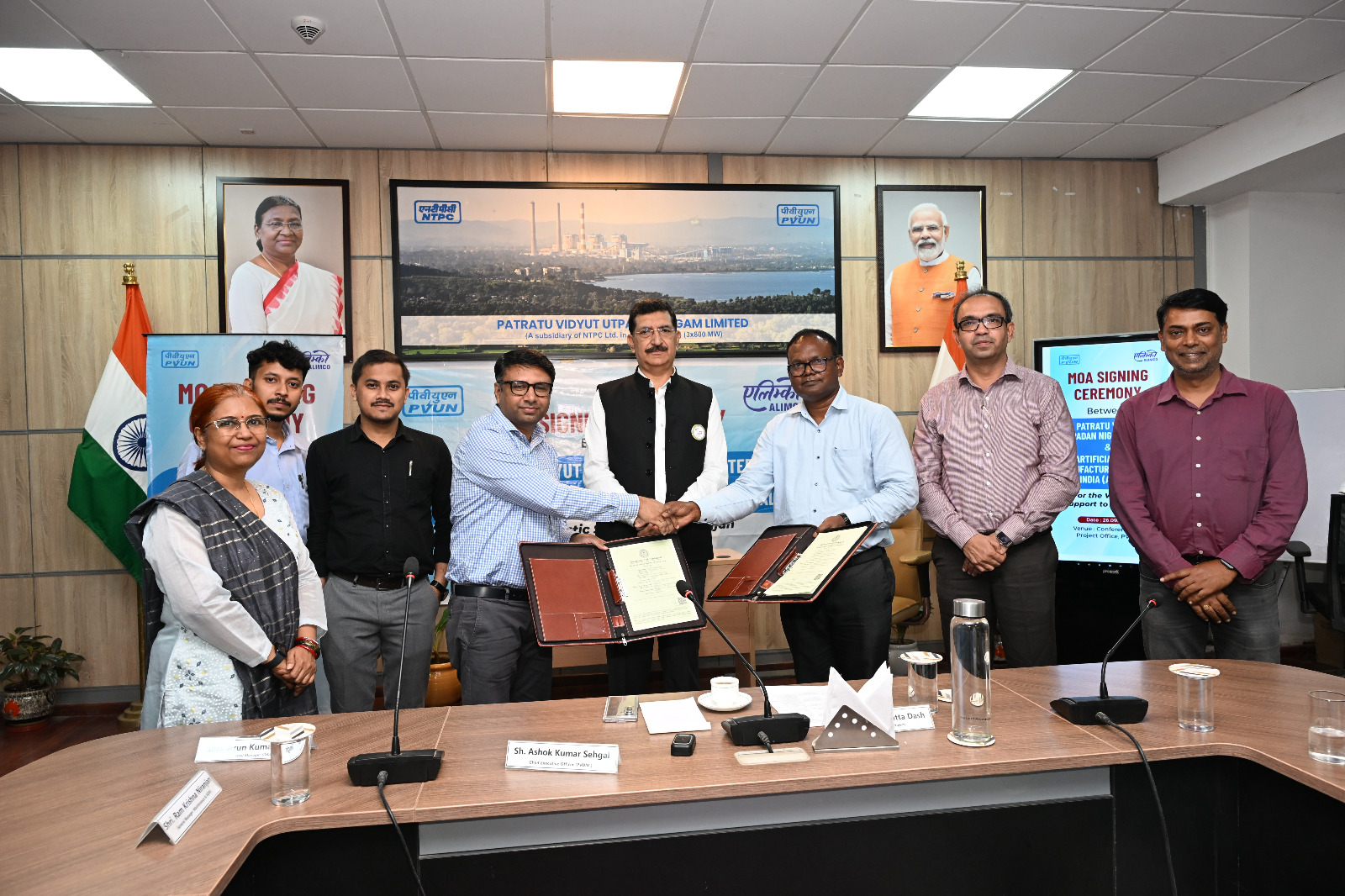
Patratu Vidyut Utpadan Nigam Limited (PVUNL) ने दिव्यांगजनों के कल्याण, सशक्तीकरण एवं जीवन की गुणवत्ता में सुधार के उद्देश्य से Artificial Limbs Manufacturing Corporation of India (ALIMCO) के साथ समझौता ज्ञापन (MoA) पर हस्ताक्षर किए।

इस अवसर पर पीवीयूएनएल के मुख्य कार्यकारी अधिकारी (CEO) श्री ए.के. सहगल, मुख्य चिकित्सा अधिकारी (CMO) डॉ. (श्रीमती) शिप्रा रानी तथा मानव संसाधन विभाग के प्रमुख श्री जियाउर रहमान उपस्थित रहे।

इस समझौते के अंतर्गत पीवीयूएनएल द्वारा पत्रातू एवं आसपास के क्षेत्रों में जरूरतमंद दिव्यांगजनों की पहचान के लिए एक आकलन शिविर (Assessment Camp) का आयोजन किया जाएगा। शिविर के माध्यम से पात्र एवं जरूरतमंद व्यक्तियों का पंजीकरण कर उनकी आवश्यकताओं का आकलन किया जाएगा।

आकलन एवं चिकित्सकीय परीक्षण के आधार पर लाभार्थियों को उनकी आवश्यकता के अनुरूप सहायक उपकरण (Assistive Devices) उपलब्ध कराए जाएंगे, जिससे उन्हें दैनिक जीवन में अधिक आत्मनिर्भर बनने में सहायता मिल सके।

पीवीयूएनएल की यह पहल अपने परिचालन क्षेत्र के आसपास रहने वाले समुदायों के समग्र विकास एवं सामाजिक कल्याण के प्रति निगम की प्रतिबद्धता को दर्शाती है। इस कार्यक्रम के माध्यम से दिव्यांगजनों को आवश्यक सहायता प्रदान कर उन्हें समाज की मुख्यधारा से जोड़ने, उनकी गतिशीलता बढ़ाने तथा सम्मानजनक एवं आत्मनिर्भर जीवन जीने के अवसर उपलब्ध कराने का प्रयास किया जाएगा।

पीवीयूएनएल निरंतर अपनी कॉर्पोरेट सामाजिक दायित्व (CSR) पहलों के माध्यम से स्थानीय समुदायों के जीवन स्तर में सुधार लाने तथा समावेशी एवं सतत विकास को बढ़ावा देने की दिशा में कार्यरत है।

Tata Safari: A Premium Family SUV Designed for Comfortable Long-Distance Travel

A Family SUV Built Around Space and ComfortFamily travel often means carrying more passengers, luggage and expectations. For customers planning regular road trips or looking for a spacious SUV for everyday family use, seating capacity, cabin comfort and practicality can become important purchase considerations.

The Tata Safari is positioned as a premium SUV with three-row seating, offering 6- and 7-seater configurations depending on the version. Its larger SUV format makes it relevant for families who want additional passenger space and a comfortable environment for longer journeys.

Designed for Long-Distance Travel

A long drive can involve city traffic, open highways and changing road conditions. A family SUV therefore needs to combine performance with a comfortable driving experience.

The Tata Safari has been offered with a 2.0-litre turbocharged diesel engine producing 170 PS and 350 Nm, with manual and automatic transmission options depending on the variant.

Customers should confirm the latest variant-wise specifications, equipment and availability with an authorised Tata Motors dealer before booking.

Three Rows for Growing Families

One of the key reasons customers consider a larger SUV is the flexibility provided by three rows of seating.

The Tata Safari can accommodate larger families and groups while providing the practicality expected from a premium SUV. The third row can be particularly useful when additional passengers need to travel together, while the cabin layout is designed around passenger comfort.

For families that frequently travel together, a three-row SUV can be useful for holidays, weekend trips, airport travel and other journeys where additional seating is required.

Technology and Convenience on the Road

Modern family SUVs are expected to provide more than space. Infotainment, connectivity and convenience features have become an important part of the in-car experience.

The Tata Safari has been offered with features such as a large touchscreen infotainment system, configurable digital instrumentation, connected-car functions and premium audio options, depending on the variant.

Feature availability can vary between variants, so customers should compare the current specifications of the versions they are considering.

Safety as an Important Family Consideration

Safety remains a key consideration when selecting a family vehicle, particularly for customers who regularly travel on highways.

The Tata Safari has been equipped with a range of safety and driver-support technologies, with equipment varying by variant. Tata Motors has highlighted features and systems designed to support occupants and the driver across different driving situations.

Customers should review the latest safety specification of their preferred variant and discuss the available equipment with the dealership before purchase.

Tata Safari for Delhi-NCR Customers

Customers searching for a Tata Safari showroom in Delhi-NCR can explore the vehicle through Garud Tata Motors.

Tata Cars Showroom - Palam, Dwarka provides access for customers from Palam, Dwarka and nearby areas.

Tata Cars Showroom - Najafgarh serves customers from Najafgarh and surrounding locations.

Tata Cars Showroom - Narela provides another option for customers in Narela and nearby areas.

Customers can enquire about available variants, features, colours, pricing and test-drive opportunities at the nearest showroom.

Why a Tata Safari Test Drive Matters

A larger SUV should ideally be experienced before purchase. A test drive gives customers the opportunity to understand the vehicle's size, driving position, visibility, ride comfort, cabin layout and overall driving experience.

Customers interested in a Tata Safari test drive can contact Garud Tata Motors and enquire about available opportunities. A test drive can also help families assess access to the second and third rows and the practicality of the cabin for their typical journeys.

Service Support for Tata Safari Owners

The ownership experience continues after the vehicle is delivered. Regular maintenance and servicing are important for keeping a vehicle in appropriate operating condition.

Garud Tata Motors provides service support through Tata Cars Service Centre - Matiala, Dwarka and Tata Cars Service Centre - Najafgarh.

Safari owners can contact the relevant service centre for applicable scheduled servicing, maintenance and after-sales requirements.

A Premium SUV for the Complete Family Journey

The Tata Safari's appeal comes from the combination of three-row practicality, performance, comfort, technology and safety-focused equipment.

For customers looking for a premium family SUV in Delhi-NCR, the Safari is worth exploring through a showroom visit and test drive. Comparing variants against individual family and travel requirements can help customers select the configuration that suits them best.

About Garud Tata Motors

Garud Tata Motors provides Tata passenger vehicle sales and service support across its Delhi-NCR network. Customers can explore Tata cars and enquire about test drives at Tata Cars Showroom - Palam, Dwarka, Tata Cars Showroom - Najafgarh and Tata Cars Showroom - Narela. Service support is available through Tata Cars Service Centre - Matiala, Dwarka and Tata Cars Service Centre - Najafgarh.

Contact Garud Tata Motors

Website: www.garudtata.com

 Sales Contact: 9217371211

 Service Contact: 9217371211


स्वास्थ्य विभाग* *स्वास्थ्य सचिव कुमार रवि के निर्देश पर मिलावटखोरों पर बड़ी कार्रवाई,


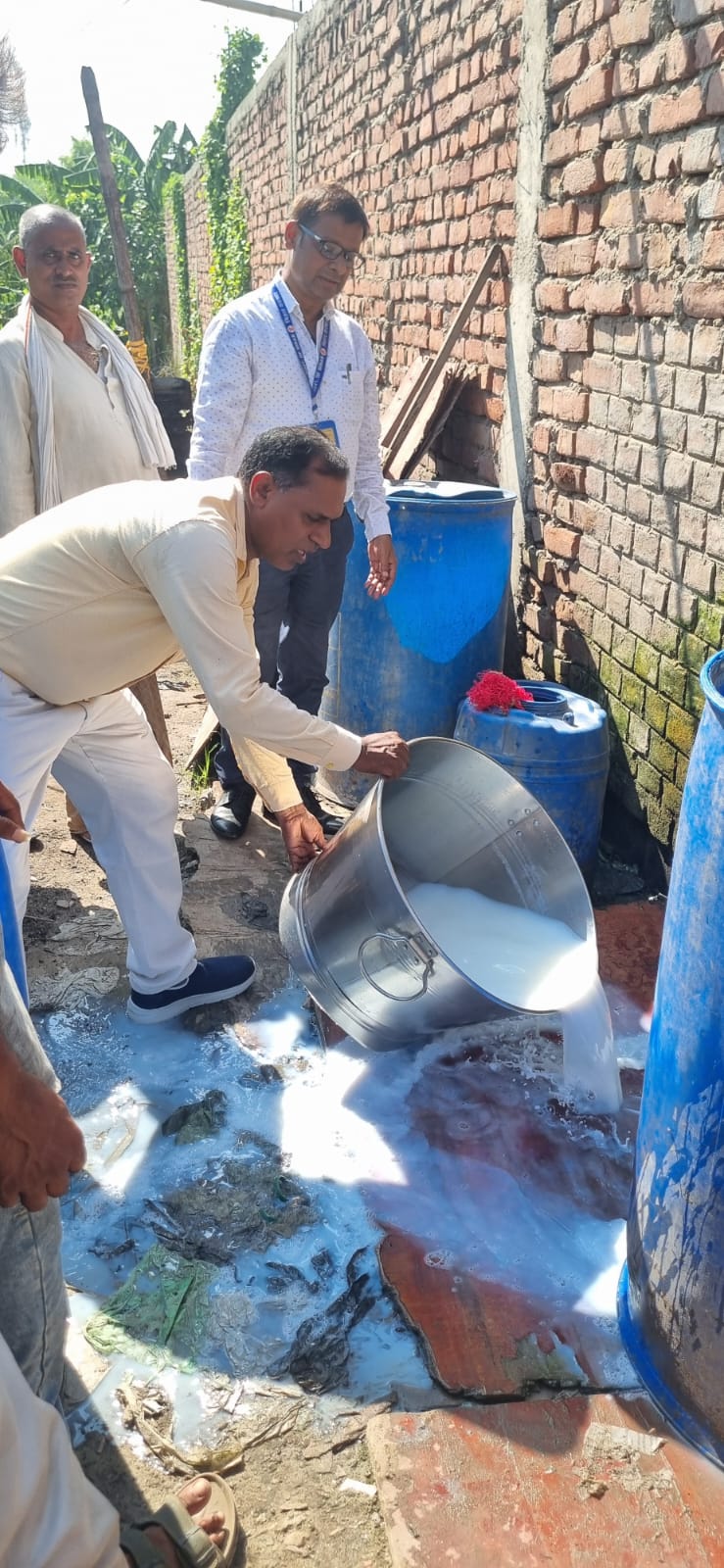
पटना, हाजीपुर एवं दरभंगा में खाद्य सुरक्षा टीम का बड़ा एक्शन* *हाजीपुर में 72 किलो मिलावटी पनीर नष्ट, दरभंगा में 21 लीटर एक्सपायर्ड दूध और 18 किलो खराब पनीर नष्ट, फतुहा में फॉर्मेलिन मिला दूध जब्त कर करीब 126 लीटर दूध कराया गया नष्ट* *फतुहा में Food Supplements के ठिकाने पर संयुक्त छापेमारी, 6 नमूने जांच के लिए संग्रहित* पटना, 12 सितंबर 2026 राज्य में लोगों को सुरक्षित और गुणवत्तापूर्ण खाद्य सामग्री उपलब्ध कराने के लिए स्वास्थ्य विभाग ने मिलावट एवं खाद्य सुरक्षा मानकों के उल्लंघन के खिलाफ कार्रवाई तेज कर दी है। स्वास्थ्य सचिव-सह-खाद्य संरक्षा आयुक्त श्री कुमार रवि के निर्देश पर राज्यभर में खाद्य प्रतिष्ठानों की जांच, छापेमारी, नमूना संग्रहण और प्रयोगशाला परीक्षण की कार्रवाई लगातार जारी है। इसी क्रम में हाजीपुर, दरभंगा और पटना जिले में खाद्य सुरक्षा की टीम ने बड़ी कार्रवाई करते हुए एक्सपायर्ड, खराब एवं मानकों के विपरीत पाए गए खाद्य पदार्थों को नष्ट कराया। वहीं, फतुहा क्षेत्र में दूध के नमूने में फॉर्मेलिन पाए जाने के बाद करीब 126 लीटर दूध नष्ट कराया गया। जबकि, पटना शहर स्थित संतुष्टि स्वीट्स और उसकी विनिर्माण इकाई में खाद्य सुरक्षा टीम द्वारा औचक निरीक्षण एवं सघन जांच की गई, साथ ही साफ-सफाई और स्वच्छता बनाए रखने के सख्त निर्देश दिए गए। *हाजीपुर में खाद्य सुरक्षा विभाग का एक्शन, मिलावटी पनीर नष्ट* वैशाली जिले के हाजीपुर स्थित स्टेशन रोड में खाद्य सुरक्षा टीम द्वारा मिलावटी पनीर के खिलाफ कार्रवाई की गई। सुधीर किराना दुकान से 14 किलोग्राम पनीर जब्त किया गया, जिसमें स्टार्च की मिलावट पाई गई, जिसे मौके पर ही नष्ट करा दिया गया। वहीं, श्री गणेश पनीर हाउस से 58 किलोग्राम पनीर में स्टार्च की मिलावट पाए जाने पर उसे भी विनष्ट कराया गया। साथ ही, नमूना लेकर जांच के लिए लैब भेजा गया है। जांच रिपोर्ट प्राप्त होने के बाद नियमानुसार आगे की विधिक कार्रवाई की जाएगी। *दरभंगा के बेनीपुर में एक्सपायर्ड दूध-पनीर पर कार्रवाई* दरभंगा जिले के बेनीपुर स्थित आशापुर चौक के सुधा मिल्क पार्लर में खाद्य संरक्षा अधिकारी द्वारा निरीक्षण एवं जांच की गई। जांच के दौरान पार्लर में 21 लीटर एक्सपायर्ड सुधा मिल्क और 18 किलोग्राम खराब पनीर पाया गया। खाद्य सुरक्षा मानकों के अनुरूप तत्काल कार्रवाई करते हुए दोनों खाद्य सामग्रियों को मौके पर ही नष्ट कराया गया। जांच के दौरान खाद्य पदार्थों के नमूने भी संग्रहित किए गए हैं, जिन्हें जांच के लिए लैब भेजा गया है। प्रयोगशाला जांच रिपोर्ट के आधार पर आगे की विधिक कार्रवाई की जाएगी। *पटना के फतुहा में दूध में फॉर्मेलिन की पुष्टि, करीब 126 लीटर दूध नष्ट* पटना जिले के सबलपुर फतुहा क्षेत्र में भी खाद्य सुरक्षा टीम ने बड़ी कार्रवाई की। अभिहित पदाधिकारी एवं चिकित्सा पदाधिकारी-सह-खाद्य संरक्षा अधिकारी की उपस्थिति में सबलपुर, फतुहा टेढ़ी पुल के निकट स्थित राजीव डेयरी में दूध एवं पनीर की जांच की गई। जांच में दूध के नमूने में फॉर्मेलिन की उपस्थिति पाई गई। इसके बाद करीब 126 लीटर दूध को नष्ट कराया गया। आवश्यक नमूने भी संग्रहित किए गए हैं और जांच के निष्कर्षों के आधार पर नियमानुसार आगे की कार्रवाई की जाएगी। *Food Supplements के ठिकाने पर संयुक्त छापेमारी, 6 नमूने जांच के लिए भेजे जाएंगे* फतुहा थाना क्षेत्र के बाजितपुर स्थित Alexa Foods and Supplements, Barishpur, Fatuha, Patna में भी संयुक्त टीम द्वारा निरीक्षण एवं छापेमारी की गई। इस संयुक्त कार्रवाई में खाद्य सुरक्षा विभाग, औषधि निरीक्षक, आयुष निदेशालय एवं पुलिस पदाधिकारियों की टीम शामिल रही। निरीक्षण के दौरान परिसर में Food Supplements, Raw Materials तथा निर्माण में प्रयुक्त Manufacturing Equipment पाए गए। परिसर में कुछ निर्मित तथा कुछ अर्द्धनिर्मित Food Supplements भी पाए गए। नियमानुसार जांच एवं विश्लेषण के लिए कुल 06 नमूने संग्रहित किए गए हैं, जिन्हें निर्धारित प्रक्रिया के तहत जांच के लिए भेजा जा रहा है। निरीक्षण के दौरान Food Supplements के अतिरिक्त कोई अन्य औषधि नहीं पाई गई तथा किसी आपत्तिजनक अथवा संदिग्ध पदार्थ की पुष्टि नहीं हुई। संस्थान के स्वाधिकारी द्वारा Food Supplements के निर्माण एवं संबंधित खाद्य विनिर्माण अनुज्ञप्ति उपलब्ध होने की जानकारी दी गई है। दस्तावेजों एवं जांच रिपोर्ट के आधार पर आगे की कार्रवाई की जाएगी। *जनता की थाली से खिलवाड़ बर्दाश्त नहीं, जांच और कार्रवाई रहेगी जारी* स्वास्थ्य सचिव-सह-खाद्य संरक्षा आयुक्त श्री कुमार रवि ने स्पष्ट किया कि खाद्य पदार्थों की गुणवत्ता और लोगों के स्वास्थ्य से किसी भी प्रकार का समझौता स्वीकार नहीं किया जाएगा। खाद्य कारोबारियों को निर्देश दिया गया है कि वे लोगों को केवल सुरक्षित, गुणवत्तापूर्ण और निर्धारित मानकों के अनुरूप खाद्य सामग्री उपलब्ध कराएं। उन्होंने कहा कि एक्सपायर्ड, खराब, मिलावटी अथवा असुरक्षित खाद्य सामग्री का भंडारण, उपयोग या बिक्री किसी भी स्थिति में स्वीकार्य नहीं है।
WallX by Avinya Bharat Launches Premium LED Video Wall Brand on India's 80th Independence Day

Pune, Maharashtra, August 2026, Avinya Bharat Pvt Ltd has launched WallX, its new premium LED video wall brand, choosing August 15, 2026, India's 80th Independence Day, as the date to introduce it. The launch reflects the company's intent to build a trusted Indian name in high-performance, professionally engineered LED display technology.With WallX, Avinya Bharat is stepping into the premium tier of India's fast-growing LED video wall and professional display market. The brand's focus sits squarely on engineering quality, long-term reliability, and the kind of after-sale support that keeps a display running for years, not just months.

A Different Starting Point for LED Displays

Most LED video wall purchases in India are still decided on price alone. WallX was built around a different question: what does a display actually cost once you account for the years it has to keep working?

That question shapes how the brand evaluates every product it puts to market. Component quality, thermal management, electrical protection, power efficiency, and spare-part availability all factor into WallX's approach, alongside how easily a unit can be serviced once it's installed. Avinya Bharat wants customers to weigh an LED video wall as a complete engineered system, not a line item on a quotation.

That distinction matters most in settings where a screen going dark has real consequences, control rooms, retail storefronts, hospitality venues, and corporate environments where downtime affects operations or brand visibility.

Backing the Brand With a 3-Year Warranty

WallX is launching with a premium 3-year warranty across its product range, one of the more significant commitments the brand is making out of the gate. It's a direct statement of confidence in the engineering behind the displays, and it gives customers planning larger installations, the kind expected to run continuously for years, a clearer sense of what they're buying into.

For a new brand entering a crowded market, a warranty like this does double duty: it protects the customer and it sets a bar Avinya Bharat is committing to meet.

Engineering Comes First

WallX's product development is built around solutions for varied indoor and outdoor environments rather than a one-size-fits-all screen. The company draws on Avinya Bharat's existing experience in LED display manufacturing, project execution, and technical support to inform how each configuration is built.

Before recommending a setup, the WallX team looks at viewing distance, pixel pitch, screen dimensions, the installation environment, power requirements, thermal conditions, and how accessible the unit will be for future servicing. It's a more deliberate process than treating every deal as a standard screen sale, and one aimed at avoiding the kind of mismatched installations that create problems down the line.

Thinking in Lifecycle Terms, Not Purchase Price

For premium buyers, the sticker price is just the entry point. Electricity use, maintenance needs, spare parts, and potential downtime all add up over the life of an installation, and WallX is positioning its products around that fuller picture rather than the number on day one.

It's a straightforward philosophy, even if it runs against how most buyers are used to shopping for displays: what will this wall cost to run and maintain, not just what will it cost to buy. That framing is likely to resonate with businesses and institutions that need consistent performance and real service support behind their LED video wall investment.

Building From Pune, Aiming Nationwide

Launching WallX on Independence Day wasn't incidental, it reflects Avinya Bharat's ambition to build a genuinely Indian premium display brand from its base in Pune, Maharashtra. From there, the company plans to expand WallX's reach across India, serving corporate, commercial, institutional, retail, and mission-critical customers who need professional LED display solutions they can rely on.

Avinya Bharat views the WallX launch as more than a product introduction, it's the start of a brand built around raising the standard for quality, reliability, and customer confidence in India's LED display industry. The company's position is that the market's future won't be won on the lowest quote, but on the combination of performance, reliability, service, and total lifecycle value.

For more information visit wallxdisplay.com


How Digital Notarisation Is Simplifying

Documentation for Businesses in India From employee onboarding and vendor agreements to bulk document processing, digital notarisation is helping Indian businesses explore more organised, technology-enabled approaches to eligible corporate documentation.NOIDA, UTTAR PRADESH —

As Indian businesses expand their operations, manage distributed teams and work with vendors across multiple locations, legal documentation has become an increasingly important operational responsibility. Employment-related declarations, vendor agreements, financial documents, corporate affidavits and other formal paperwork may require verification, signatures or notarisation before they can be used. Traditionally, these activities have relied on physical paperwork, in-person appointments and manual coordination. For organisations managing large workforces, multiple vendors or geographically dispersed operations, arranging each step can add administrative effort and interrupt routine business processes. Digital notarisation is one area businesses are examining as they modernise documentation workflows. Depending on the document and applicable legal requirements, a digital process may combine a live interaction with an authorised Notary Public, identity verification, electronic signatures and electronic records. These tools may make coordination more convenient, but they do not remove the need to comply with legal and institutional requirements.

Why Traditional Notarisation Can Be Challenging for Businesses

Corporate documentation often involves several departments, employees, external partners and legal stakeholders. Physical notarisation can become difficult to coordinate when signatories are located in different cities or when many documents need attention within a short period.

· Time-consuming coordination: Employees or authorised representatives may need to travel,

arrange appointments and coordinate document submissions. This can add steps to routine administration.

· Bulk documentation: Organisations with large workforces or vendor networks may need to process

many declarations and agreements. Managing each document separately can make tracking and follow-up more demanding.

· Employee onboarding: Some onboarding processes involve declarations, affidavits or other formal

documents. Where notarisation is required, arranging it can add another coordination step.

· Vendor and partner coordination: Suppliers, contractors and service providers may operate from

different locations, making physical execution inconvenient.

· Document storage and retrieval: Physical records require organised filing and storage. Retrieving

older documents and maintaining consistent records can become harder as organisations grow.

How Digital Notarisation May Support Corporate

Documentation Digital notarisation introduces electronic tools into procedures that have traditionally depended on paper and physical coordination. Depending on the document category and applicable law, the workflow may include a live audio-video interaction with an authorised Notary Public, identity checks, electronic signing and digital document records. For businesses, the potential value lies in making eligible documentation easier to coordinate across locations and departments. Employees, vendors and authorised representatives may be able to participate remotely where the process is legally appropriate and accepted by the receiving institution. Companies should first identify which documents genuinely require notarisation, which can be executed through other legally recognised methods, and what the receiving organisation will accept. This distinction helps prevent digital convenience from being mistaken for automatic legal validity.

Bulk Notarisation: Coordinating Multiple Documents

Bulk document processing is an important operational consideration for organisations that regularly handle employee declarations, vendor agreements, contractual paperwork and other formal records. A digital platform with enterprise-oriented workflows may help centralise requests, coordinate participants and organise document status. Depending on the platform’s capabilities and the legal requirements applicable to each document, businesses may look for:

· Centralised coordination: A common workflow for initiating and monitoring multiple documentation

requests.

· Participant management: Clear steps for identifying the signatories and other people who need to

take part.

· Status visibility: A way for authorised teams to track which documents are pending, completed or

require attention.

· Electronic record access: Organised access to completed documents for authorised users, subject

to privacy, security and retention requirements. These capabilities can support administration, but bulk processing does not change the legal requirements applicable to each individual document or notarial act.

The Role of HR, Legal and Procurement Teams

HR teams may encounter notarisation requirements in specific employee declarations or supporting documents. Legal teams may coordinate affidavits, authorisations and other instruments, while procurement and operations teams may manage vendor-related paperwork. A consistent workflow can help these departments understand who is responsible for each step and where a document stands. Before adopting a digital process, organisations should consult their legal advisers and confirm the requirements of the institution receiving the document. They should also establish internal controls for identity verification, access permissions, document accuracy, retention and auditability.

Legal Recognition and Compliance Remain Essential

India’s legal framework does not make every document suitable for electronic notarisation simply because electronic signatures and digital records are recognised in certain circumstances. The Information Technology Act, 2000 addresses electronic records and electronic signatures, while notarial functions are governed by the Notaries Act, 1952 and the Notaries Rules, 1956. e-signing, e-stamping and notarisation remain distinct processes. A September 2026 development in the Karnataka High Court brought the issue into sharper focus. The Court took on record an electronically notarised affidavit and directed its Registry to bring the possibility of implementing e-notarisation for High Court and District Court filings to the attention of the relevant administrative officials. The direction was to examine the possibility; it does not amount to universal approval of all electronically notarised documents. Separately, the Ministry of Law and Justice stated in an April 2026 Rajya Sabha response that no proposal for a uniform nationwide e-notarisation framework was under consideration. For businesses, this underlines the importance of checking document-specific legal requirements and the acceptance policies of the relevant recipient before relying on a digital process.

What Businesses Should Evaluate Before Adopting a Platform

A business considering digital notarisation should assess more than convenience. It should understand how the platform verifies participants, connects them with an authorised notary, records the notarial process, applies the notary’s signature and official seal where required, and provides the completed document. The organisation should also review privacy safeguards, access controls, storage arrangements, customer support and the ability to retrieve records. Most importantly, the company should confirm whether the intended document can be handled through the proposed process and whether the receiving court, government department, bank, counterparty or other institution will accept it. Legal review should be part of implementation rather than an afterthought. How Digital Platforms Are Entering the Corporate Documentation Space Technology providers are developing services intended to make eligible documentation workflows easier to coordinate. EZNotary, operated by Quereshan Solutions Private Limited, is one such platform. It offers digital notarisation-related workflows, eSigning and eStamping services through an online platform, including a feature that connects users with a live Notary Public through a video call. The company describes enterprise-oriented capabilities for documentation requirements such as bulk notarisation workflows, HR onboarding agreements, vendor contracts and other corporate paperwork. The suitability of any particular document depends on the applicable legal requirements and the policies of the organisation receiving it. EZNotary’s approach reflects a broader shift in how businesses are exploring digital tools for legal and administrative documentation. The platform’s role is best understood as part of an evolving market in which convenience must be balanced with legal compliance, data protection and institutional acceptance.

A More Organised Approach to Business Documentation

As organisations become more geographically distributed, the ability to coordinate documentation across locations is likely to remain an operational priority. Digital tools may help reduce manual follow-up, improve visibility and make eligible processes more accessible to employees and business partners. The long-term value of digital notarisation will depend not simply on moving paperwork online, but on whether the process is legally appropriate, secure and accepted by the relevant institution. Businesses that combine careful legal review with well-managed digital workflows will be better placed to benefit from the changing documentation landscape.

About EZNotary

EZNotary is a digital documentation platform operated by Quereshan Solutions Private Limited. It offers online notarisation-related workflows, eSigning and eStamping services, including live connectivity with a Notary Public. Its enterprise-oriented services are designed to support eligible business documentation workflows. For more information: www.eznotary.in

EDITORIAL FACT-CHECK REFERENCES

The following references support the legal and regulatory context in this article. This reference page is for editorial

verification and may be removed by the publishing desk.

Karnataka High Court development — Bar & Bench, 10 September 2026

Reports that the Court took an electronically notarised affidavit on record and directed the Registry to consider

implementation for court filings.

https://www.barandbench.com/news/litigation/karnataka-hc-calls-for-implementation-of-e-notarisation-in-high-cou

rt-and-district-courts

Karnataka High Court development — LawStreet, 11 September 2026

Provides procedural context and clarifies that the direction concerned examination of possible implementation.

https://lawstreet.co/judiciary/karnataka-hc-asks-registry-to-examine-enotarisation-for-court-filings

Ministry of Law and Justice — Rajya Sabha Unstarred Question No. 4437, answered 2 April 2026

Official response stating that no proposal for a uniform nationwide e-notarisation framework was under

consideration.

https://www.doj.gov.in/static/uploads/2026/04/b7b4da487543be9a9f1d1558d06d76d2.pdf

The Notaries Act, 1952 — India Code

Primary legislation governing notaries in India.

https://www.indiacode.nic.in/bitstream/123456789/17288/1/notaries_act_1952.pdf

Ministry of Law and Justice — Digital Modernisation of Notary Portal, 13 March 2026

Government information on the Notary Portal and its digital administrative functions.

https://www.pib.gov.in/PressReleasePage.aspx?PRID=2239464&lang=1®=6

EZNotary company statement on the Karnataka High Court matter

Company-published account identifying EZNotary's role in the affidavit process; attribute platform-specific details

to the company.

https://eznotary.in/blog/karnataka-high-court-accepts-e-notarised-affidavit-via-eznotary

 

Before Fraud Costs You: How Mr. Sankar Rao Sees AI Transforming Business Risk Management

As businesses increasingly embrace digital operations, fraud prevention and risk management have become essential to protecting customer trust, business data and operational efficiency. From suspicious enquiries and inaccurate customer information to duplicate records and unusual activity, organizations face growing challenges in identifying potential risks. Artificial intelligence (AI) is emerging as a valuable tool in addressing these challenges by helping businesses analyze data, identify patterns, and make more informed decisions. Unlike traditional approaches that rely heavily on manual checks and predefined rules, AI-powered systems can process large volumes of data and help teams' priorities cases requiring further investigation. While these technologies can strengthen risk monitoring, their effectiveness depends on data quality, appropriate implementation, and human oversight.  


Surefy.ai: Bringing AI and Verification Capabilities Together

Founded by Mr. Sankar Rao, Surefy.ai is an AI-first customer engagement platform offering solutions for lead management, customer verification, campaign analytics, and multi-channel communication. Its offerings include Surefy Insight, positioned as a campaign and fraud analytics engine, and Surefy Console, which provides KYC and verified business APIs.

 These capabilities support businesses seeking to improve visibility into customer information and organize verification-related workflows. An AI Lead Management Platform can help structure enquiry management, while AI Lead Verification and Customer Data Validation focus on improving the reliability of lead information.  

Similarly, a Customer Verification Platform, Lead Verification Software, and Business Verification API can support organizations that require structured checks on customer or business information. Surefy.ai also offers capabilities for lead qualification, automated voice calling and communication through SMS and WhatsApp.  

By connecting these functions, the platform supports a more organized approach to customer acquisition and engagement. Its verification and analytics capabilities are relevant to businesses seeking to strengthen their processes, although no technology can guarantee the detection or prevention of every fraudulent activity.  


Helping Businesses Make More Informed Decisions

 Adopting AI requires businesses to evaluate more than automation features. Data security, privacy safeguards, integration requirements, reporting capabilities, and human oversight are important considerations when selecting a solution. Organizations should also understand which checks are performed and what risks a particular system is designed to identify.  

Solutions associated with AI Sales Automation, Lead Qualification Software, an AI Lead Verification Platform, and a Customer Data Verification Platform can contribute to more structured operations when aligned with specific business needs. The objective should be to make measurable improvements in data quality, workflow efficiency, and risk monitoring.


 Rethinking Risk Management for the Digital Future  

As digital business continues to evolve, combining reliable information, intelligent analysis and responsible decision-making will become increasingly important. AI can help organizations identify potential warning signs and improve verification processes, while established security controls and human judgement remain essential.

 Through Surefy.ai, Mr. Sankar Rao is pursuing a technology-led approach to business challenges involving customer verification, lead management, analytics, and engagement. Businesses interested in exploring the company's available solutions can visit Surefy.ai to learn more about its platform and capabilities.


How Shubham Rajput & Dev Solanki Are Building Smarter Businesses with Y2WAY

A business owner can have the latest software, a strong team and an impressive customer base—and still lose hours every day because the systems connecting everything do not work properly.

Customer information might sit in spreadsheets. Payments might be tracked manually. Factory activity may be visible on CCTV without producing useful operational insights. Employees may spend more time preparing reports than acting on them.

These everyday problems are central to the thinking behind Y2WAY Universal Consultancy, the venture built by young entrepreneurs Shubham Sanjaysinh Rajput and Dev Virendrakumar Solanki.

Their idea is straightforward: before adding more technology, understand why the existing process is inefficient.

It is an approach shaped by a freelancing journey that began in 2017 and has since evolved into a multidisciplinary consultancy. According to the founders, they have delivered 187 projects in the past two years across their freelance-to-consultancy journey, responding to different business and technology requirements. Both founders received appreciation in July 2026 from Rivaba Ravindrasinh Jadeja, Gujarat’s Minister of State for Primary, Secondary and Adult Education.

The Hidden Cost of Doing Things the Old Way

Indian businesses are increasingly exploring artificial intelligence, customer management software and workflow automation. However, buying a digital product does not automatically make a company more efficient.

A standard CRM might offer dozens of features while missing the few that a particular business genuinely needs. An automated reporting tool may still require employees to enter the same information repeatedly. An AI application may sound impressive without delivering a useful business outcome.

Shubham Sanjaysinh Rajput and Dev Virendrakumar Solanki believe the real opportunity lies in designing technology around a company’s actual operations.

Through Y2WAY Universal Consultancy, they aim to connect technical implementation with process understanding, usability and commercial value.

Their work emphasizes asking fundamental questions: Which activities are repetitive? Where is information getting lost? Which decisions need better data? What can be simplified before it is automated?

Answering those questions helps determine whether the solution requires a new application, a customized algorithm, integrated software or a redesigned workflow.

What Makes Y2WAY’s Optimization Approach Different?

A central area of interest for Y2WAY Universal Consultancy is algorithmic optimization—designing logical systems that perform useful tasks while reducing unnecessary steps.

An algorithm does not have to be a mysterious black box. In practical business applications, it may determine how information moves between departments, how records are organized, how exceptions are flagged or when users should receive an alert.

The founders’ approach combines such logic with artificial intelligence where it adds value.

For an industrial setting, this could involve examining production data, machine activity or operational patterns. In customer-facing businesses, it could mean improving membership records, billing, inventory control and follow-up processes.

Computer vision and IoT systems can introduce additional possibilities, allowing certain physical activities to be translated into useful digital information.

The objective is not automation for its own sake. It is to help organizations operate with fewer unnecessary steps and more timely information.

From Freelance Thinking to a Multidisciplinary Consultancy

The company’s beginnings in freelancing remain relevant to how it approaches projects.

Freelance work requires adaptability because no two client briefs are identical. Over time, Shubham Sanjaysinh Rajput and Dev Virendrakumar Solanki began using that experience to combine development, design, creative strategy and business consulting into one service model.

Y2WAY Universal Consultancy now positions itself across more than 12 industry and solution areas, including manufacturing, industrial IoT, smart automation, CRM technology, healthcare, fitness and wellness, education, retail, hospitality, logistics, financial operations, and marketing and media.

The sectors may appear unrelated, but many share similar underlying problems: disconnected information, repetitive administration, limited visibility and software that does not fit the organization.

This creates opportunities to reuse problem-solving principles while developing solutions specific to each client.

A Commercial Opportunity Built on Real Problems

The transition from freelancers to consultancy founders has also created a broader revenue model based on technology projects, business services and potential long-term client engagements.

Although the founders have not disclosed revenue figures for this story, their reported project volume reflects an expanding delivery portfolio.

For Shubham Sanjaysinh Rajput and Dev Virendrakumar Solanki, the larger ambition is to help Indian enterprises see automation as a practical business investment rather than an intimidating technological shift.

The founders envision a future in which software can be customized more intelligently and small and medium businesses can make better use of tools once associated primarily with larger corporations.

Whether that vision becomes a major force in India’s AI industry will depend on future execution and measurable client outcomes.

But the principle behind Y2WAY Universal Consultancy is worth examining: sometimes the smartest innovation is not adding another tool, but making the entire system work better.

For more information you can visit on Website: https://www.y2way.com/


Made in Delhi, Worn Around the World: How Corset Vogue Grew from a Setback

Some of the most interesting brands are born in difficult moments. Corset Vogue is one of them.Its story begins not in a boardroom, but with a corset designer named Ravinder Singh who suddenly found himself out of work, in an industry where jobs were almost impossible to find.

A Rare Skill in a Small Industry

Corset making is a specialised craft. It takes precise pattern work, the right materials and a deep understanding of how structure meets the body. Ravinder had built that knowledge over years as a corset designer.

The problem was that India had very few corset manufacturers. When he lost his job, there was simply nowhere else to take his skills. The industry was too small to absorb him.

So he stopped looking for a place in it and decided to make one.

The First Machine

In 2021, Ravinder started Corset Vogue in Delhi with one second-hand sewing machine. It was a modest start, but it was enough to make the kind of corsets he believed in: steel boned, carefully shaped and built to last.

Word spread through customers who loved the fit. The collection grew to include steampunk corsets with a Victorian, industrial feel, gothic corsets for lovers of dark fashion, versatile underbust corsets, bold overbust corsets and elegant corset dresses.

Crossing Borders

As the quality became known, a new kind of customer arrived: international brands.

Today, Corset Vogue manufactures and exports corsets for international brands. Designs made in Delhi now travel to customers in other countries under other labels. For a business that began with one used machine, that is a remarkable step, and proof that specialist craftsmanship from India can compete anywhere.

Making Room for the Next Generation

Growing bigger did not make Corset Vogue forget where it came from. The brand saw how hard it was for small boutiques, resellers and new labels to work with manufacturers who demanded huge orders.

So Corset Vogue keeps its minimum order quantity at just 20 pieces, with very reasonable prices. Whether it is a brand abroad testing a new line or a boutique in India adding corsets for the first time, the door is open to start small.

It is the same principle Ravinder built his own business on: take the first practical step, and grow from there.

What Comes Next

Corset Vogue now runs on three tracks: its own online store for customers across India, wholesale for resellers and boutiques, and manufacturing and export for international brands. The goal ahead is to take the Corset Vogue name itself to corset lovers worldwide.

Connect with Corset Vogue

For manufacturing, export or wholesale enquiries, visit the wholesale page or email the collection at www.corsetvogue.com and follow the journey on Instagram Vogue: Sculpt Your Silhouette.

Made in Delhi, Worn Around the World: How Corset Vogue Grew from a Setback

Some of the most interesting brands are born in difficult moments. Corset Vogue is one of them.Its story begins not in a boardroom, but with a corset designer named Ravinder Singh who suddenly found himself out of work, in an industry where jobs were almost impossible to find.

A Rare Skill in a Small Industry

Corset making is a specialised craft. It takes precise pattern work, the right materials and a deep understanding of how structure meets the body. Ravinder had built that knowledge over years as a corset designer.

The problem was that India had very few corset manufacturers. When he lost his job, there was simply nowhere else to take his skills. The industry was too small to absorb him.

So he stopped looking for a place in it and decided to make one.

The First Machine

In 2021, Ravinder started Corset Vogue in Delhi with one second-hand sewing machine. It was a modest start, but it was enough to make the kind of corsets he believed in: steel boned, carefully shaped and built to last.

Word spread through customers who loved the fit. The collection grew to include steampunk corsets with a Victorian, industrial feel, gothic corsets for lovers of dark fashion, versatile underbust corsets, bold overbust corsets and elegant corset dresses.

Crossing Borders

As the quality became known, a new kind of customer arrived: international brands.

Today, Corset Vogue manufactures and exports corsets for international brands. Designs made in Delhi now travel to customers in other countries under other labels. For a business that began with one used machine, that is a remarkable step, and proof that specialist craftsmanship from India can compete anywhere.

Making Room for the Next Generation

Growing bigger did not make Corset Vogue forget where it came from. The brand saw how hard it was for small boutiques, resellers and new labels to work with manufacturers who demanded huge orders.

So Corset Vogue keeps its minimum order quantity at just 20 pieces, with very reasonable prices. Whether it is a brand abroad testing a new line or a boutique in India adding corsets for the first time, the door is open to start small.

It is the same principle Ravinder built his own business on: take the first practical step, and grow from there.

What Comes Next

Corset Vogue now runs on three tracks: its own online store for customers across India, wholesale for resellers and boutiques, and manufacturing and export for international brands. The goal ahead is to take the Corset Vogue name itself to corset lovers worldwide.

Connect with Corset Vogue

For manufacturing, export or wholesale enquiries, visit the wholesale page or email the collection at www.corsetvogue.com and follow the journey on Instagram Vogue: Sculpt Your Silhouette.

Made in Delhi, Worn Around the World: How Corset Vogue Grew from a Setback

Some of the most interesting brands are born in difficult moments. Corset Vogue is one of them.Its story begins not in a boardroom, but with a corset designer named Ravinder Singh who suddenly found himself out of work, in an industry where jobs were almost impossible to find.

A Rare Skill in a Small Industry

Corset making is a specialised craft. It takes precise pattern work, the right materials and a deep understanding of how structure meets the body. Ravinder had built that knowledge over years as a corset designer.

The problem was that India had very few corset manufacturers. When he lost his job, there was simply nowhere else to take his skills. The industry was too small to absorb him.

So he stopped looking for a place in it and decided to make one.

The First Machine

In 2021, Ravinder started Corset Vogue in Delhi with one second-hand sewing machine. It was a modest start, but it was enough to make the kind of corsets he believed in: steel boned, carefully shaped and built to last.

Word spread through customers who loved the fit. The collection grew to include steampunk corsets with a Victorian, industrial feel, gothic corsets for lovers of dark fashion, versatile underbust corsets, bold overbust corsets and elegant corset dresses.

Crossing Borders

As the quality became known, a new kind of customer arrived: international brands.

Today, Corset Vogue manufactures and exports corsets for international brands. Designs made in Delhi now travel to customers in other countries under other labels. For a business that began with one used machine, that is a remarkable step, and proof that specialist craftsmanship from India can compete anywhere.

Making Room for the Next Generation

Growing bigger did not make Corset Vogue forget where it came from. The brand saw how hard it was for small boutiques, resellers and new labels to work with manufacturers who demanded huge orders.

So Corset Vogue keeps its minimum order quantity at just 20 pieces, with very reasonable prices. Whether it is a brand abroad testing a new line or a boutique in India adding corsets for the first time, the door is open to start small.

It is the same principle Ravinder built his own business on: take the first practical step, and grow from there.

What Comes Next

Corset Vogue now runs on three tracks: its own online store for customers across India, wholesale for resellers and boutiques, and manufacturing and export for international brands. The goal ahead is to take the Corset Vogue name itself to corset lovers worldwide.

Connect with Corset Vogue

For manufacturing, export or wholesale enquiries, visit the wholesale page or email the collection at www.corsetvogue.com and follow the journey on Instagram Vogue: Sculpt Your Silhouette.

पत्रातू: दिव्यांगजनों को आत्मनिर्भर बनाएगा PVUNL, ALIMCO के साथ समझौता

Patratu Vidyut Utpadan Nigam Limited (PVUNL) ने दिव्यांगजनों के कल्याण, सशक्तीकरण एवं जीवन की गुणवत्ता में सुधार के उद्देश्य से Artificial Limbs Manufacturing Corporation of India (ALIMCO) के साथ समझौता ज्ञापन (MoA) पर हस्ताक्षर किए।

इस अवसर पर पीवीयूएनएल के मुख्य कार्यकारी अधिकारी (CEO) श्री ए.के. सहगल, मुख्य चिकित्सा अधिकारी (CMO) डॉ. (श्रीमती) शिप्रा रानी तथा मानव संसाधन विभाग के प्रमुख श्री जियाउर रहमान उपस्थित रहे।

इस समझौते के अंतर्गत पीवीयूएनएल द्वारा पत्रातू एवं आसपास के क्षेत्रों में जरूरतमंद दिव्यांगजनों की पहचान के लिए एक आकलन शिविर (Assessment Camp) का आयोजन किया जाएगा। शिविर के माध्यम से पात्र एवं जरूरतमंद व्यक्तियों का पंजीकरण कर उनकी आवश्यकताओं का आकलन किया जाएगा।

आकलन एवं चिकित्सकीय परीक्षण के आधार पर लाभार्थियों को उनकी आवश्यकता के अनुरूप सहायक उपकरण (Assistive Devices) उपलब्ध कराए जाएंगे, जिससे उन्हें दैनिक जीवन में अधिक आत्मनिर्भर बनने में सहायता मिल सके।

पीवीयूएनएल की यह पहल अपने परिचालन क्षेत्र के आसपास रहने वाले समुदायों के समग्र विकास एवं सामाजिक कल्याण के प्रति निगम की प्रतिबद्धता को दर्शाती है। इस कार्यक्रम के माध्यम से दिव्यांगजनों को आवश्यक सहायता प्रदान कर उन्हें समाज की मुख्यधारा से जोड़ने, उनकी गतिशीलता बढ़ाने तथा सम्मानजनक एवं आत्मनिर्भर जीवन जीने के अवसर उपलब्ध कराने का प्रयास किया जाएगा।

पीवीयूएनएल निरंतर अपनी कॉर्पोरेट सामाजिक दायित्व (CSR) पहलों के माध्यम से स्थानीय समुदायों के जीवन स्तर में सुधार लाने तथा समावेशी एवं सतत विकास को बढ़ावा देने की दिशा में कार्यरत है।

Tata Safari: A Premium Family SUV Designed for Comfortable Long-Distance Travel

A Family SUV Built Around Space and ComfortFamily travel often means carrying more passengers, luggage and expectations. For customers planning regular road trips or looking for a spacious SUV for everyday family use, seating capacity, cabin comfort and practicality can become important purchase considerations.

The Tata Safari is positioned as a premium SUV with three-row seating, offering 6- and 7-seater configurations depending on the version. Its larger SUV format makes it relevant for families who want additional passenger space and a comfortable environment for longer journeys.

Designed for Long-Distance Travel

A long drive can involve city traffic, open highways and changing road conditions. A family SUV therefore needs to combine performance with a comfortable driving experience.

The Tata Safari has been offered with a 2.0-litre turbocharged diesel engine producing 170 PS and 350 Nm, with manual and automatic transmission options depending on the variant.

Customers should confirm the latest variant-wise specifications, equipment and availability with an authorised Tata Motors dealer before booking.

Three Rows for Growing Families

One of the key reasons customers consider a larger SUV is the flexibility provided by three rows of seating.

The Tata Safari can accommodate larger families and groups while providing the practicality expected from a premium SUV. The third row can be particularly useful when additional passengers need to travel together, while the cabin layout is designed around passenger comfort.

For families that frequently travel together, a three-row SUV can be useful for holidays, weekend trips, airport travel and other journeys where additional seating is required.

Technology and Convenience on the Road

Modern family SUVs are expected to provide more than space. Infotainment, connectivity and convenience features have become an important part of the in-car experience.

The Tata Safari has been offered with features such as a large touchscreen infotainment system, configurable digital instrumentation, connected-car functions and premium audio options, depending on the variant.

Feature availability can vary between variants, so customers should compare the current specifications of the versions they are considering.

Safety as an Important Family Consideration

Safety remains a key consideration when selecting a family vehicle, particularly for customers who regularly travel on highways.

The Tata Safari has been equipped with a range of safety and driver-support technologies, with equipment varying by variant. Tata Motors has highlighted features and systems designed to support occupants and the driver across different driving situations.

Customers should review the latest safety specification of their preferred variant and discuss the available equipment with the dealership before purchase.

Tata Safari for Delhi-NCR Customers

Customers searching for a Tata Safari showroom in Delhi-NCR can explore the vehicle through Garud Tata Motors.

Tata Cars Showroom - Palam, Dwarka provides access for customers from Palam, Dwarka and nearby areas.

Tata Cars Showroom - Najafgarh serves customers from Najafgarh and surrounding locations.

Tata Cars Showroom - Narela provides another option for customers in Narela and nearby areas.

Customers can enquire about available variants, features, colours, pricing and test-drive opportunities at the nearest showroom.

Why a Tata Safari Test Drive Matters

A larger SUV should ideally be experienced before purchase. A test drive gives customers the opportunity to understand the vehicle's size, driving position, visibility, ride comfort, cabin layout and overall driving experience.

Customers interested in a Tata Safari test drive can contact Garud Tata Motors and enquire about available opportunities. A test drive can also help families assess access to the second and third rows and the practicality of the cabin for their typical journeys.

Service Support for Tata Safari Owners

The ownership experience continues after the vehicle is delivered. Regular maintenance and servicing are important for keeping a vehicle in appropriate operating condition.

Garud Tata Motors provides service support through Tata Cars Service Centre - Matiala, Dwarka and Tata Cars Service Centre - Najafgarh.

Safari owners can contact the relevant service centre for applicable scheduled servicing, maintenance and after-sales requirements.

A Premium SUV for the Complete Family Journey

The Tata Safari's appeal comes from the combination of three-row practicality, performance, comfort, technology and safety-focused equipment.

For customers looking for a premium family SUV in Delhi-NCR, the Safari is worth exploring through a showroom visit and test drive. Comparing variants against individual family and travel requirements can help customers select the configuration that suits them best.

About Garud Tata Motors

Garud Tata Motors provides Tata passenger vehicle sales and service support across its Delhi-NCR network. Customers can explore Tata cars and enquire about test drives at Tata Cars Showroom - Palam, Dwarka, Tata Cars Showroom - Najafgarh and Tata Cars Showroom - Narela. Service support is available through Tata Cars Service Centre - Matiala, Dwarka and Tata Cars Service Centre - Najafgarh.

Contact Garud Tata Motors

Website: www.garudtata.com

 Sales Contact: 9217371211

 Service Contact: 9217371211


स्वास्थ्य विभाग* *स्वास्थ्य सचिव कुमार रवि के निर्देश पर मिलावटखोरों पर बड़ी कार्रवाई,


पटना, हाजीपुर एवं दरभंगा में खाद्य सुरक्षा टीम का बड़ा एक्शन* *हाजीपुर में 72 किलो मिलावटी पनीर नष्ट, दरभंगा में 21 लीटर एक्सपायर्ड दूध और 18 किलो खराब पनीर नष्ट, फतुहा में फॉर्मेलिन मिला दूध जब्त कर करीब 126 लीटर दूध कराया गया नष्ट* *फतुहा में Food Supplements के ठिकाने पर संयुक्त छापेमारी, 6 नमूने जांच के लिए संग्रहित* पटना, 12 सितंबर 2026 राज्य में लोगों को सुरक्षित और गुणवत्तापूर्ण खाद्य सामग्री उपलब्ध कराने के लिए स्वास्थ्य विभाग ने मिलावट एवं खाद्य सुरक्षा मानकों के उल्लंघन के खिलाफ कार्रवाई तेज कर दी है। स्वास्थ्य सचिव-सह-खाद्य संरक्षा आयुक्त श्री कुमार रवि के निर्देश पर राज्यभर में खाद्य प्रतिष्ठानों की जांच, छापेमारी, नमूना संग्रहण और प्रयोगशाला परीक्षण की कार्रवाई लगातार जारी है। इसी क्रम में हाजीपुर, दरभंगा और पटना जिले में खाद्य सुरक्षा की टीम ने बड़ी कार्रवाई करते हुए एक्सपायर्ड, खराब एवं मानकों के विपरीत पाए गए खाद्य पदार्थों को नष्ट कराया। वहीं, फतुहा क्षेत्र में दूध के नमूने में फॉर्मेलिन पाए जाने के बाद करीब 126 लीटर दूध नष्ट कराया गया। जबकि, पटना शहर स्थित संतुष्टि स्वीट्स और उसकी विनिर्माण इकाई में खाद्य सुरक्षा टीम द्वारा औचक निरीक्षण एवं सघन जांच की गई, साथ ही साफ-सफाई और स्वच्छता बनाए रखने के सख्त निर्देश दिए गए। *हाजीपुर में खाद्य सुरक्षा विभाग का एक्शन, मिलावटी पनीर नष्ट* वैशाली जिले के हाजीपुर स्थित स्टेशन रोड में खाद्य सुरक्षा टीम द्वारा मिलावटी पनीर के खिलाफ कार्रवाई की गई। सुधीर किराना दुकान से 14 किलोग्राम पनीर जब्त किया गया, जिसमें स्टार्च की मिलावट पाई गई, जिसे मौके पर ही नष्ट करा दिया गया। वहीं, श्री गणेश पनीर हाउस से 58 किलोग्राम पनीर में स्टार्च की मिलावट पाए जाने पर उसे भी विनष्ट कराया गया। साथ ही, नमूना लेकर जांच के लिए लैब भेजा गया है। जांच रिपोर्ट प्राप्त होने के बाद नियमानुसार आगे की विधिक कार्रवाई की जाएगी। *दरभंगा के बेनीपुर में एक्सपायर्ड दूध-पनीर पर कार्रवाई* दरभंगा जिले के बेनीपुर स्थित आशापुर चौक के सुधा मिल्क पार्लर में खाद्य संरक्षा अधिकारी द्वारा निरीक्षण एवं जांच की गई। जांच के दौरान पार्लर में 21 लीटर एक्सपायर्ड सुधा मिल्क और 18 किलोग्राम खराब पनीर पाया गया। खाद्य सुरक्षा मानकों के अनुरूप तत्काल कार्रवाई करते हुए दोनों खाद्य सामग्रियों को मौके पर ही नष्ट कराया गया। जांच के दौरान खाद्य पदार्थों के नमूने भी संग्रहित किए गए हैं, जिन्हें जांच के लिए लैब भेजा गया है। प्रयोगशाला जांच रिपोर्ट के आधार पर आगे की विधिक कार्रवाई की जाएगी। *पटना के फतुहा में दूध में फॉर्मेलिन की पुष्टि, करीब 126 लीटर दूध नष्ट* पटना जिले के सबलपुर फतुहा क्षेत्र में भी खाद्य सुरक्षा टीम ने बड़ी कार्रवाई की। अभिहित पदाधिकारी एवं चिकित्सा पदाधिकारी-सह-खाद्य संरक्षा अधिकारी की उपस्थिति में सबलपुर, फतुहा टेढ़ी पुल के निकट स्थित राजीव डेयरी में दूध एवं पनीर की जांच की गई। जांच में दूध के नमूने में फॉर्मेलिन की उपस्थिति पाई गई। इसके बाद करीब 126 लीटर दूध को नष्ट कराया गया। आवश्यक नमूने भी संग्रहित किए गए हैं और जांच के निष्कर्षों के आधार पर नियमानुसार आगे की कार्रवाई की जाएगी। *Food Supplements के ठिकाने पर संयुक्त छापेमारी, 6 नमूने जांच के लिए भेजे जाएंगे* फतुहा थाना क्षेत्र के बाजितपुर स्थित Alexa Foods and Supplements, Barishpur, Fatuha, Patna में भी संयुक्त टीम द्वारा निरीक्षण एवं छापेमारी की गई। इस संयुक्त कार्रवाई में खाद्य सुरक्षा विभाग, औषधि निरीक्षक, आयुष निदेशालय एवं पुलिस पदाधिकारियों की टीम शामिल रही। निरीक्षण के दौरान परिसर में Food Supplements, Raw Materials तथा निर्माण में प्रयुक्त Manufacturing Equipment पाए गए। परिसर में कुछ निर्मित तथा कुछ अर्द्धनिर्मित Food Supplements भी पाए गए। नियमानुसार जांच एवं विश्लेषण के लिए कुल 06 नमूने संग्रहित किए गए हैं, जिन्हें निर्धारित प्रक्रिया के तहत जांच के लिए भेजा जा रहा है। निरीक्षण के दौरान Food Supplements के अतिरिक्त कोई अन्य औषधि नहीं पाई गई तथा किसी आपत्तिजनक अथवा संदिग्ध पदार्थ की पुष्टि नहीं हुई। संस्थान के स्वाधिकारी द्वारा Food Supplements के निर्माण एवं संबंधित खाद्य विनिर्माण अनुज्ञप्ति उपलब्ध होने की जानकारी दी गई है। दस्तावेजों एवं जांच रिपोर्ट के आधार पर आगे की कार्रवाई की जाएगी। *जनता की थाली से खिलवाड़ बर्दाश्त नहीं, जांच और कार्रवाई रहेगी जारी* स्वास्थ्य सचिव-सह-खाद्य संरक्षा आयुक्त श्री कुमार रवि ने स्पष्ट किया कि खाद्य पदार्थों की गुणवत्ता और लोगों के स्वास्थ्य से किसी भी प्रकार का समझौता स्वीकार नहीं किया जाएगा। खाद्य कारोबारियों को निर्देश दिया गया है कि वे लोगों को केवल सुरक्षित, गुणवत्तापूर्ण और निर्धारित मानकों के अनुरूप खाद्य सामग्री उपलब्ध कराएं। उन्होंने कहा कि एक्सपायर्ड, खराब, मिलावटी अथवा असुरक्षित खाद्य सामग्री का भंडारण, उपयोग या बिक्री किसी भी स्थिति में स्वीकार्य नहीं है।
WallX by Avinya Bharat Launches Premium LED Video Wall Brand on India's 80th Independence Day

Pune, Maharashtra, August 2026, Avinya Bharat Pvt Ltd has launched WallX, its new premium LED video wall brand, choosing August 15, 2026, India's 80th Independence Day, as the date to introduce it. The launch reflects the company's intent to build a trusted Indian name in high-performance, professionally engineered LED display technology.With WallX, Avinya Bharat is stepping into the premium tier of India's fast-growing LED video wall and professional display market. The brand's focus sits squarely on engineering quality, long-term reliability, and the kind of after-sale support that keeps a display running for years, not just months.

A Different Starting Point for LED Displays

Most LED video wall purchases in India are still decided on price alone. WallX was built around a different question: what does a display actually cost once you account for the years it has to keep working?

That question shapes how the brand evaluates every product it puts to market. Component quality, thermal management, electrical protection, power efficiency, and spare-part availability all factor into WallX's approach, alongside how easily a unit can be serviced once it's installed. Avinya Bharat wants customers to weigh an LED video wall as a complete engineered system, not a line item on a quotation.

That distinction matters most in settings where a screen going dark has real consequences, control rooms, retail storefronts, hospitality venues, and corporate environments where downtime affects operations or brand visibility.

Backing the Brand With a 3-Year Warranty

WallX is launching with a premium 3-year warranty across its product range, one of the more significant commitments the brand is making out of the gate. It's a direct statement of confidence in the engineering behind the displays, and it gives customers planning larger installations, the kind expected to run continuously for years, a clearer sense of what they're buying into.

For a new brand entering a crowded market, a warranty like this does double duty: it protects the customer and it sets a bar Avinya Bharat is committing to meet.

Engineering Comes First

WallX's product development is built around solutions for varied indoor and outdoor environments rather than a one-size-fits-all screen. The company draws on Avinya Bharat's existing experience in LED display manufacturing, project execution, and technical support to inform how each configuration is built.

Before recommending a setup, the WallX team looks at viewing distance, pixel pitch, screen dimensions, the installation environment, power requirements, thermal conditions, and how accessible the unit will be for future servicing. It's a more deliberate process than treating every deal as a standard screen sale, and one aimed at avoiding the kind of mismatched installations that create problems down the line.

Thinking in Lifecycle Terms, Not Purchase Price

For premium buyers, the sticker price is just the entry point. Electricity use, maintenance needs, spare parts, and potential downtime all add up over the life of an installation, and WallX is positioning its products around that fuller picture rather than the number on day one.

It's a straightforward philosophy, even if it runs against how most buyers are used to shopping for displays: what will this wall cost to run and maintain, not just what will it cost to buy. That framing is likely to resonate with businesses and institutions that need consistent performance and real service support behind their LED video wall investment.

Building From Pune, Aiming Nationwide

Launching WallX on Independence Day wasn't incidental, it reflects Avinya Bharat's ambition to build a genuinely Indian premium display brand from its base in Pune, Maharashtra. From there, the company plans to expand WallX's reach across India, serving corporate, commercial, institutional, retail, and mission-critical customers who need professional LED display solutions they can rely on.

Avinya Bharat views the WallX launch as more than a product introduction, it's the start of a brand built around raising the standard for quality, reliability, and customer confidence in India's LED display industry. The company's position is that the market's future won't be won on the lowest quote, but on the combination of performance, reliability, service, and total lifecycle value.

For more information visit wallxdisplay.com