From Cubicles to Clean Living: How Three IT Guys are Fixing India’s "Fake Herbal Tea" Problem

PUNE, If you walked into a typical IT park three years ago, you would have found Abhijeet, Kunal and Abhijit doing exactly what millions of others do: grinding through 9-hour shifts, fueled by back-to-back coffees and ignoring the slow decline of their health.

They weren't wellness experts. They were "IT Warriors" who had traded their fitness for deadlines. But today, they are the faces behind FitClan Life, a brand that is stripping the complexity and the chemicals out of the Indian wellness industry.

The "Family Pack" Epiphany

The story of FitClan Life didn’t start with a business plan; it started with a "midlife crisis" in the 30's.

"We called our bellies 'family packs' to joke about them," says Abhijeet, one of the founders. "But the joke stopped being funny when the knee pain started, when the gut issues became a daily struggle and when weekend cricket matches felt like climbing Everest."

The trio realized they were part of a massive, silent epidemic of corporate burnout. They decided to fight back. They started with a "Great Kitchen Purge" deleting delivery apps and declaring a "War on Sugar." The results were startling. Abhijeet lost 10kg, regained his agility on the cricket pitch and finally felt "light" again.

"They realized that people don’t lack motivation", "They just lack real, honest options. Everything in the ‘healthy’ aisle was either tasteless, overpriced or secretly loaded with sugar."

Breaking the "Fake Healthy" Cycle

FitClan Life was born to bridge the gap between "tasty" and "truthful." The founders noticed a frustrating trend: mass-market herbal teas were often just flavored dust with zero potency.

Coming from an engineering background, they applied a "systems-first" approach to their manufacturing. They learned that the power of an herb depends on its Active Compounds. In their facility, ingredients aren't just tossed together; they are ground, dusted and blended with precision to ensure that the "magic" of the plant actually makes it into your cup.

The FitClan Life Difference: Beyond the Label : 

While many wellness brands rely on "window dressing", using tiny amounts of herbs just to put them on the label. FitClan Life operates on a different frequency. Most mass-market herbal teas are bulked up with "fillers" like maltodextrin, artificial flavors, acidity regulators and hidden sugars that actually harm your gut while claiming to heal it. We took a stand against this "tasteless or fake" culture. By focusing on Active Compound Potency, we ensure that our herbs aren't just present; they are powerful. We’ve eliminated the faulty fillers, the preservatives and dyes and scents, creating a blend that is strictly functional. When you look at a FitClan label, you aren't just seeing ingredients; you’re seeing a promise of purity that mass-market competitors simply can't afford to keep. It is indeed Non-boring healthy tea options available in India.

Five Cups of Change

FitClan Life has distilled its philosophy into five targeted blends, each solving a problem the founders personally faced:

Sleep Stress-Free: Because "IT brains" don't switch off easily. It uses Ashwagandha, Lavender and other herbs to calm the mind without the morning fog. It is one of the Effective herbal teas for better sleep and stress.

Weight Balance: A metabolism-booster featuring the Blue Pea flower, green tea and other herbs. It’s about feeling active, not feeling "starved."

Digestion Enhance: Their "Gut-First" solution. UsingPeppermint, Fennel, Ginger and other herbs, it fixes the heaviness that comes from sitting at a desk all day.

Immunity Boosting: A daily shield of Amla and Turmeric with Rhododendron flower and other herbs for those who can’t afford a "sick day."

Diabetes Control: The ultimate partner for the "Sugar Breakup," using Gudmar, Vijaysar, Daruhaldi and Stevia to manage post-meal spikes naturally.

From Flea Markets to Dorabjee’s

The brand didn't grow through fancy TV ads. It grew through conversations. The founders started by setting up stalls at residential flea markets in Pune, brewing tea for neighbors and listening to their stories.

That grassroots trust eventually led them to the shelves of Dorabjee’s, Pune’s most iconic premium retailer. Today, while they remain a local favorite, their "Clan" has spread across India via Amazon and their website, delivering chemical-free wellness to every pin code.

Join the Clan

"FitClan Life isn't just a name, It’s a Clan. We wanted to build a community where fitness isn't a punishment for what you ate, but a celebration of what your body can do."

For these three founders, the mission is simple: healthy living shouldn't be a chore. It should be as easy, honest and refreshing as a cup of tea.

Want to join the tribe?

Explore the full range of zero-sugar, plant-powered blends at https://www.fitclanlife.com/ or find FitClan Life at Dorabjee’ Pune’s and Amazon.in. Follow their journey on Instagram for a daily dose of "Real Health."

Not Just a Podcast: How Candid Talks With RV Is Building a New Creator Business Model

Mumbai’s creator ecosystem witnessed a defining moment as Candid Talks With RV hosted an exclusive success celebration at House of Pleo, Chandivali, a rooftop venue known for premium, high-energy gatherings. The invite-only evening brought together a curated mix of entrepreneurs, content creators, and professionals who have been part of the show’s journey as panelists, sponsors, and collaborators. Hosted by Rajveer Singh the night held a dual significance marking not just the success of the talk show, but also Rajveer’s birthday on 23rd April, where not just champagne, but happiness and success were pouring.

At a time when the podcast space is saturated with predictable formats, Candid Talks With RV stands apart with its distinct structure, four guests from four different professions engaging in one powerful conversation. Backed by the tagline “It’s NOT just a Podcast,” the show embraces a no-script, no-filter approach, creating raw, authentic exchanges that resonate strongly with today’s creator and entrepreneurial audience.

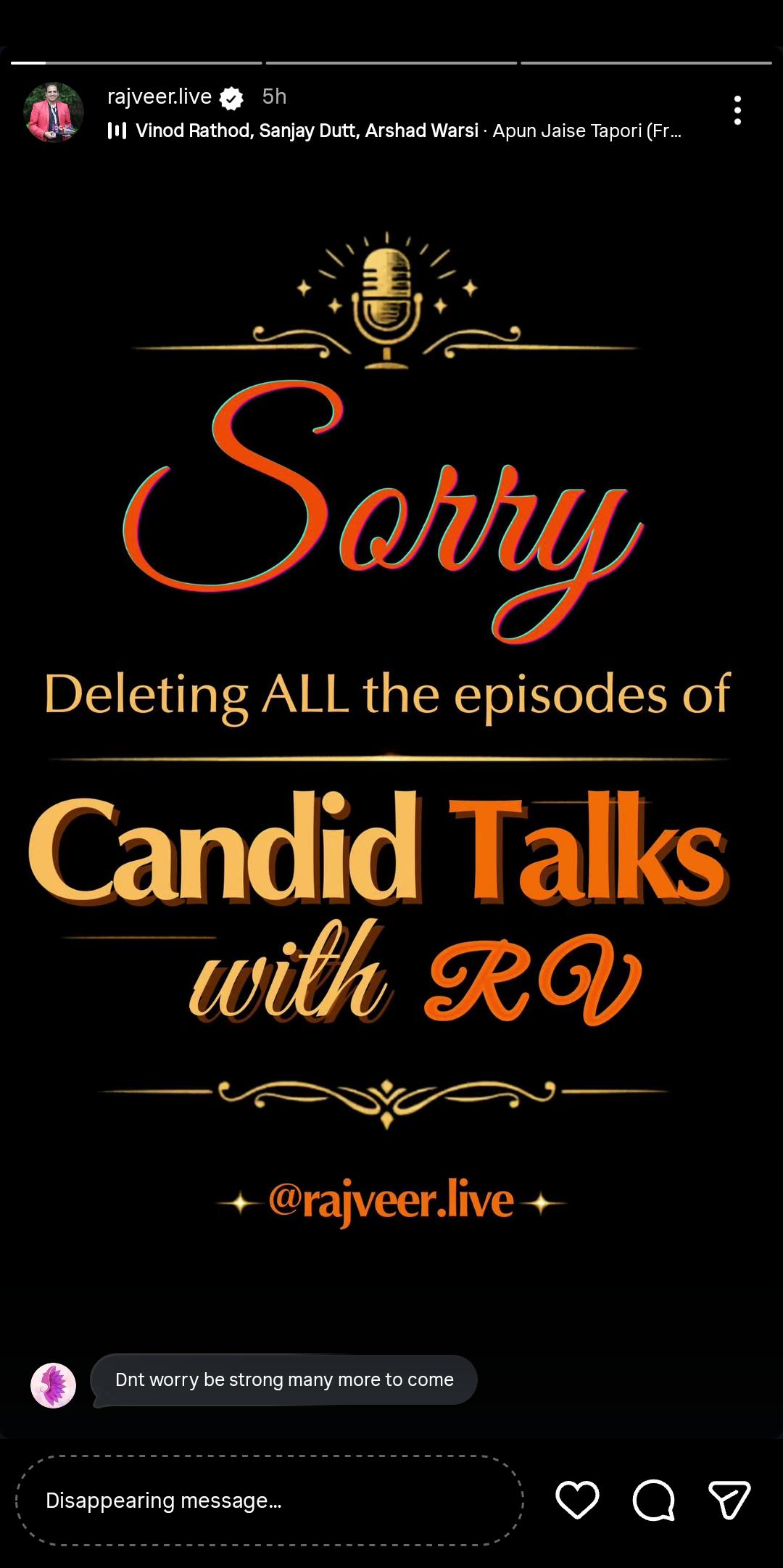
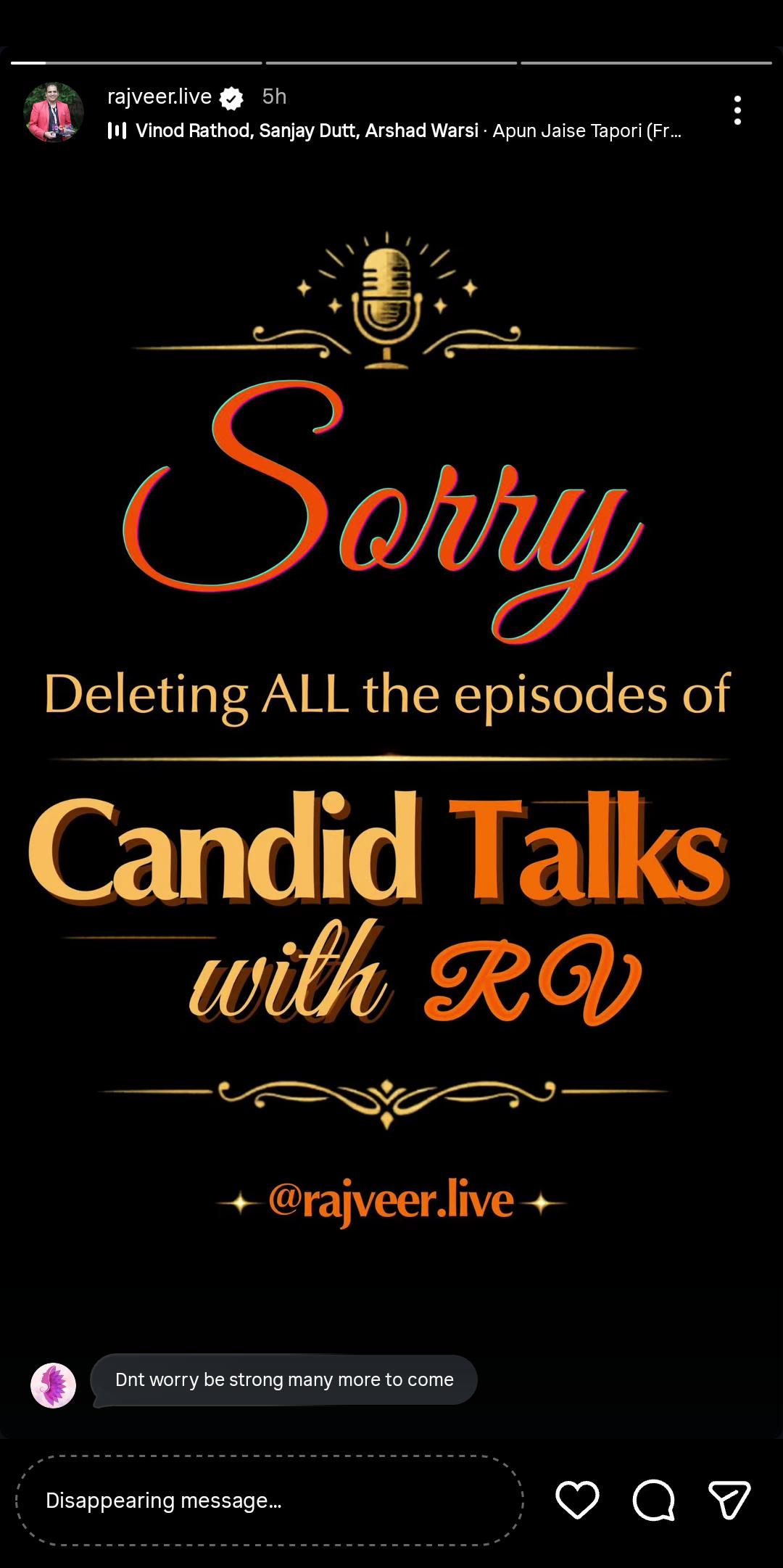
The show recently amplified its presence with a bold social media moment announcing the deletion of all episodes due to controversy and legal issues, triggering widespread speculation. The reveal of this as a strategic April Fool’s campaign highlighted a sharp understanding of audience psychology and modern content storytelling, positioning the brand beyond conventional formats.

More importantly, the focus now shifts to what lies ahead. With a rapidly expanding community and increasing cross-industry participation, Candid Talks With RV is evolving into more than a content series, it is shaping a platform that could redefine how conversations are structured within the creator economy, fostering collaboration, perspective, and real dialogue.

As the evening concluded, what stood out wasn’t just the scale of the celebration, but the momentum behind it. While no figures were officially disclosed, industry conversations suggest that the ecosystem being built around the show and its host RV has already crossed significant multi-million valuations, quietly reinforcing its growing influence in the digital landscape.

Google Ads Services In Patna | Best PPC Company In Patna | PPC Service Patna – Digital Care

Drive instant leads with our Google Ads services in Patna. Digital Care helps businesses get more traffic, sales and ROI with PPC campaigns.

Deepan Boopathy Congratulates Grandmaster R Vaishali, Praises Tamil Nadu’s Chess Legacy and Leadership Support

Chennai:The victory of R Vaishali at the Women’s Candidates Tournament 2026 has been widely recognised as a significant milestone for Indian chess. By securing this title, Grandmaster Vaishali has earned the opportunity to compete for the World Championship, marking a major step forward in her career and reinforcing India’s growing presence in the global chess landscape.

Producer Deepan Boopathy extended his congratulations to Grandmaster Vaishali, describing the achievement as a reflection of sustained effort, preparation, and competitive strength. Her performance throughout the tournament, particularly in high-pressure situations, has been acknowledged as a demonstration of composure and strategic clarity at the highest level of the sport.

Chennai has long been regarded as one of the most important centres for chess in India. Over the years, the city has consistently produced players who have gone on to represent the country internationally. The emergence of Grandmaster Vaishali, along with her brother R Praggnanandhaa, highlights the depth of talent that continues to come out of the region.

The state’s contribution to chess is further reflected in the presence of top players such as D Gukesh, who has also achieved global recognition at a young age. Together, these players represent a generation that has strengthened India’s standing in international chess and brought renewed attention to Tamil Nadu’s role in nurturing talent.

Beyond individual achievements, Tamil Nadu’s chess ecosystem has been built on a strong foundation of coaching, competitive exposure, and structured development. Training centres, tournaments, and mentorship systems across the state have enabled players to progress steadily through different levels of competition, creating a pipeline of talent capable of performing on the world stage.

Deepan Boopathy also highlighted the importance of leadership and institutional support in sustaining this growth. He spoke appreciatively about the role of Udhayanidhi Stalin, acknowledging the continued emphasis on sports development across the state.

Under his leadership as Deputy Chief Minister and Minister for Youth Welfare and Sports Development, Tamil Nadu has seen increased focus on improving sports infrastructure, expanding access to training facilities, and encouraging young athletes across disciplines. Such initiatives have contributed to building an environment where players are able to pursue excellence with the necessary support systems in place.

“Grandmaster Vaishali’s victory is a proud and inspiring moment for Indian chess and especially for Tamil Nadu. It reflects the level of dedication, focus, and mental strength required to succeed at the highest level of the game.

Chennai has consistently been a hub for chess, and achievements like this once again highlight the depth of talent coming from the region. At the same time, the continued support for sports under the leadership of Deputy Chief Minister and Sports Minister Udhayanidhi Stalin has created a strong and encouraging environment for athletes.

Investments in infrastructure, support at the grassroots level, and recognition of talent play an important role in shaping future Grandmasters. Such achievements inspire the next generation and contribute to the larger growth of sport in India,” Deepan Boopathy said.

Vaishali’s success is also being viewed as a significant moment for women’s chess in India. Her performance has brought attention to the increasing participation of women in competitive chess and the importance of creating equal opportunities within the sport. With more players emerging from structured training systems, the visibility of women in international chess continues to grow.

The broader rise of Indian chess in recent years has been marked by strong performances from a new generation of players. With Grandmasters such as Vaishali, Praggnanandhaa, and Gukesh achieving success on global platforms, the country has established itself as a serious contender in international competitions.

Deepan Boopathy added that such milestones go beyond individual recognition and contribute to a larger narrative of sporting progress. The combination of talent, infrastructure, and sustained support has positioned Tamil Nadu as a key contributor to India’s success in chess.

As Grandmaster R Vaishali prepares for the World Championship, her achievement continues to resonate across sporting and cultural circles. It stands as both an individual milestone and a reflection of the systems that have supported her journey, reinforcing Tamil Nadu’s enduring reputation as a centre for excellence in chess.

Why Smart Indian Homeowners Are Choosing Modular Furniture? And Why Speed Is Now the Biggest Factor?

If you have ever renovated a home in India, you know the feeling. The excitement of choosing designs quickly turns into weeks of waiting, followed by delays you didn’t see coming, contractor no-shows, quality compromises, and a final result that makes you wonder why you didn’t just live with your old furniture.For years, this has been the reality of home interiors.

But that is now changing — and fast.

According to Sufiyan Khan, Founder of Classic K3 Design Interiors, the biggest shift in the industry isn’t just design trends or materials — it’s speed. More specifically, the rise of in-house modular manufacturing that is making it possible to furnish an entire home in a fraction of the time it once took.

So what exactly is modular furniture, and why does it matter?

At its core, modular furniture is factory-made, precision-engineered furniture built in standardized components that can be customised to fit any space. Unlike traditional carpenter-made furniture — which is built on-site and often suffers from inconsistent quality and unpredictable timelines — modular furniture is manufactured under controlled conditions, quality-checked before delivery, and installed efficiently by trained professionals.

And the difference is significant.

A complete 2 BHK home furnishing project — including living room, bedrooms, kitchen, and storage — which traditionally takes 3 to 6 months, can now be delivered in just 20 days by companies like Classic K3 Design Interiors, backed by their in-house modular factory. A modular kitchen alone can be completed in as little as 7 days.

For modern homeowners juggling EMI payments, rental costs, and the disruption of living in an unfinished home, this kind of speed is not just convenient — it is transformative.

But speed without quality is meaningless.

This is where the real distinction lies.

Brands that rely on third-party contractors often lose control over both quality and timelines. Every subcontractor introduces variability — in schedules, materials, and execution standards. In contrast, companies like Classic K3 Design Interiors, which operate with a fully in-house manufacturing and execution model, eliminate these variables entirely.

As Sufiyan Khan explains, “When the same team is responsible for design, manufacturing, and installation, accountability becomes absolute. That’s when timelines become commitments, not estimates.”

For those wondering whether in-house modular brands can truly deliver at scale, the answer lies in who trusts them.

The Indian Army — an institution known for its discipline, precision, and zero tolerance for delays — has placed its trust in this model. And beyond that, leading interior platforms like Livspace, Homelane, and DesignCafe rely on manufacturing partners like Classic K3 Design Interiors to deliver projects for their customers across India.

When the biggest players in the industry depend on a system, it signals reliability.

So what should a homeowner look for when choosing a modular interior partner?

First, ask whether the manufacturing is in-house or outsourced.

Second, look for guaranteed timelines — not vague estimates.

Third, ensure the same company handles design, production, and installation.

According to Sufiyan Khan, if any of these elements are missing, delays and inconsistencies are almost inevitable.

The future of home interiors in India is not just about better design — it is about better systems.

And as more homeowners prioritize speed, reliability, and transparency, companies like Classic K3 Design Interiors are setting the benchmark for what modern interior execution should look like.

Shock Move: ‘Candid Talks with RV’ Could Delete Every Episode

India | March 2026

In a development that has rapidly captured attention across digital and media circles, Candid Talks with RV — a talk format known for its bold and unfiltered conversations may soon face a complete takedown, with indications that all episodes of the show will be deleted due to legal issues.

The development came to light after a series of Instagram Stories shared by Rajveer Singh suggested that the platform could be removed in its entirety, citing “controversies and unavoidable legal issues.”

The announcement has triggered widespread discussion, with audiences and industry observers closely tracking the situation.

While no detailed clarification has been issued, the nature of the announcement has led to multiple interpretations.

Some believe that the show’s format which brings together diverse voices for candid, often opinion-driven discussions may have led to conversations intersecting with sensitive public narratives, including political viewpoints or broader societal issues, potentially raising concerns.

Others suggest that certain discussions may have overlapped with cultural or religious sentiments, which, in a highly reactive digital environment, can escalate quickly and lead to precautionary decisions.

There is also growing conversation around whether legal and compliance factors may be at play, particularly if any statements made during the show were considered open to interpretation or contentious.

At the same time, a contrasting perspective continues to surface. Given the show’s strong storytelling approach and ability to drive engagement, some industry voices believe this could still be a strategic narrative build-up, although no confirmation supports this view at present.

What makes this situation particularly significant is the scale of the reported action not just a single episode, but the entire catalogue of Candid Talks with RV.

Positioned as “It’s NOT just a podcast,” the show has differentiated itself through its format of four guests from four different professions, creating conversations that blend business, culture, media, and real-world perspectives.

The platform has featured a wide range of notable personalities, including the CMO of Donear / NeoStretch, the National Director of Veeba, Dr. Alpana of Body Profuse, award-winning journalist Sitaram Mewati, Chef Mukul of Aurika Hotels, actress Jaswinder Gardner, and leading creators such as Foodie Kashif, Anjuri Sinha, Krithi Kuttathil, and Guneet Sharma. Social impact voices like Suhani Mendonsa have also contributed to the show’s diverse dialogue.

The show is backed by Body Profuse as its primary sponsor and HOLLYLAND as its technical and audio partner, both of whom remain aligned with the platform and its host as the situation develops.

Following the announcement, audience curiosity has surged, with viewers revisiting available content and attempting to understand the implications of a potential full removal.

At present, there is no official confirmation on timelines or the exact nature of the legal concerns involved. However, the possibility that all episodes may be taken down has elevated this situation into a larger conversation about content, boundaries, and responsibility in the evolving digital landscape.

This moment also comes at a time when long-form conversations and podcast-style formats are witnessing massive growth, with creators like Ranveer Allahbadia, Raj Shamani, Nikhil Kamath, and globally Joe Rogan shaping how dialogue captures attention and influences audiences.

In that context, what is unfolding around Candid Talks with RV is being closely watched, not just as a standalone development, but as a reflection of how powerful conversations can sometimes lead to equally powerful consequences.

Whether this is a necessary step, a precautionary move, or something more layered the coming days are expected to bring clarity.

Shock Move: ‘Candid Talks with RV’ Could Delete Every Episode

India | March 2026

In a development that has rapidly captured attention across digital and media circles, Candid Talks with RV — a talk format known for its bold and unfiltered conversations may soon face a complete takedown, with indications that all episodes of the show will be deleted due to legal issues.

The development came to light after a series of Instagram Stories shared by Rajveer Singh suggested that the platform could be removed in its entirety, citing “controversies and unavoidable legal issues.”

The announcement has triggered widespread discussion, with audiences and industry observers closely tracking the situation.

While no detailed clarification has been issued, the nature of the announcement has led to multiple interpretations.

Some believe that the show’s format which brings together diverse voices for candid, often opinion-driven discussions may have led to conversations intersecting with sensitive public narratives, including political viewpoints or broader societal issues, potentially raising concerns.

Others suggest that certain discussions may have overlapped with cultural or religious sentiments, which, in a highly reactive digital environment, can escalate quickly and lead to precautionary decisions.

There is also growing conversation around whether legal and compliance factors may be at play, particularly if any statements made during the show were considered open to interpretation or contentious.

At the same time, a contrasting perspective continues to surface. Given the show’s strong storytelling approach and ability to drive engagement, some industry voices believe this could still be a strategic narrative build-up, although no confirmation supports this view at present.

What makes this situation particularly significant is the scale of the reported action not just a single episode, but the entire catalogue of Candid Talks with RV.

Positioned as “It’s NOT just a podcast,” the show has differentiated itself through its format of four guests from four different professions, creating conversations that blend business, culture, media, and real-world perspectives.

The platform has featured a wide range of notable personalities, including the CMO of Donear / NeoStretch, the National Director of Veeba, Dr. Alpana of Body Profuse, award-winning journalist Sitaram Mewati, Chef Mukul of Aurika Hotels, actress Jaswinder Gardner, and leading creators such as Foodie Kashif, Anjuri Sinha, Krithi Kuttathil, and Guneet Sharma. Social impact voices like Suhani Mendonsa have also contributed to the show’s diverse dialogue.

The show is backed by Body Profuse as its primary sponsor and HOLLYLAND as its technical and audio partner, both of whom remain aligned with the platform and its host as the situation develops.

Following the announcement, audience curiosity has surged, with viewers revisiting available content and attempting to understand the implications of a potential full removal.

At present, there is no official confirmation on timelines or the exact nature of the legal concerns involved. However, the possibility that all episodes may be taken down has elevated this situation into a larger conversation about content, boundaries, and responsibility in the evolving digital landscape.

This moment also comes at a time when long-form conversations and podcast-style formats are witnessing massive growth, with creators like Ranveer Allahbadia, Raj Shamani, Nikhil Kamath, and globally Joe Rogan shaping how dialogue captures attention and influences audiences.

In that context, what is unfolding around Candid Talks with RV is being closely watched, not just as a standalone development, but as a reflection of how powerful conversations can sometimes lead to equally powerful consequences.

Whether this is a necessary step, a precautionary move, or something more layered the coming days are expected to bring clarity.

From IT Professional to Global E-commerce Founder: How Mahesh Chada Built PushMyCart to Deliver Authentic Indian Products to Millions Living Abr

Every successful business begins with a story driven by passion, purpose, and the desire to solve a real problem. The journey of PushMyCart is one such story, inspired by the vision of its founder, Mahesh Chada, whose deep connection to Indian culture and traditions led him to create a platform that now serves millions of Indians living far from home.

Before becoming an entrepreneur, Mahesh was building a successful career in the United States in the Information Technology industry. Academically strong and professionally accomplished, he is also a Chartered Accountant (CA). With expertise in finance and technology, he had a stable and promising career abroad.

Despite his professional success, Mahesh remained deeply connected to his roots. Born into a South Indian family, he grew up surrounded by Indian traditions, religious rituals, traditional food, and strong cultural values. These influences remained an important part of his identity even after he moved overseas.

Living in the United States gave him global exposure and professional growth, but it also made him realize a challenge faced by many Indians living abroad. Being away from India often meant being away from the everyday products that define Indian culture and lifestyle.

While living in the U.S., Mahesh noticed that many Indians struggled to find authentic Indian products. Traditional sweets, regional foods, pooja items, and everyday essentials were either unavailable or extremely expensive in local markets.

For many members of the Indian diaspora, finding authentic Indian products often meant depending on limited Indian stores or asking family members traveling from India to carry items for them.

Mahesh realized that millions of Indians living abroad were missing small yet meaningful pieces of home — food that reminded them of festivals, traditional items used during pooja, and products that carried memories of their culture.

This observation planted the seed of an idea that would eventually change his career path.

Mahesh believed that distance should never prevent people from staying connected to their roots. He envisioned creating a platform that would make authentic Indian products easily accessible to Indians living across the world, especially those in the United States.

Turning this vision into reality required courage. Despite having a secure and well-paying job in the IT industry, Mahesh made the bold decision to step away from his career and pursue entrepreneurship.

With determination and a clear mission, he founded PushMyCart.com, an online platform designed to deliver authentic Indian products to customers living abroad.

The mission behind PushMyCart was simple but powerful — to make Indian products accessible to people living outside India at reasonable prices.

Like many startups, PushMyCart began with a focused idea. Mahesh understood that food often holds the strongest emotional connection to one’s homeland. He started by offering traditional Indian food products, particularly items loved by South Indian communities.

One of the early products introduced on the platform was Ariselu, a traditional South Indian sweet enjoyed during festivals and family celebrations.

For many Indians living in the United States, seeing such authentic products available online brought a sense of joy and nostalgia. PushMyCart soon became a bridge connecting India with Indians living thousands of miles away.

Customers could once again enjoy the flavors of their childhood and celebrate festivals the way they did back home.

Mahesh understood that building a successful e-commerce platform required more than just selling products. Trust was equally important.

From the beginning, PushMyCart focused on providing authentic products sourced directly from India, offering fair pricing for international customers, ensuring reliable delivery services, and maintaining a strong customer-first approach.

As customers discovered the platform, word about PushMyCart began spreading across Indian communities in the United States. Families shared the platform with friends, and communities recommended it during festivals and gatherings.

Gradually, PushMyCart began gaining popularity and expanding its customer base.

Over time, the platform proudly served more than one million customers, helping Indians around the world stay connected to their culture even while living far from home.

As the platform gained trust and recognition, Mahesh expanded the product range. He realized that food was only one aspect of Indian life abroad.

Many customers were also searching for traditional pooja items and spiritual products used in Hindu rituals. To meet this demand, PushMyCart introduced silver products commonly used during religious ceremonies and festivals.

This expansion made the platform even more valuable for the Indian diaspora. Customers could now find not only their favorite foods but also sacred items needed for their spiritual practices.

With increasing support from customers, PushMyCart continued to grow and diversify. Over the years, the platform expanded into multiple categories including Indian food brands, traditional clothing, Ayurvedic and wellness products, and several innovative Indian items.

Each new category was carefully selected to maintain authenticity and quality.

Mahesh’s long-term vision was to make PushMyCart a one-stop destination for Indian products for customers living anywhere in the world.

Unlike many businesses that focus purely on profits, PushMyCart was built on a deeper emotional mission. Mahesh understood the feeling of living far from home and the happiness that comes from finding something that reminds you of your culture and traditions.

This emotional connection became the foundation of PushMyCart’s philosophy.

The company’s slogan reflects this purpose perfectly:

“Don’t Miss Anything from India.”

For Mahesh and his team, this slogan represents more than marketing. It reflects their commitment to ensuring that Indians living abroad never feel disconnected from their roots.

Today, PushMyCart continues to grow as a trusted platform delivering Indian products to customers around the world.

Mahesh Chada’s journey — from working in the IT industry to building a global e-commerce brand — highlights the power of vision, courage, and cultural pride.

His story demonstrates that sometimes the most impactful business ideas come from personal experiences and a genuine desire to help others.

PushMyCart has become more than just an online marketplace. It has become a bridge connecting people to their homeland, their traditions, and the memories that make India special.

And as long as there are Indians living far from home who miss the flavors, traditions, and products of their country, PushMyCart will continue its mission — ensuring that no one ever has to miss anything from India.


IOEMS Workforce Outsourcing Services Emerging as a Key Support System for Government Projects in India

As India continues to accelerate its development agenda across sectors such as infrastructure, healthcare, education, and digital governance, the importance of efficient workforce management in the public sector is becoming increasingly evident. Government departments and public institutions depend on thousands of contractual and project-based employees to carry out various development initiatives and public welfare programs. Managing such a large workforce, however, has historically presented several administrative challenges.

In response to these challenges, structured workforce outsourcing services are gradually gaining attention as a practical solution to improve efficiency and transparency. Companies like Indian Outsourcing Employment Management Services (IOEMS) are working to simplify workforce administration by offering organized employment management solutions specifically designed for government departments and semi-government institutions.

The Expanding Workforce Behind Government Programs

India’s public sector operates numerous projects simultaneously, ranging from road construction and urban infrastructure to healthcare services and digital governance initiatives. These projects often require a flexible workforce that can be deployed quickly depending on project needs.

Contractual employees and project-based staff therefore play a vital role in the successful implementation of these initiatives. However, coordinating recruitment, onboarding, payroll management, and compliance for a large number of workers can become complex for government departments that are primarily focused on policy implementation and service delivery.

Traditionally, these workforce requirements have been managed through contractors or multiple intermediaries. While this approach helped provide manpower when required, it also led to several operational inefficiencies over time.

Challenges in Traditional Workforce Management Systems

One of the major issues associated with traditional workforce management systems has been the reliance on multiple intermediaries. Workers seeking employment opportunities in government-funded projects often depended on agents or contractors who connected them with job openings.

This system sometimes resulted in delays in recruitment processes, unclear communication regarding employment terms, and lack of transparency in payroll management. Workers occasionally faced confusion regarding salary deductions or documentation related to their employment.

From the perspective of government departments, managing workforce records and ensuring compliance with labor regulations also became increasingly difficult when several intermediaries were involved in the process.

These challenges have encouraged institutions to explore more structured employment management systems that provide greater accountability and transparency.

The Rise of IOEMS Organized Workforce Outsourcing

Structured workforce outsourcing models aim to address these challenges by centralizing employment management processes. In this system, a professional workforce solutions provider acts as an authorized partner responsible for managing recruitment coordination, employee onboarding, payroll processing, and HR administration.

IOEMS (Indian Outsourcing Employment Management Services) is among the organizations positioning itself as a workforce management partner for public sector institutions. By aligning its operations with statutory regulations and government compliance standards, IOEMS aims to help streamline workforce administration while maintaining transparency in employment practices.

This centralized model reduces the need for multiple intermediaries and allows government departments to manage manpower more effectively.

Comprehensive Workforce Management Services by IOEMS

Structured employment management providers typically offer a wide range of services designed to support government workforce operations.

One of the primary services is manpower outsourcing for government projects, which involves identifying suitable candidates and deploying them to projects that require additional workforce support.

Another key service is payroll processing, where salary management is handled through transparent digital systems. Accurate payroll records help ensure that employees receive timely payments while maintaining proper financial documentation.

IOEMS also assists with statutory compliance management, ensuring that labor laws and employee welfare regulations are followed. This includes handling contributions related to provident funds, employee benefits, and other legal requirements.

Additionally, Employer of Record (EOR) services allow workforce providers to manage employment contracts, documentation, and HR administration for contractual employees on behalf of government institutions.

Improving Operational Efficiency for Government Institutions

The adoption of structured workforce outsourcing services can significantly improve operational efficiency within government departments. By delegating administrative tasks such as recruitment, payroll, and employee documentation to specialized workforce management providers like IOEMS, institutions can focus more on project implementation and public service delivery.

Centralized workforce systems also help maintain accurate digital records, which are essential for large-scale government projects that require detailed reporting and monitoring.

Transparency in payroll processing and compliance management further strengthens governance standards, reducing the risk of disputes or regulatory complications.

Benefits for Contractual Employees

Structured workforce outsourcing models also provide several benefits for employees working on government projects. One of the key advantages is the availability of clearly defined employment agreements that outline roles, responsibilities, and compensation terms.

Transparent payroll systems ensure that salaries are paid on time and that deductions are properly documented. This reduces the likelihood of misunderstandings or disputes related to wage payments.

Digital employment records also provide workers with formal documentation of their work experience, which can be valuable for future employment opportunities.

Furthermore, organized HR administration systems allow employees to access grievance redressal mechanisms, leave management systems, and other support services that may not be available in informal employment arrangements.

The Future of Workforce Management with IOEMS

As India continues to expand its infrastructure network and implement new digital governance initiatives, the scale of public sector projects is expected to increase significantly in the coming years.

Managing large workforces efficiently will therefore remain a key priority for government institutions. Structured workforce outsourcing services led by organizations like IOEMS are likely to play an increasingly important role in supporting these efforts.

By promoting transparency, efficiency, and accountability in workforce management, IOEMS aims to contribute to the successful implementation of government initiatives while also improving employment conditions for contractual workers across the country.

IOEMS Workforce Outsourcing Services Emerging as a Key Support System for Government Projects in India

As India continues to accelerate its development agenda across sectors such as infrastructure, healthcare, education, and digital governance, the importance of efficient workforce management in the public sector is becoming increasingly evident. Government departments and public institutions depend on thousands of contractual and project-based employees to carry out various development initiatives and public welfare programs. Managing such a large workforce, however, has historically presented several administrative challenges.

In response to these challenges, structured workforce outsourcing services are gradually gaining attention as a practical solution to improve efficiency and transparency. Companies like Indian Outsourcing Employment Management Services (IOEMS) are working to simplify workforce administration by offering organized employment management solutions specifically designed for government departments and semi-government institutions.

The Expanding Workforce Behind Government Programs

India’s public sector operates numerous projects simultaneously, ranging from road construction and urban infrastructure to healthcare services and digital governance initiatives. These projects often require a flexible workforce that can be deployed quickly depending on project needs.

Contractual employees and project-based staff therefore play a vital role in the successful implementation of these initiatives. However, coordinating recruitment, onboarding, payroll management, and compliance for a large number of workers can become complex for government departments that are primarily focused on policy implementation and service delivery.

Traditionally, these workforce requirements have been managed through contractors or multiple intermediaries. While this approach helped provide manpower when required, it also led to several operational inefficiencies over time.

Challenges in Traditional Workforce Management Systems

One of the major issues associated with traditional workforce management systems has been the reliance on multiple intermediaries. Workers seeking employment opportunities in government-funded projects often depended on agents or contractors who connected them with job openings.

This system sometimes resulted in delays in recruitment processes, unclear communication regarding employment terms, and lack of transparency in payroll management. Workers occasionally faced confusion regarding salary deductions or documentation related to their employment.

From the perspective of government departments, managing workforce records and ensuring compliance with labor regulations also became increasingly difficult when several intermediaries were involved in the process.

These challenges have encouraged institutions to explore more structured employment management systems that provide greater accountability and transparency.

The Rise of IOEMS Organized Workforce Outsourcing

Structured workforce outsourcing models aim to address these challenges by centralizing employment management processes. In this system, a professional workforce solutions provider acts as an authorized partner responsible for managing recruitment coordination, employee onboarding, payroll processing, and HR administration.

IOEMS (Indian Outsourcing Employment Management Services) is among the organizations positioning itself as a workforce management partner for public sector institutions. By aligning its operations with statutory regulations and government compliance standards, IOEMS aims to help streamline workforce administration while maintaining transparency in employment practices.

This centralized model reduces the need for multiple intermediaries and allows government departments to manage manpower more effectively.

Comprehensive Workforce Management Services by IOEMS

Structured employment management providers typically offer a wide range of services designed to support government workforce operations.

One of the primary services is manpower outsourcing for government projects, which involves identifying suitable candidates and deploying them to projects that require additional workforce support.

Another key service is payroll processing, where salary management is handled through transparent digital systems. Accurate payroll records help ensure that employees receive timely payments while maintaining proper financial documentation.

IOEMS also assists with statutory compliance management, ensuring that labor laws and employee welfare regulations are followed. This includes handling contributions related to provident funds, employee benefits, and other legal requirements.

Additionally, Employer of Record (EOR) services allow workforce providers to manage employment contracts, documentation, and HR administration for contractual employees on behalf of government institutions.

Improving Operational Efficiency for Government Institutions

The adoption of structured workforce outsourcing services can significantly improve operational efficiency within government departments. By delegating administrative tasks such as recruitment, payroll, and employee documentation to specialized workforce management providers like IOEMS, institutions can focus more on project implementation and public service delivery.

Centralized workforce systems also help maintain accurate digital records, which are essential for large-scale government projects that require detailed reporting and monitoring.

Transparency in payroll processing and compliance management further strengthens governance standards, reducing the risk of disputes or regulatory complications.

Benefits for Contractual Employees

Structured workforce outsourcing models also provide several benefits for employees working on government projects. One of the key advantages is the availability of clearly defined employment agreements that outline roles, responsibilities, and compensation terms.

Transparent payroll systems ensure that salaries are paid on time and that deductions are properly documented. This reduces the likelihood of misunderstandings or disputes related to wage payments.

Digital employment records also provide workers with formal documentation of their work experience, which can be valuable for future employment opportunities.

Furthermore, organized HR administration systems allow employees to access grievance redressal mechanisms, leave management systems, and other support services that may not be available in informal employment arrangements.

The Future of Workforce Management with IOEMS

As India continues to expand its infrastructure network and implement new digital governance initiatives, the scale of public sector projects is expected to increase significantly in the coming years.

Managing large workforces efficiently will therefore remain a key priority for government institutions. Structured workforce outsourcing services led by organizations like IOEMS are likely to play an increasingly important role in supporting these efforts.

By promoting transparency, efficiency, and accountability in workforce management, IOEMS aims to contribute to the successful implementation of government initiatives while also improving employment conditions for contractual workers across the country.

From Cubicles to Clean Living: How Three IT Guys are Fixing India’s "Fake Herbal Tea" Problem

PUNE, If you walked into a typical IT park three years ago, you would have found Abhijeet, Kunal and Abhijit doing exactly what millions of others do: grinding through 9-hour shifts, fueled by back-to-back coffees and ignoring the slow decline of their health.

They weren't wellness experts. They were "IT Warriors" who had traded their fitness for deadlines. But today, they are the faces behind FitClan Life, a brand that is stripping the complexity and the chemicals out of the Indian wellness industry.

The "Family Pack" Epiphany

The story of FitClan Life didn’t start with a business plan; it started with a "midlife crisis" in the 30's.

"We called our bellies 'family packs' to joke about them," says Abhijeet, one of the founders. "But the joke stopped being funny when the knee pain started, when the gut issues became a daily struggle and when weekend cricket matches felt like climbing Everest."

The trio realized they were part of a massive, silent epidemic of corporate burnout. They decided to fight back. They started with a "Great Kitchen Purge" deleting delivery apps and declaring a "War on Sugar." The results were startling. Abhijeet lost 10kg, regained his agility on the cricket pitch and finally felt "light" again.

"They realized that people don’t lack motivation", "They just lack real, honest options. Everything in the ‘healthy’ aisle was either tasteless, overpriced or secretly loaded with sugar."

Breaking the "Fake Healthy" Cycle

FitClan Life was born to bridge the gap between "tasty" and "truthful." The founders noticed a frustrating trend: mass-market herbal teas were often just flavored dust with zero potency.

Coming from an engineering background, they applied a "systems-first" approach to their manufacturing. They learned that the power of an herb depends on its Active Compounds. In their facility, ingredients aren't just tossed together; they are ground, dusted and blended with precision to ensure that the "magic" of the plant actually makes it into your cup.

The FitClan Life Difference: Beyond the Label : 

While many wellness brands rely on "window dressing", using tiny amounts of herbs just to put them on the label. FitClan Life operates on a different frequency. Most mass-market herbal teas are bulked up with "fillers" like maltodextrin, artificial flavors, acidity regulators and hidden sugars that actually harm your gut while claiming to heal it. We took a stand against this "tasteless or fake" culture. By focusing on Active Compound Potency, we ensure that our herbs aren't just present; they are powerful. We’ve eliminated the faulty fillers, the preservatives and dyes and scents, creating a blend that is strictly functional. When you look at a FitClan label, you aren't just seeing ingredients; you’re seeing a promise of purity that mass-market competitors simply can't afford to keep. It is indeed Non-boring healthy tea options available in India.

Five Cups of Change

FitClan Life has distilled its philosophy into five targeted blends, each solving a problem the founders personally faced:

Sleep Stress-Free: Because "IT brains" don't switch off easily. It uses Ashwagandha, Lavender and other herbs to calm the mind without the morning fog. It is one of the Effective herbal teas for better sleep and stress.

Weight Balance: A metabolism-booster featuring the Blue Pea flower, green tea and other herbs. It’s about feeling active, not feeling "starved."

Digestion Enhance: Their "Gut-First" solution. UsingPeppermint, Fennel, Ginger and other herbs, it fixes the heaviness that comes from sitting at a desk all day.

Immunity Boosting: A daily shield of Amla and Turmeric with Rhododendron flower and other herbs for those who can’t afford a "sick day."

Diabetes Control: The ultimate partner for the "Sugar Breakup," using Gudmar, Vijaysar, Daruhaldi and Stevia to manage post-meal spikes naturally.

From Flea Markets to Dorabjee’s

The brand didn't grow through fancy TV ads. It grew through conversations. The founders started by setting up stalls at residential flea markets in Pune, brewing tea for neighbors and listening to their stories.

That grassroots trust eventually led them to the shelves of Dorabjee’s, Pune’s most iconic premium retailer. Today, while they remain a local favorite, their "Clan" has spread across India via Amazon and their website, delivering chemical-free wellness to every pin code.

Join the Clan

"FitClan Life isn't just a name, It’s a Clan. We wanted to build a community where fitness isn't a punishment for what you ate, but a celebration of what your body can do."

For these three founders, the mission is simple: healthy living shouldn't be a chore. It should be as easy, honest and refreshing as a cup of tea.

Want to join the tribe?

Explore the full range of zero-sugar, plant-powered blends at https://www.fitclanlife.com/ or find FitClan Life at Dorabjee’ Pune’s and Amazon.in. Follow their journey on Instagram for a daily dose of "Real Health."

Not Just a Podcast: How Candid Talks With RV Is Building a New Creator Business Model

Mumbai’s creator ecosystem witnessed a defining moment as Candid Talks With RV hosted an exclusive success celebration at House of Pleo, Chandivali, a rooftop venue known for premium, high-energy gatherings. The invite-only evening brought together a curated mix of entrepreneurs, content creators, and professionals who have been part of the show’s journey as panelists, sponsors, and collaborators. Hosted by Rajveer Singh the night held a dual significance marking not just the success of the talk show, but also Rajveer’s birthday on 23rd April, where not just champagne, but happiness and success were pouring.

At a time when the podcast space is saturated with predictable formats, Candid Talks With RV stands apart with its distinct structure, four guests from four different professions engaging in one powerful conversation. Backed by the tagline “It’s NOT just a Podcast,” the show embraces a no-script, no-filter approach, creating raw, authentic exchanges that resonate strongly with today’s creator and entrepreneurial audience.

The show recently amplified its presence with a bold social media moment announcing the deletion of all episodes due to controversy and legal issues, triggering widespread speculation. The reveal of this as a strategic April Fool’s campaign highlighted a sharp understanding of audience psychology and modern content storytelling, positioning the brand beyond conventional formats.

More importantly, the focus now shifts to what lies ahead. With a rapidly expanding community and increasing cross-industry participation, Candid Talks With RV is evolving into more than a content series, it is shaping a platform that could redefine how conversations are structured within the creator economy, fostering collaboration, perspective, and real dialogue.

As the evening concluded, what stood out wasn’t just the scale of the celebration, but the momentum behind it. While no figures were officially disclosed, industry conversations suggest that the ecosystem being built around the show and its host RV has already crossed significant multi-million valuations, quietly reinforcing its growing influence in the digital landscape.

Google Ads Services In Patna | Best PPC Company In Patna | PPC Service Patna – Digital Care

Drive instant leads with our Google Ads services in Patna. Digital Care helps businesses get more traffic, sales and ROI with PPC campaigns.

Deepan Boopathy Congratulates Grandmaster R Vaishali, Praises Tamil Nadu’s Chess Legacy and Leadership Support

Chennai:The victory of R Vaishali at the Women’s Candidates Tournament 2026 has been widely recognised as a significant milestone for Indian chess. By securing this title, Grandmaster Vaishali has earned the opportunity to compete for the World Championship, marking a major step forward in her career and reinforcing India’s growing presence in the global chess landscape.

Producer Deepan Boopathy extended his congratulations to Grandmaster Vaishali, describing the achievement as a reflection of sustained effort, preparation, and competitive strength. Her performance throughout the tournament, particularly in high-pressure situations, has been acknowledged as a demonstration of composure and strategic clarity at the highest level of the sport.

Chennai has long been regarded as one of the most important centres for chess in India. Over the years, the city has consistently produced players who have gone on to represent the country internationally. The emergence of Grandmaster Vaishali, along with her brother R Praggnanandhaa, highlights the depth of talent that continues to come out of the region.

The state’s contribution to chess is further reflected in the presence of top players such as D Gukesh, who has also achieved global recognition at a young age. Together, these players represent a generation that has strengthened India’s standing in international chess and brought renewed attention to Tamil Nadu’s role in nurturing talent.

Beyond individual achievements, Tamil Nadu’s chess ecosystem has been built on a strong foundation of coaching, competitive exposure, and structured development. Training centres, tournaments, and mentorship systems across the state have enabled players to progress steadily through different levels of competition, creating a pipeline of talent capable of performing on the world stage.

Deepan Boopathy also highlighted the importance of leadership and institutional support in sustaining this growth. He spoke appreciatively about the role of Udhayanidhi Stalin, acknowledging the continued emphasis on sports development across the state.

Under his leadership as Deputy Chief Minister and Minister for Youth Welfare and Sports Development, Tamil Nadu has seen increased focus on improving sports infrastructure, expanding access to training facilities, and encouraging young athletes across disciplines. Such initiatives have contributed to building an environment where players are able to pursue excellence with the necessary support systems in place.

“Grandmaster Vaishali’s victory is a proud and inspiring moment for Indian chess and especially for Tamil Nadu. It reflects the level of dedication, focus, and mental strength required to succeed at the highest level of the game.

Chennai has consistently been a hub for chess, and achievements like this once again highlight the depth of talent coming from the region. At the same time, the continued support for sports under the leadership of Deputy Chief Minister and Sports Minister Udhayanidhi Stalin has created a strong and encouraging environment for athletes.

Investments in infrastructure, support at the grassroots level, and recognition of talent play an important role in shaping future Grandmasters. Such achievements inspire the next generation and contribute to the larger growth of sport in India,” Deepan Boopathy said.

Vaishali’s success is also being viewed as a significant moment for women’s chess in India. Her performance has brought attention to the increasing participation of women in competitive chess and the importance of creating equal opportunities within the sport. With more players emerging from structured training systems, the visibility of women in international chess continues to grow.

The broader rise of Indian chess in recent years has been marked by strong performances from a new generation of players. With Grandmasters such as Vaishali, Praggnanandhaa, and Gukesh achieving success on global platforms, the country has established itself as a serious contender in international competitions.

Deepan Boopathy added that such milestones go beyond individual recognition and contribute to a larger narrative of sporting progress. The combination of talent, infrastructure, and sustained support has positioned Tamil Nadu as a key contributor to India’s success in chess.

As Grandmaster R Vaishali prepares for the World Championship, her achievement continues to resonate across sporting and cultural circles. It stands as both an individual milestone and a reflection of the systems that have supported her journey, reinforcing Tamil Nadu’s enduring reputation as a centre for excellence in chess.

Why Smart Indian Homeowners Are Choosing Modular Furniture? And Why Speed Is Now the Biggest Factor?

If you have ever renovated a home in India, you know the feeling. The excitement of choosing designs quickly turns into weeks of waiting, followed by delays you didn’t see coming, contractor no-shows, quality compromises, and a final result that makes you wonder why you didn’t just live with your old furniture.For years, this has been the reality of home interiors.

But that is now changing — and fast.

According to Sufiyan Khan, Founder of Classic K3 Design Interiors, the biggest shift in the industry isn’t just design trends or materials — it’s speed. More specifically, the rise of in-house modular manufacturing that is making it possible to furnish an entire home in a fraction of the time it once took.

So what exactly is modular furniture, and why does it matter?

At its core, modular furniture is factory-made, precision-engineered furniture built in standardized components that can be customised to fit any space. Unlike traditional carpenter-made furniture — which is built on-site and often suffers from inconsistent quality and unpredictable timelines — modular furniture is manufactured under controlled conditions, quality-checked before delivery, and installed efficiently by trained professionals.

And the difference is significant.

A complete 2 BHK home furnishing project — including living room, bedrooms, kitchen, and storage — which traditionally takes 3 to 6 months, can now be delivered in just 20 days by companies like Classic K3 Design Interiors, backed by their in-house modular factory. A modular kitchen alone can be completed in as little as 7 days.

For modern homeowners juggling EMI payments, rental costs, and the disruption of living in an unfinished home, this kind of speed is not just convenient — it is transformative.

But speed without quality is meaningless.

This is where the real distinction lies.

Brands that rely on third-party contractors often lose control over both quality and timelines. Every subcontractor introduces variability — in schedules, materials, and execution standards. In contrast, companies like Classic K3 Design Interiors, which operate with a fully in-house manufacturing and execution model, eliminate these variables entirely.

As Sufiyan Khan explains, “When the same team is responsible for design, manufacturing, and installation, accountability becomes absolute. That’s when timelines become commitments, not estimates.”

For those wondering whether in-house modular brands can truly deliver at scale, the answer lies in who trusts them.

The Indian Army — an institution known for its discipline, precision, and zero tolerance for delays — has placed its trust in this model. And beyond that, leading interior platforms like Livspace, Homelane, and DesignCafe rely on manufacturing partners like Classic K3 Design Interiors to deliver projects for their customers across India.

When the biggest players in the industry depend on a system, it signals reliability.

So what should a homeowner look for when choosing a modular interior partner?

First, ask whether the manufacturing is in-house or outsourced.

Second, look for guaranteed timelines — not vague estimates.

Third, ensure the same company handles design, production, and installation.

According to Sufiyan Khan, if any of these elements are missing, delays and inconsistencies are almost inevitable.

The future of home interiors in India is not just about better design — it is about better systems.

And as more homeowners prioritize speed, reliability, and transparency, companies like Classic K3 Design Interiors are setting the benchmark for what modern interior execution should look like.

Shock Move: ‘Candid Talks with RV’ Could Delete Every Episode

India | March 2026

In a development that has rapidly captured attention across digital and media circles, Candid Talks with RV — a talk format known for its bold and unfiltered conversations may soon face a complete takedown, with indications that all episodes of the show will be deleted due to legal issues.

The development came to light after a series of Instagram Stories shared by Rajveer Singh suggested that the platform could be removed in its entirety, citing “controversies and unavoidable legal issues.”

The announcement has triggered widespread discussion, with audiences and industry observers closely tracking the situation.

While no detailed clarification has been issued, the nature of the announcement has led to multiple interpretations.

Some believe that the show’s format which brings together diverse voices for candid, often opinion-driven discussions may have led to conversations intersecting with sensitive public narratives, including political viewpoints or broader societal issues, potentially raising concerns.

Others suggest that certain discussions may have overlapped with cultural or religious sentiments, which, in a highly reactive digital environment, can escalate quickly and lead to precautionary decisions.

There is also growing conversation around whether legal and compliance factors may be at play, particularly if any statements made during the show were considered open to interpretation or contentious.

At the same time, a contrasting perspective continues to surface. Given the show’s strong storytelling approach and ability to drive engagement, some industry voices believe this could still be a strategic narrative build-up, although no confirmation supports this view at present.

What makes this situation particularly significant is the scale of the reported action not just a single episode, but the entire catalogue of Candid Talks with RV.

Positioned as “It’s NOT just a podcast,” the show has differentiated itself through its format of four guests from four different professions, creating conversations that blend business, culture, media, and real-world perspectives.

The platform has featured a wide range of notable personalities, including the CMO of Donear / NeoStretch, the National Director of Veeba, Dr. Alpana of Body Profuse, award-winning journalist Sitaram Mewati, Chef Mukul of Aurika Hotels, actress Jaswinder Gardner, and leading creators such as Foodie Kashif, Anjuri Sinha, Krithi Kuttathil, and Guneet Sharma. Social impact voices like Suhani Mendonsa have also contributed to the show’s diverse dialogue.

The show is backed by Body Profuse as its primary sponsor and HOLLYLAND as its technical and audio partner, both of whom remain aligned with the platform and its host as the situation develops.

Following the announcement, audience curiosity has surged, with viewers revisiting available content and attempting to understand the implications of a potential full removal.

At present, there is no official confirmation on timelines or the exact nature of the legal concerns involved. However, the possibility that all episodes may be taken down has elevated this situation into a larger conversation about content, boundaries, and responsibility in the evolving digital landscape.

This moment also comes at a time when long-form conversations and podcast-style formats are witnessing massive growth, with creators like Ranveer Allahbadia, Raj Shamani, Nikhil Kamath, and globally Joe Rogan shaping how dialogue captures attention and influences audiences.

In that context, what is unfolding around Candid Talks with RV is being closely watched, not just as a standalone development, but as a reflection of how powerful conversations can sometimes lead to equally powerful consequences.

Whether this is a necessary step, a precautionary move, or something more layered the coming days are expected to bring clarity.

Shock Move: ‘Candid Talks with RV’ Could Delete Every Episode

India | March 2026

In a development that has rapidly captured attention across digital and media circles, Candid Talks with RV — a talk format known for its bold and unfiltered conversations may soon face a complete takedown, with indications that all episodes of the show will be deleted due to legal issues.

The development came to light after a series of Instagram Stories shared by Rajveer Singh suggested that the platform could be removed in its entirety, citing “controversies and unavoidable legal issues.”

The announcement has triggered widespread discussion, with audiences and industry observers closely tracking the situation.

While no detailed clarification has been issued, the nature of the announcement has led to multiple interpretations.

Some believe that the show’s format which brings together diverse voices for candid, often opinion-driven discussions may have led to conversations intersecting with sensitive public narratives, including political viewpoints or broader societal issues, potentially raising concerns.

Others suggest that certain discussions may have overlapped with cultural or religious sentiments, which, in a highly reactive digital environment, can escalate quickly and lead to precautionary decisions.

There is also growing conversation around whether legal and compliance factors may be at play, particularly if any statements made during the show were considered open to interpretation or contentious.

At the same time, a contrasting perspective continues to surface. Given the show’s strong storytelling approach and ability to drive engagement, some industry voices believe this could still be a strategic narrative build-up, although no confirmation supports this view at present.

What makes this situation particularly significant is the scale of the reported action not just a single episode, but the entire catalogue of Candid Talks with RV.

Positioned as “It’s NOT just a podcast,” the show has differentiated itself through its format of four guests from four different professions, creating conversations that blend business, culture, media, and real-world perspectives.

The platform has featured a wide range of notable personalities, including the CMO of Donear / NeoStretch, the National Director of Veeba, Dr. Alpana of Body Profuse, award-winning journalist Sitaram Mewati, Chef Mukul of Aurika Hotels, actress Jaswinder Gardner, and leading creators such as Foodie Kashif, Anjuri Sinha, Krithi Kuttathil, and Guneet Sharma. Social impact voices like Suhani Mendonsa have also contributed to the show’s diverse dialogue.

The show is backed by Body Profuse as its primary sponsor and HOLLYLAND as its technical and audio partner, both of whom remain aligned with the platform and its host as the situation develops.

Following the announcement, audience curiosity has surged, with viewers revisiting available content and attempting to understand the implications of a potential full removal.

At present, there is no official confirmation on timelines or the exact nature of the legal concerns involved. However, the possibility that all episodes may be taken down has elevated this situation into a larger conversation about content, boundaries, and responsibility in the evolving digital landscape.

This moment also comes at a time when long-form conversations and podcast-style formats are witnessing massive growth, with creators like Ranveer Allahbadia, Raj Shamani, Nikhil Kamath, and globally Joe Rogan shaping how dialogue captures attention and influences audiences.

In that context, what is unfolding around Candid Talks with RV is being closely watched, not just as a standalone development, but as a reflection of how powerful conversations can sometimes lead to equally powerful consequences.

Whether this is a necessary step, a precautionary move, or something more layered the coming days are expected to bring clarity.

From IT Professional to Global E-commerce Founder: How Mahesh Chada Built PushMyCart to Deliver Authentic Indian Products to Millions Living Abr

Every successful business begins with a story driven by passion, purpose, and the desire to solve a real problem. The journey of PushMyCart is one such story, inspired by the vision of its founder, Mahesh Chada, whose deep connection to Indian culture and traditions led him to create a platform that now serves millions of Indians living far from home.

Before becoming an entrepreneur, Mahesh was building a successful career in the United States in the Information Technology industry. Academically strong and professionally accomplished, he is also a Chartered Accountant (CA). With expertise in finance and technology, he had a stable and promising career abroad.

Despite his professional success, Mahesh remained deeply connected to his roots. Born into a South Indian family, he grew up surrounded by Indian traditions, religious rituals, traditional food, and strong cultural values. These influences remained an important part of his identity even after he moved overseas.

Living in the United States gave him global exposure and professional growth, but it also made him realize a challenge faced by many Indians living abroad. Being away from India often meant being away from the everyday products that define Indian culture and lifestyle.

While living in the U.S., Mahesh noticed that many Indians struggled to find authentic Indian products. Traditional sweets, regional foods, pooja items, and everyday essentials were either unavailable or extremely expensive in local markets.

For many members of the Indian diaspora, finding authentic Indian products often meant depending on limited Indian stores or asking family members traveling from India to carry items for them.

Mahesh realized that millions of Indians living abroad were missing small yet meaningful pieces of home — food that reminded them of festivals, traditional items used during pooja, and products that carried memories of their culture.

This observation planted the seed of an idea that would eventually change his career path.

Mahesh believed that distance should never prevent people from staying connected to their roots. He envisioned creating a platform that would make authentic Indian products easily accessible to Indians living across the world, especially those in the United States.

Turning this vision into reality required courage. Despite having a secure and well-paying job in the IT industry, Mahesh made the bold decision to step away from his career and pursue entrepreneurship.

With determination and a clear mission, he founded PushMyCart.com, an online platform designed to deliver authentic Indian products to customers living abroad.

The mission behind PushMyCart was simple but powerful — to make Indian products accessible to people living outside India at reasonable prices.

Like many startups, PushMyCart began with a focused idea. Mahesh understood that food often holds the strongest emotional connection to one’s homeland. He started by offering traditional Indian food products, particularly items loved by South Indian communities.

One of the early products introduced on the platform was Ariselu, a traditional South Indian sweet enjoyed during festivals and family celebrations.

For many Indians living in the United States, seeing such authentic products available online brought a sense of joy and nostalgia. PushMyCart soon became a bridge connecting India with Indians living thousands of miles away.

Customers could once again enjoy the flavors of their childhood and celebrate festivals the way they did back home.

Mahesh understood that building a successful e-commerce platform required more than just selling products. Trust was equally important.

From the beginning, PushMyCart focused on providing authentic products sourced directly from India, offering fair pricing for international customers, ensuring reliable delivery services, and maintaining a strong customer-first approach.

As customers discovered the platform, word about PushMyCart began spreading across Indian communities in the United States. Families shared the platform with friends, and communities recommended it during festivals and gatherings.

Gradually, PushMyCart began gaining popularity and expanding its customer base.

Over time, the platform proudly served more than one million customers, helping Indians around the world stay connected to their culture even while living far from home.

As the platform gained trust and recognition, Mahesh expanded the product range. He realized that food was only one aspect of Indian life abroad.

Many customers were also searching for traditional pooja items and spiritual products used in Hindu rituals. To meet this demand, PushMyCart introduced silver products commonly used during religious ceremonies and festivals.

This expansion made the platform even more valuable for the Indian diaspora. Customers could now find not only their favorite foods but also sacred items needed for their spiritual practices.

With increasing support from customers, PushMyCart continued to grow and diversify. Over the years, the platform expanded into multiple categories including Indian food brands, traditional clothing, Ayurvedic and wellness products, and several innovative Indian items.

Each new category was carefully selected to maintain authenticity and quality.

Mahesh’s long-term vision was to make PushMyCart a one-stop destination for Indian products for customers living anywhere in the world.

Unlike many businesses that focus purely on profits, PushMyCart was built on a deeper emotional mission. Mahesh understood the feeling of living far from home and the happiness that comes from finding something that reminds you of your culture and traditions.

This emotional connection became the foundation of PushMyCart’s philosophy.

The company’s slogan reflects this purpose perfectly:

“Don’t Miss Anything from India.”

For Mahesh and his team, this slogan represents more than marketing. It reflects their commitment to ensuring that Indians living abroad never feel disconnected from their roots.

Today, PushMyCart continues to grow as a trusted platform delivering Indian products to customers around the world.

Mahesh Chada’s journey — from working in the IT industry to building a global e-commerce brand — highlights the power of vision, courage, and cultural pride.

His story demonstrates that sometimes the most impactful business ideas come from personal experiences and a genuine desire to help others.

PushMyCart has become more than just an online marketplace. It has become a bridge connecting people to their homeland, their traditions, and the memories that make India special.

And as long as there are Indians living far from home who miss the flavors, traditions, and products of their country, PushMyCart will continue its mission — ensuring that no one ever has to miss anything from India.

IOEMS Workforce Outsourcing Services Emerging as a Key Support System for Government Projects in India

As India continues to accelerate its development agenda across sectors such as infrastructure, healthcare, education, and digital governance, the importance of efficient workforce management in the public sector is becoming increasingly evident. Government departments and public institutions depend on thousands of contractual and project-based employees to carry out various development initiatives and public welfare programs. Managing such a large workforce, however, has historically presented several administrative challenges.
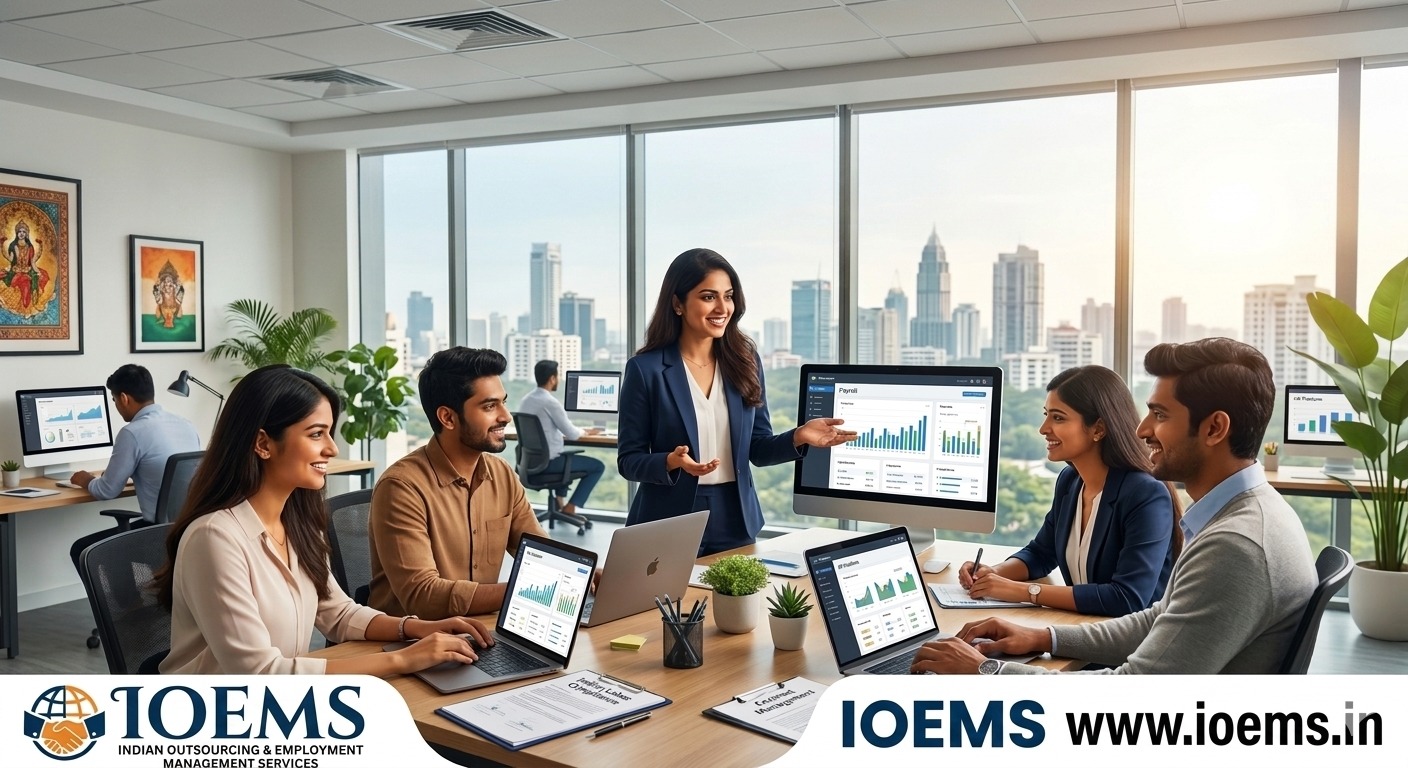
In response to these challenges, structured workforce outsourcing services are gradually gaining attention as a practical solution to improve efficiency and transparency. Companies like Indian Outsourcing Employment Management Services (IOEMS) are working to simplify workforce administration by offering organized employment management solutions specifically designed for government departments and semi-government institutions.

The Expanding Workforce Behind Government Programs

India’s public sector operates numerous projects simultaneously, ranging from road construction and urban infrastructure to healthcare services and digital governance initiatives. These projects often require a flexible workforce that can be deployed quickly depending on project needs.

Contractual employees and project-based staff therefore play a vital role in the successful implementation of these initiatives. However, coordinating recruitment, onboarding, payroll management, and compliance for a large number of workers can become complex for government departments that are primarily focused on policy implementation and service delivery.

Traditionally, these workforce requirements have been managed through contractors or multiple intermediaries. While this approach helped provide manpower when required, it also led to several operational inefficiencies over time.

Challenges in Traditional Workforce Management Systems

One of the major issues associated with traditional workforce management systems has been the reliance on multiple intermediaries. Workers seeking employment opportunities in government-funded projects often depended on agents or contractors who connected them with job openings.

This system sometimes resulted in delays in recruitment processes, unclear communication regarding employment terms, and lack of transparency in payroll management. Workers occasionally faced confusion regarding salary deductions or documentation related to their employment.

From the perspective of government departments, managing workforce records and ensuring compliance with labor regulations also became increasingly difficult when several intermediaries were involved in the process.

These challenges have encouraged institutions to explore more structured employment management systems that provide greater accountability and transparency.

The Rise of IOEMS Organized Workforce Outsourcing

Structured workforce outsourcing models aim to address these challenges by centralizing employment management processes. In this system, a professional workforce solutions provider acts as an authorized partner responsible for managing recruitment coordination, employee onboarding, payroll processing, and HR administration.

IOEMS (Indian Outsourcing Employment Management Services) is among the organizations positioning itself as a workforce management partner for public sector institutions. By aligning its operations with statutory regulations and government compliance standards, IOEMS aims to help streamline workforce administration while maintaining transparency in employment practices.

This centralized model reduces the need for multiple intermediaries and allows government departments to manage manpower more effectively.

Comprehensive Workforce Management Services by IOEMS

Structured employment management providers typically offer a wide range of services designed to support government workforce operations.

One of the primary services is manpower outsourcing for government projects, which involves identifying suitable candidates and deploying them to projects that require additional workforce support.

Another key service is payroll processing, where salary management is handled through transparent digital systems. Accurate payroll records help ensure that employees receive timely payments while maintaining proper financial documentation.

IOEMS also assists with statutory compliance management, ensuring that labor laws and employee welfare regulations are followed. This includes handling contributions related to provident funds, employee benefits, and other legal requirements.

Additionally, Employer of Record (EOR) services allow workforce providers to manage employment contracts, documentation, and HR administration for contractual employees on behalf of government institutions.

Improving Operational Efficiency for Government Institutions

The adoption of structured workforce outsourcing services can significantly improve operational efficiency within government departments. By delegating administrative tasks such as recruitment, payroll, and employee documentation to specialized workforce management providers like IOEMS, institutions can focus more on project implementation and public service delivery.

Centralized workforce systems also help maintain accurate digital records, which are essential for large-scale government projects that require detailed reporting and monitoring.

Transparency in payroll processing and compliance management further strengthens governance standards, reducing the risk of disputes or regulatory complications.

Benefits for Contractual Employees

Structured workforce outsourcing models also provide several benefits for employees working on government projects. One of the key advantages is the availability of clearly defined employment agreements that outline roles, responsibilities, and compensation terms.

Transparent payroll systems ensure that salaries are paid on time and that deductions are properly documented. This reduces the likelihood of misunderstandings or disputes related to wage payments.

Digital employment records also provide workers with formal documentation of their work experience, which can be valuable for future employment opportunities.

Furthermore, organized HR administration systems allow employees to access grievance redressal mechanisms, leave management systems, and other support services that may not be available in informal employment arrangements.

The Future of Workforce Management with IOEMS

As India continues to expand its infrastructure network and implement new digital governance initiatives, the scale of public sector projects is expected to increase significantly in the coming years.

Managing large workforces efficiently will therefore remain a key priority for government institutions. Structured workforce outsourcing services led by organizations like IOEMS are likely to play an increasingly important role in supporting these efforts.

By promoting transparency, efficiency, and accountability in workforce management, IOEMS aims to contribute to the successful implementation of government initiatives while also improving employment conditions for contractual workers across the country.

IOEMS Workforce Outsourcing Services Emerging as a Key Support System for Government Projects in India

As India continues to accelerate its development agenda across sectors such as infrastructure, healthcare, education, and digital governance, the importance of efficient workforce management in the public sector is becoming increasingly evident. Government departments and public institutions depend on thousands of contractual and project-based employees to carry out various development initiatives and public welfare programs. Managing such a large workforce, however, has historically presented several administrative challenges.

In response to these challenges, structured workforce outsourcing services are gradually gaining attention as a practical solution to improve efficiency and transparency. Companies like Indian Outsourcing Employment Management Services (IOEMS) are working to simplify workforce administration by offering organized employment management solutions specifically designed for government departments and semi-government institutions.

The Expanding Workforce Behind Government Programs

India’s public sector operates numerous projects simultaneously, ranging from road construction and urban infrastructure to healthcare services and digital governance initiatives. These projects often require a flexible workforce that can be deployed quickly depending on project needs.

Contractual employees and project-based staff therefore play a vital role in the successful implementation of these initiatives. However, coordinating recruitment, onboarding, payroll management, and compliance for a large number of workers can become complex for government departments that are primarily focused on policy implementation and service delivery.

Traditionally, these workforce requirements have been managed through contractors or multiple intermediaries. While this approach helped provide manpower when required, it also led to several operational inefficiencies over time.

Challenges in Traditional Workforce Management Systems

One of the major issues associated with traditional workforce management systems has been the reliance on multiple intermediaries. Workers seeking employment opportunities in government-funded projects often depended on agents or contractors who connected them with job openings.

This system sometimes resulted in delays in recruitment processes, unclear communication regarding employment terms, and lack of transparency in payroll management. Workers occasionally faced confusion regarding salary deductions or documentation related to their employment.

From the perspective of government departments, managing workforce records and ensuring compliance with labor regulations also became increasingly difficult when several intermediaries were involved in the process.

These challenges have encouraged institutions to explore more structured employment management systems that provide greater accountability and transparency.

The Rise of IOEMS Organized Workforce Outsourcing

Structured workforce outsourcing models aim to address these challenges by centralizing employment management processes. In this system, a professional workforce solutions provider acts as an authorized partner responsible for managing recruitment coordination, employee onboarding, payroll processing, and HR administration.

IOEMS (Indian Outsourcing Employment Management Services) is among the organizations positioning itself as a workforce management partner for public sector institutions. By aligning its operations with statutory regulations and government compliance standards, IOEMS aims to help streamline workforce administration while maintaining transparency in employment practices.

This centralized model reduces the need for multiple intermediaries and allows government departments to manage manpower more effectively.

Comprehensive Workforce Management Services by IOEMS

Structured employment management providers typically offer a wide range of services designed to support government workforce operations.

One of the primary services is manpower outsourcing for government projects, which involves identifying suitable candidates and deploying them to projects that require additional workforce support.

Another key service is payroll processing, where salary management is handled through transparent digital systems. Accurate payroll records help ensure that employees receive timely payments while maintaining proper financial documentation.

IOEMS also assists with statutory compliance management, ensuring that labor laws and employee welfare regulations are followed. This includes handling contributions related to provident funds, employee benefits, and other legal requirements.

Additionally, Employer of Record (EOR) services allow workforce providers to manage employment contracts, documentation, and HR administration for contractual employees on behalf of government institutions.

Improving Operational Efficiency for Government Institutions

The adoption of structured workforce outsourcing services can significantly improve operational efficiency within government departments. By delegating administrative tasks such as recruitment, payroll, and employee documentation to specialized workforce management providers like IOEMS, institutions can focus more on project implementation and public service delivery.

Centralized workforce systems also help maintain accurate digital records, which are essential for large-scale government projects that require detailed reporting and monitoring.

Transparency in payroll processing and compliance management further strengthens governance standards, reducing the risk of disputes or regulatory complications.

Benefits for Contractual Employees

Structured workforce outsourcing models also provide several benefits for employees working on government projects. One of the key advantages is the availability of clearly defined employment agreements that outline roles, responsibilities, and compensation terms.

Transparent payroll systems ensure that salaries are paid on time and that deductions are properly documented. This reduces the likelihood of misunderstandings or disputes related to wage payments.

Digital employment records also provide workers with formal documentation of their work experience, which can be valuable for future employment opportunities.

Furthermore, organized HR administration systems allow employees to access grievance redressal mechanisms, leave management systems, and other support services that may not be available in informal employment arrangements.

The Future of Workforce Management with IOEMS

As India continues to expand its infrastructure network and implement new digital governance initiatives, the scale of public sector projects is expected to increase significantly in the coming years.

Managing large workforces efficiently will therefore remain a key priority for government institutions. Structured workforce outsourcing services led by organizations like IOEMS are likely to play an increasingly important role in supporting these efforts.

By promoting transparency, efficiency, and accountability in workforce management, IOEMS aims to contribute to the successful implementation of government initiatives while also improving employment conditions for contractual workers across the country.